Buying Guide · 2026
Is the Warm Air Dryer on a Bidet Seat Worth It?
By Ilane TallUpdated September 1, 2026Research-based
Best Bidet Seats is reader-supported. When you buy through our links we may earn a commission, at no extra cost to you. Commissions never change which products we recommend.
Scroll through the spec list of any electric bidet seat and the warm air dryer sits near the bottom, one line above the warranty terms. It rarely gets a headline photo. And yet ask people who own a bidet seat what they'd change, keep, or warn a friend about, and the dryer comes up constantly — more than the remote, more than the nightlight, sometimes more than the warm water itself. It's a genuinely divisive feature: some owners say it's the reason they stopped buying toilet paper for anything but backup, and others say it's the first button they stopped pressing.
That split is exactly why it's worth a straight answer instead of a marketing one. A seat with a warm air dryer typically costs $30 to $60 more than an otherwise similar model without one — often the exact gap between a $150 seat and a $190 one. Whether that's money well spent depends on something the spec sheet never tells you: how long you're actually willing to sit still and wait.
One honest note before we get into it: we don't run a fake testing lab, and we never pretend to. What follows comes from published specifications, listing details, and the patterns that repeat across thousands of verified owner reviews — including the critical ones, which is where a feature like this reveals its real trade-offs.
First, the basics
What the dryer actually is, and how long it takes
Strip away the marketing name and a bidet seat's warm air dryer is a small heating element paired with a low-power fan, built into the same housing as the wash nozzle. After the wash cycle ends, you press a separate button — or on some models it's the same button held down — and warm air blows gently upward toward the area the nozzle just rinsed. It is closer in spirit to a bathroom hand dryer than a hair dryer: lower airflow, lower heat, running at a distance and angle it can't easily adjust the way a handheld dryer would.
That's the part that surprises first-time owners the most. A warm air dryer on a bidet seat is not trying to blast you dry the way a car dashboard vent dries a wet windshield. It's a slow, gentle process by design — the seat can't put a high-velocity, high-heat airflow directly against skin without it becoming uncomfortable or, at higher settings, genuinely risky. So manufacturers throttle it down, and the result is a feature that works, but works patiently.
Most bidet seat dryers on the market run somewhere in the two-to-five-minute range for a full, hands-off dry, with an automatic shutoff so the unit doesn't run indefinitely if you get distracted. Exact cycle length and wattage vary by model and aren't always published in detail — check your specific listing if the number matters to you — but the shape of the experience is consistent across the category: it's a multi-minute wait, not a ten-second flourish. That single fact is the whole reason this feature divides owners so cleanly, which is worth unpacking on its own.
The real debate
Why the wait is the whole argument
Every complaint and every compliment about this feature traces back to the same variable: time. A dryer that finished in fifteen seconds would be an uncontroversial upgrade — nobody would think twice about using it every single time. A dryer that took twenty minutes would be an obvious skip. Bidet seat dryers land in the uncomfortable middle, and where exactly they land on that spectrum decides whether an owner loves the feature or abandons it within a week.
The theme that repeats across owner reviews is almost a mirror image of itself. One group describes the dryer as transformative: they run it every time, they've adjusted their morning routine around the couple of extra minutes, and they genuinely use far less toilet paper as a result. Reviewers consistently note that this group tends to be people with more flexible mornings, or people drying just briefly before dressing rather than expecting to be bone-dry. The other group describes exactly the same feature as pointless: they're in a hurry, a few minutes feels much longer than a few minutes when you're sitting on a toilet seat waiting, and they end up reaching for a few sheets of paper anyway — meaning they paid the $30–$60 premium for a feature they use rarely.
Neither group is wrong about their own experience; they're just weighing the same wait differently. If you already know you're the type who'll stand up the moment a task feels slow, that's useful self-knowledge before you spend the extra money. If a two-to-five-minute pause doesn't bother you — the same amount of time you might spend scrolling your phone anyway — the dryer is far more likely to earn its keep. It's also worth checking your own bathroom habits against your household's morning schedule; a dryer that's genuinely relaxing on a Sunday can feel like an obstacle on a Monday when someone else needs the bathroom next.
What changes, what doesn't
The paper you still use, and the paper you stop using
The pitch for a warm air dryer is usually framed as "no more toilet paper," and that's an overstatement worth correcting before you buy. What actually changes is narrower, and it's worth separating into what goes away and what sticks around.
What tends to go away is the post-wash pat-dry — the few sheets most people use after a bidet wash simply to blot the area dry before standing up. That's the specific job the dryer replaces, and it's the job it's reasonably good at, given enough time. Households that use the dryer consistently report meaningfully lower toilet paper spending over months, in the same range our bidet seat running-cost breakdown covers for wash-only seats — the dryer just pushes those savings a bit further by removing one more habitual use of paper.
What tends to stick around is everything the dryer was never built to handle: the initial wipe before a wash on a seat without a pre-wash nozzle rinse, paper kept on hand for guests or houseguests who skip the bidet function entirely, paper for anyone in the household who finds the wait genuinely uncomfortable, and paper as the honest backup during the two-to-five-minute window when the seat is still drying and you need to leave the bathroom. Toilet paper doesn't disappear from the shopping list; it moves from "every use" to "most uses, plus backup."
Set your expectations by that more modest, more accurate version of the pitch, and the dryer stops being a binary "works or doesn't" feature and becomes what it actually is: a habit that trims paper use for the people who stick with it, and does nothing at all for the people who don't.
Dialing it in
Temperature settings, and the ones that matter
Most bidet seats with a dryer offer a small number of heat steps — typically two or three, sometimes labeled low/medium/high and sometimes just numbered — alongside a separate control for the wash water temperature and the heated seat itself. It's easy to assume more heat means a faster, better dry. In practice, it's the setting owners misuse the most.
The highest heat setting is rarely the one that matters. Because the airflow itself is gentle by design — again, closer to a bathroom hand dryer than a hair dryer — cranking the temperature up doesn't meaningfully speed up the cycle; it mostly just makes the last stretch of a multi-minute wait feel warmer, and past a point, uncomfortably so on sensitive skin. The setting that actually decides whether you keep using this feature is the middle one: warm enough to feel deliberate rather than lukewarm, cool enough that you're not shifting around waiting for it to end. Most owners who stick with the dryer long-term report settling on the middle step and never touching the others again.
The other control worth knowing about, separate from air temperature, is the automatic shutoff timer built into essentially every seat in this category — a safety feature that ends the cycle after a set number of minutes whether or not you've pressed stop. It's not something you configure so much as something worth knowing exists, since a seat that stops "on its own" partway through isn't malfunctioning; it's doing exactly what it was designed to do. If a dryer feels underpowered no matter the setting, it's usually a fan-speed limitation rather than a temperature one, and no amount of extra heat fixes that — worth confirming in owner reviews before you buy if a fast, forceful dry matters more to you than a gentle one.
Or skip it entirely
When to buy the seat without one, and keep a towel
Skipping the dryer isn't a compromise pick — for a real slice of buyers, it's the correct answer. If your mornings run on a schedule that doesn't have a spare two to five minutes in it, if you already know you're not going to stand around waiting, or if you'd simply rather put that $30–$60 toward a hybrid heater or a better remote, a seat without a dryer plus a small hand towel kept within reach solves the exact same problem — you're just supplying the drying step yourself instead of the seat.
A dedicated bidet towel is a genuinely underrated solution: a small, quick-dry cloth hung on a hook near the toilet, used once and tossed in the wash, costs essentially nothing to run and dries you in a few seconds rather than a few minutes. It's also the more practical choice for households where more than one person will use the bathroom in a hurry, since nobody's waiting on anybody else's dry cycle. It's worth a look at our bidet seats for seniors and limited mobility guide too — for anyone who finds reaching for a towel easier than holding a position through a multi-minute cycle, that's a real, practical reason to pick the simpler seat.
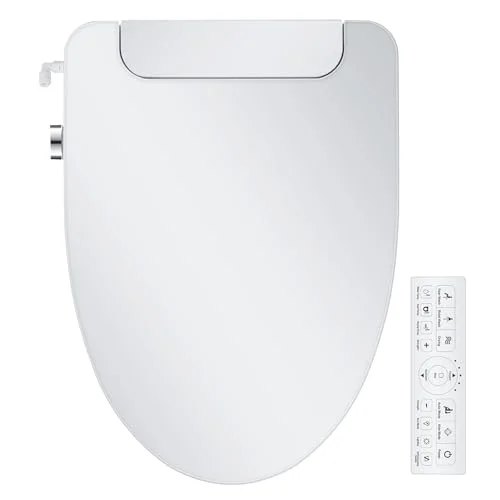
IYTATA Electric Bidet Toilet Seat
Warm water and a heated seat, no dryer to wait on
The IYTATA's listing names warm water and a heated seat but doesn't list a drying function — which puts it roughly $30–$40 below the two dryer-equipped picks above and makes it the straightforward choice if the towel-and-go routine appeals to you more than a multi-minute wait. You still get the two comfort features most owners say matter most: water that isn't cold, and a seat that isn't either. Pair it with a towel on a hook and you've solved drying for less than the cost of the dryer hardware alone.
The math is simple enough to do in your head: skip the dryer, save $30 to $60 up front, and spend a few dollars on two or three towels. If a few weeks in you find yourself wishing the seat would just dry you off, that's real information — and unlike a lot of upgrade decisions, it's a cheap one to have gotten "wrong," since the towel routine costs so little to try first. It's the same low-risk logic our warm water duration guide recommends for testing whether continuous heating is worth paying for, applied to a different button on the same seat.