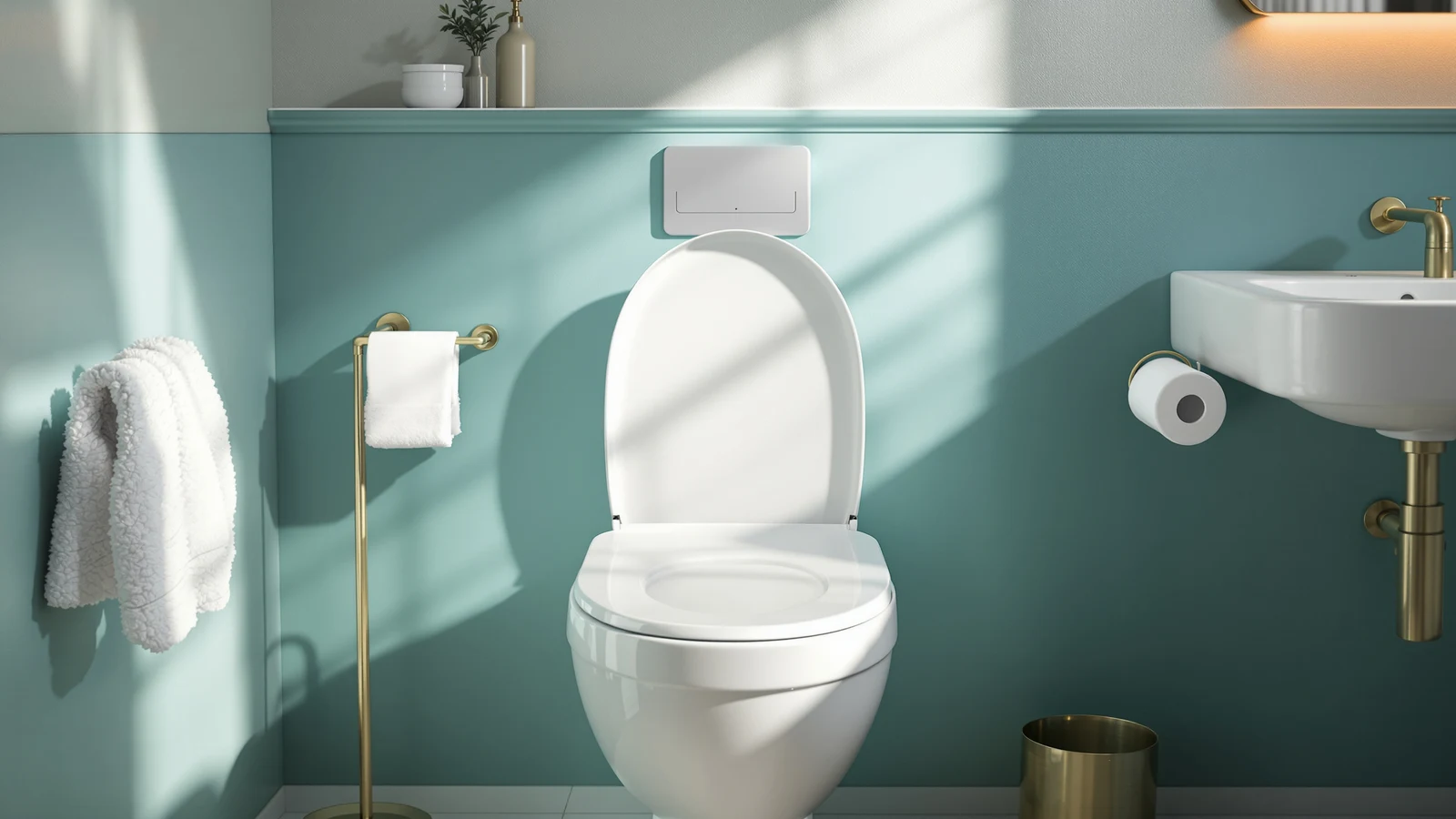
What Does a Bidet Seat Actually Cost to Run?
Best Bidet Seats is reader-supported. When you buy through our links we may earn a commission, at no extra cost to you. Commissions never change which products we recommend.
The sticker price on a bidet seat is the easy number. Ninety-nine dollars, two hundred, four hundred — you see it once at checkout and never think about it again. The number nobody puts on the box is the one that actually matters over the life of the thing: what does it cost to run, every month, for as long as you own it? That number is small, but it isn't zero, and every seller has an incentive to let you assume it is.
So we built it from the ground up — electricity, water, filters and replacement parts, weighed against the toilet paper you stop buying — with every assumption stated in the open so you can swap in your own electricity rate, your own household size, and your own habits and get a number you actually trust. One honest note before we start: we don't run a fake testing lab, and we don't own a wattmeter clamped to five bidet seats in a garage somewhere. What follows is arithmetic built on published manufacturer specs, US Energy Information Administration rate data, and the two most-cited independent teardown figures for tankless heating draw — not a lab result, and we say so plainly rather than dressing it up as one.
We'll use five real, currently listed electric seats to anchor the price tiers along the way — from the SR SUN RISE Electric Bidet Toilet Seat at $99.98 up to the VOVO VB-4000SE at $399.00 — but the math itself applies to any electric seat, because it's the heater type, not the brand, that decides most of the bill.
If you just want the number
Roughly $20–$55 a year, most households
A reservoir (tank) heater on standby, plus a few gallons of water a week, plus a filter or valve part every few years, lands most single- and two-person households between about $20 and $55 a year in added cost — well under $5 a month. Instant-heater models and larger households run higher; we break down exactly why below.
Toilet paper claws most of it back
Conservatively, a household that cuts toilet paper use in half after switching to a bidet saves somewhere between $25 and $65 a year — which means for a lot of households, the seat is close to a wash, or even a small net saving, before you count the comfort at all.
Electricity: tank heaters, instant heaters, and paying nothing at all
Nearly all of a bidet seat's running cost, when there is any, comes from the water heater — because that's the only always-on component drawing meaningful power. To keep this honest we're using the US national average residential electricity rate, which has hovered close to $0.16 per kWh — note that it swings from around $0.11 in some states to well over $0.30 in others, so treat every dollar figure below as a starting point to rescale against your own utility bill, not a promise.
There are three heater categories, and the one your seat uses matters far more than the brand on the box:
- Reservoir (tank) heating keeps a small tank of water warm around the clock so it's ready the instant you press the button. It's the cheaper mechanism to build, which is why it's common on seats under roughly $150–$200. Assume a standby draw in the neighborhood of 15–25 watts to hold that tank at temperature 24 hours a day — call it 20 watts as a working average. Run the math: 20W × 24h × 365 days = 175 kWh/year, times $0.16/kWh, and you land at roughly $28 a year just to keep the tank warm, before a single wash.
- Instant (tankless) heating only draws real power while water is actually flowing — commonly cited teardown figures put that in the 1,200–1,400 watt range, similar to a hair dryer, but only for the 20–40 seconds of an actual wash. Assume three washes a day at 30 seconds each and 1,300W average draw: that's 0.0108 kWh/day, or about 3.9 kWh/year — under $1 a year in wash-time electricity. The catch is that most instant models still hold a small standby buffer and run control electronics continuously, so real-world instant seats typically land closer to $15–$25 a year once you include that idle draw — still usually cheaper than a 24/7 reservoir, because they aren't fighting to keep a whole tank hot between uses.
- Non-electric bidets and attachments draw zero electricity, full stop — no tank, no pump, no control board. If a running-cost line item is the deciding factor for you, this is the honest floor: $0. Our bidet seat vs. bidet attachment guide walks through what you give up in exchange for that number.
Here's where we have to be careful, because it's tempting to assign a heater type to each product we're comparing and we simply don't have that spec confirmed for every model in our lineup. The SR SUN RISE seat ($99.98) sits at a price point where reservoir heating is the norm across the category, and the Combier Electric Heated Bidet Toilet Seat ($118.99) sits right beside it. The GAICOM ($189.96) adds a warm-air dryer on top of the heated seat and wash, which is its own small standby draw layered over whichever heater it uses. Rather than guess at a spec none of these listings confirm, check the "heating" or "water heater type" line on the specific listing before you buy if this is the number you're optimizing — it's usually stated plainly, and it's the single most important line on the page for this article's purposes. Our electrical outlet guide covers the other half of the electric-seat equation: whether your bathroom can even power one.
Water per wash, and what it adds to a typical bill
Water is the cost nobody worries about, and the math shows why: it's genuinely small. A typical bidet wash uses somewhere in the range of a third of a gallon to about a gallon, depending on spray pressure and how long you hold the button — we'll use 0.5 gallons per wash as a conservative middle-of-the-range assumption, on the higher side rather than the lower, so the number that follows is not flattering the category.
Combined water-and-sewer rates in most US cities run somewhere around $8–$14 per 750 gallons, which works out to roughly $0.011–$0.019 per gallon — call it $0.015/gallon as a round working number. At 0.5 gallons per wash, that's about $0.0075 per wash — three-quarters of a cent. A single person washing three times a day spends about $8.20 a year on water for it. A family of four averaging ten washes a day between them is closer to $27 a year. Even doubling every assumption in this section — a full gallon per wash, $0.03/gallon combined rate — a family of four still lands under $110 a year, and that's the deliberately pessimistic case. Our water pressure and nozzle guide explains what actually changes how much water a given wash uses, if you want to tune your own habits toward the cheaper end of that range.
Filters and replacement parts over five years
This is the line item that catches new owners off guard, because it doesn't show up until year two or three. Bidet seats have a handful of parts that wear or need periodic attention: the nozzle, the valve core in the T-valve that splits your water supply, any carbon deodorizer filter on models that include one, and — on electric seats — the seal and connections around the heater.
Not every seat in our lineup carries the same maintenance profile, and we can only speak to what each listing actually states. The VOVO VB-4000SE ($399.00) lists a built-in deodorizer, which typically means a small carbon filter cartridge — the kind of part that's inexpensive individually (commonly single-digit dollars per replacement across the category) but adds up if you replace it on a strict schedule rather than when odor control actually starts to fade. The Kohler PureWash E590 ($359.13) lists a self-cleaning stainless wand, which is worth calling out specifically because it's a maintenance-cost feature, not just a comfort one: a wand that rinses itself before and after each use resists mineral scale and buildup far better than a wand you have to remember to clean by hand, which in hard-water areas is one of the more common reasons an owner ends up replacing a nozzle assembly early.
Zooming out to a five-year total: budget roughly $15–$40 for filter cartridges over that span if your seat includes a deodorizer and you replace them at a sensible pace rather than aggressively, and roughly $10–$30 for a valve core or washer replacement if you get unlucky with hard water or a slow drip — a problem that is almost always installation-related rather than a defect, and one our installation problems and fixes guide covers in detail, including the plumber's-tape fix that resolves the large majority of reported T-valve drips. All told, a reasonable five-year parts-and-filters budget for an electric seat lands somewhere between $25 and $70, and for a non-electric attachment or seat, usually the low end of that same range, since there's no heater seal or deodorizer filter to account for. For day-to-day upkeep that extends any seat's working life, our cleaning and maintenance guide is the companion piece to this one.
The toilet-paper offset, calculated conservatively
Every running-cost conversation about bidets leaves out the column that makes the rest of it look smaller: what you stop spending on toilet paper. We're going to lowball every number here on purpose, because inflated savings claims are exactly the kind of thing this article exists to avoid.
Published industry estimates put average US toilet paper spending somewhere around $130–$180 a year for a household of four, with plenty of variation by brand choice and household size. We'll use a conservative $110/year for a family of four as our baseline — below most published estimates, not above them. Owners who switch to a bidet consistently report using less toilet paper for drying rather than eliminating it — a reduction, not a replacement. We'll assume a conservative 40% reduction in sheet usage rather than the 50–75% some manufacturers claim. That's roughly $44 a year saved for a family of four, or call it $11–$15 a year for a single-person household spending proportionally less on paper to begin with. Scale those figures to your own household's actual toilet paper budget for a more precise number — the percentage is the part that travels; the dollar figure is only as good as your starting spend.
Set against the running-cost figures above, that offset covers most or all of a reservoir-heater seat's annual electricity and water cost for a typical household, and comfortably covers a non-electric attachment's cost with room to spare. It rarely covers a high-draw instant-heater premium seat's full running cost on its own — but it meaningfully narrows the gap every year you own it.
Standby power, and the eco modes that cut it
Standby power is the least visible cost in this whole article and, for reservoir-heater seats, the single biggest line item — bigger than every actual wash combined, by a wide margin. That's the nature of keeping a tank of water warm 24 hours a day for the handful of minutes it's actually used. It's also where an LED nightlight, an always-on deodorizer fan, or a lit control panel adds a small, continuous draw on top of the heater itself. The VOVO VB-4000SE's LED light and the Kohler E590's nightlight are both convenience features worth exactly this kind of scrutiny: individually tiny, typically a watt or two, but continuous, which is what standby draw always is.
This is also where eco or power-save modes earn their keep. Most electric seats sold today include some version of a setting that lets the tank cool between uses — commonly overnight, or after a set idle period — and reheats on a schedule or on approach rather than holding peak temperature around the clock. Manufacturers commonly cite reductions in the 10–30% range for standby draw when these modes are enabled, which on our $28/year reservoir estimate works out to roughly $3–$8 a year clawed back for the minor inconvenience of a slightly longer warm-up on the first use of the day. If your seat has an eco or sleep setting and it isn't already on, turning it on is the single easiest change you can make to this article's numbers in your own home.
Five electric seats, and what feeds their running cost
Prices move on Amazon — confirm the live price before buying. Heater type isn't confirmed on every listing; check the specific product page before assuming.
| Model | Price | Notable draw-relevant features | |
|---|---|---|---|
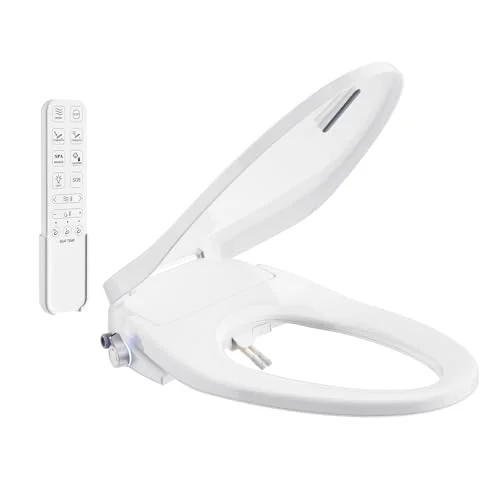 SR SUN RISE Electric Bidet Toilet Seat SR SUN RISE Electric Bidet Toilet Seat | $99.98 | Entry-level electric heated wash; check listing for heater type | Price |
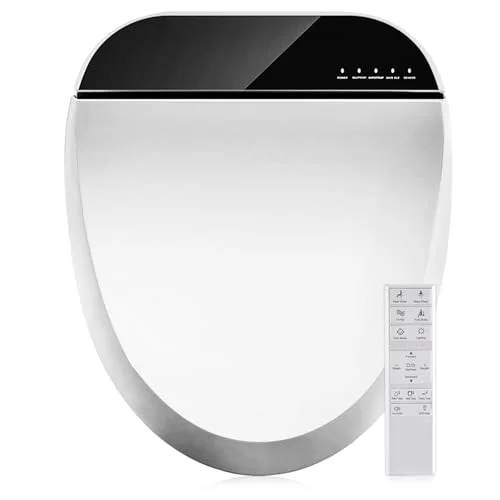 Combier Electric Heated Bidet Toilet Seat Combier Electric Heated Bidet Toilet Seat | $118.99 | Heated seat, wash and dry, soft-close, remote control | Price |
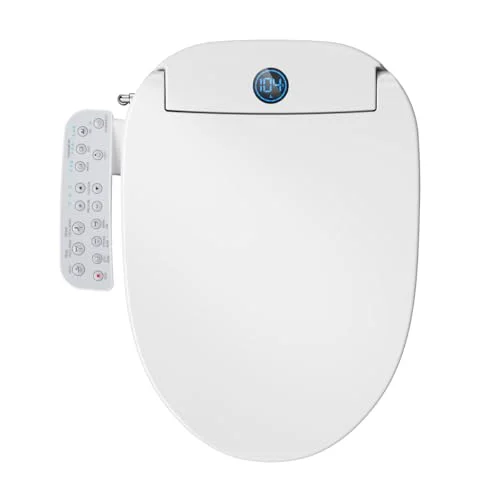 GAICOM Electric Bidet Toilet Seat GAICOM Electric Bidet Toilet Seat | $189.96 | Heated seat plus warm-air dryer — its own added standby draw | Price |
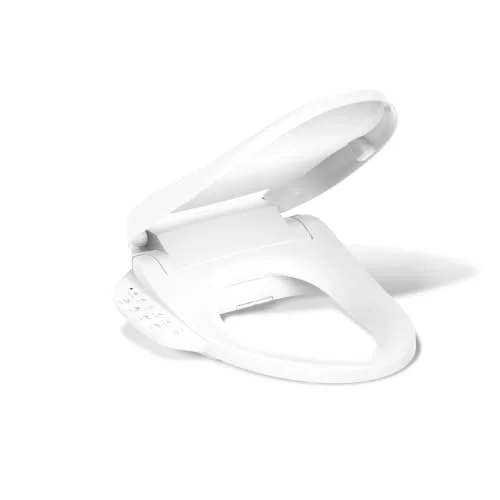 Kohler PureWash E590 Kohler PureWash E590 | $359.13 | Self-cleaning wand (lowers descaling/replacement risk), nightlight, adjustable pressure | Price |
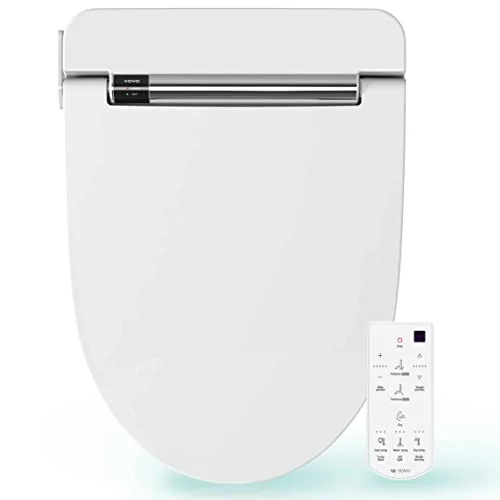 VOVO VB-4000SE VOVO VB-4000SE | $399.00 | Deodorizer filter (a recurring small cost), LED light, dryer, stainless nozzle | Price |
The honest bottom line, by household size
Adding up electricity, water and a pro-rated share of five-year parts costs, then subtracting the conservative toilet-paper offset from earlier, here's roughly where three household sizes land per year. Treat these as directional, not precise — your electricity rate, water rate and habits will move every number.
| Household | Reservoir-heater electric seat | Instant-heater electric seat | Non-electric attachment/seat |
|---|---|---|---|
| Single person | ~$40/yr gross, ~$27/yr after TP offset | ~$28/yr gross, ~$15/yr after TP offset | ~$10/yr gross, near $0 after TP offset |
| Couple | ~$46/yr gross, ~$18/yr after TP offset | ~$34/yr gross, ~$6/yr after TP offset | ~$16/yr gross, effectively $0 after TP offset |
| Family of four | ~$58/yr gross, ~$14/yr after TP offset | ~$46/yr gross, ~$2/yr after TP offset | ~$28/yr gross, net saving likely |
"Gross" is electricity plus water plus a pro-rated one-fifth of the five-year parts budget. The toilet-paper offset uses the conservative 40%-reduction assumption from earlier, scaled to household size. None of these figures include the purchase price itself — this is running cost only.
Running cost: common questions
How much does it cost to run a bidet seat per month?
Most single- and two-person households land somewhere between about $1.50 and $4.50 a month before the toilet-paper offset, depending mainly on whether the seat uses a reservoir or instant heater. After a conservative toilet-paper offset, the real added cost for many households is closer to $1–$2 a month. Non-electric attachments and seats cost close to nothing to run — just a few cents a week in water.
Do bidet seats use a lot of electricity?
No. Even a reservoir-heater seat that keeps water warm around the clock draws roughly 15–25 watts continuously — similar to a small night light left on — which works out to around $25–$30 a year at national average electricity rates. Instant-heater seats draw far more power, but only in short bursts while actually spraying, which keeps their wash-time cost to under a dollar a year; most of their real cost comes from smaller standby electronics rather than the heater itself.
How often do bidet seat filters need replacing?
It depends on the part. A deodorizer carbon filter, on seats that include one, typically gets replaced every few months to once a year depending on use and how quickly odor control fades — inexpensive individually, at a few dollars per cartridge. Valve cores and washers usually last years and are only replaced if a drip develops, most often from an over- or under-tightened T-valve at install rather than normal wear.
Does a bidet seat actually save money on toilet paper?
For most households, yes, though the honest framing is a reduction rather than an elimination — owners typically report using less toilet paper for drying, not none. Using a conservative 40% reduction against a modest baseline toilet paper budget, a family of four can expect to save roughly $40–$50 a year, which offsets most or all of a reservoir-heater seat's running cost and comfortably covers a non-electric option's.