Picks · 2026
The Best Bidet Seats for Round Toilet Bowls
By Ilane TallUpdated August 20, 2026Research-based.
Affiliate disclosure: Best Bidet Seats is reader-supported. If you buy through links on this page, we may earn a commission from Amazon at no extra cost to you. We publish rating figures only where we hold verified per-product data — we don't have any for the products below, so you won't see star ratings on this page.
Most bidet-seat marketing is written for a bowl shape that isn't necessarily yours. Scroll any listing page and the hero image, the feature list and the word "universal" all assume an elongated bowl — the oval-fronted shape that's been the US default in new construction for two decades. If your toilet is round instead, shorter and more circular at the front, a chunk of the category simply isn't built for you, and the popular electric seats with the longest feature lists are disproportionately the ones that leave a gap or a footprint at the front of the porcelain.
This guide is the round-bowl-specific version of that shopping trip. We'll show you the one measurement that tells you which camp you're in, explain why so many "universal" seats quietly aren't, and walk through which of the products we carry actually work on a round bowl — cheapest first — plus what to do if your toilet is an odd shape that resists both categories.
One honest note up front: we compare published specifications, live Amazon pricing and the product listings themselves — we don't run a testing lab, and we don't own every bowl shape to check a seat against in person. Where a listing doesn't state a bowl-shape variant, we say so plainly rather than guess.
Step one
The measurement that decides everything
One number, taken in about thirty seconds, tells you which shape you're shopping for.
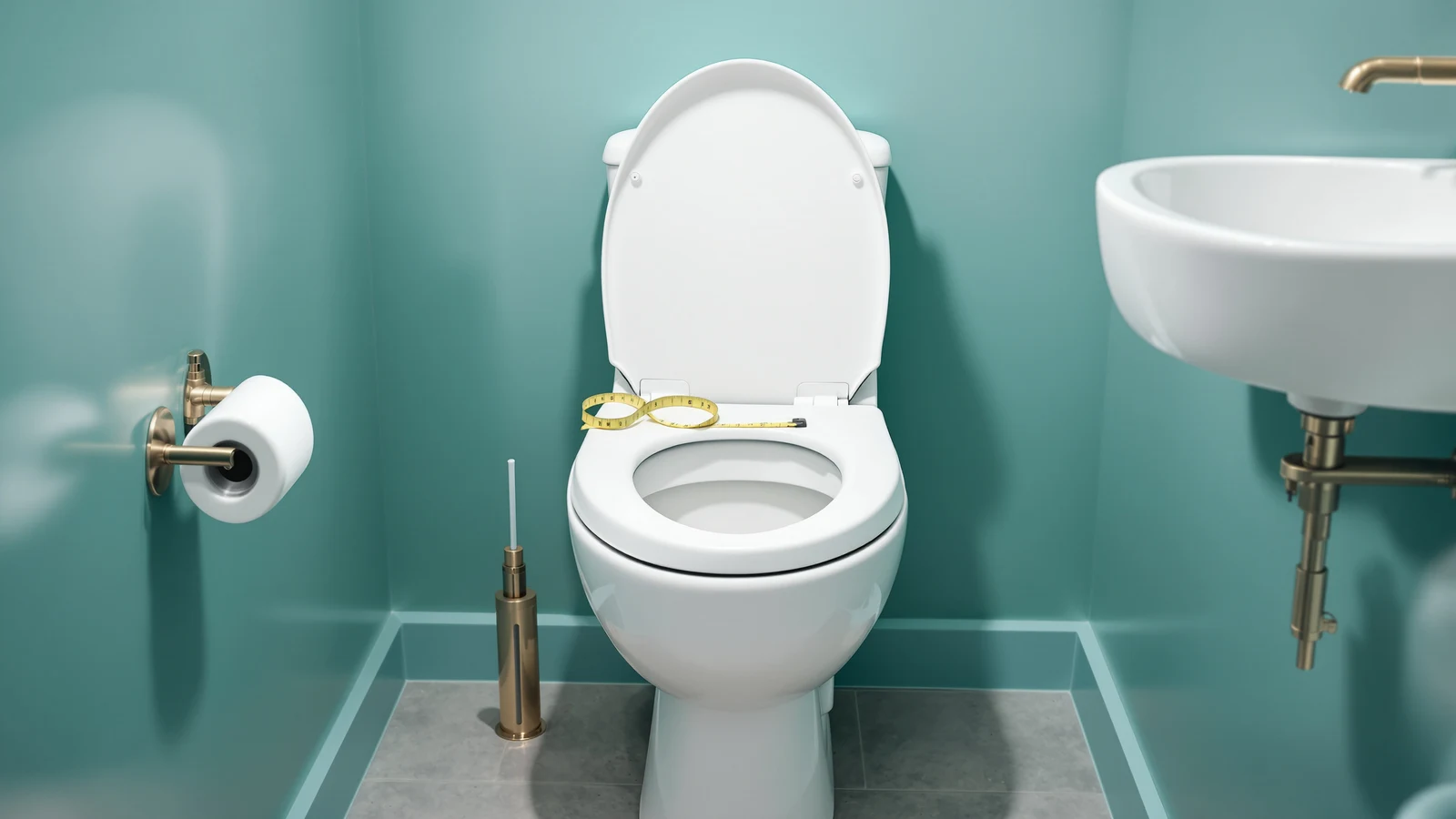
Lift your current seat and lid so you're looking at bare porcelain. At the back of the bowl are two bolt holes — the same ones your existing seat is anchored through, often hidden under small plastic caps. Hold or hook a tape measure at the midpoint between those two holes, and run it straight forward to the outer edge of the front rim. That single distance is nearly binary:
~16.5″
Round bowl
Roughly 16 to 17 inches from bolt holes to front rim. A compact, circular footprint — common in older homes, powder rooms and anywhere floor space was tight.
~18.5″
Elongated bowl
Roughly 18 to 19 inches. The oval-fronted shape that's become the default in new construction, and the shape most seats are designed for first.
Notice the two-inch gap between the standards — that's why the reading is so forgiving. You don't need calipers; you need to know which cluster your toilet falls into. If your tape lands squarely between the two, at 17 to 18 inches, treat it as a special case: that usually signals a compact-elongated bowl or a non-US fixture, and it's worth checking the seat maker's printed fit template before ordering rather than guessing. Our full round vs elongated fit guide covers that measurement in more depth, along with one-piece and skirted-bowl exceptions.
While the tape is out, take a second number that matters just as much: bolt-hole spacing, the distance between the centers of the two mounting holes. On US toilets — round or elongated — this is standardized at 5.5 inches, and it's what nearly every bidet seat and attachment sold in the US assumes. If your spacing is off that standard, which is rare but does happen on some imported or antique fixtures, no seat or attachment in this category will bolt on cleanly regardless of bowl shape.
The catch
Why some "universal" seats still overhang a round bowl
A bidet seat's plastic body is molded to a specific bowl outline, the same way a toilet seat is. "Universal" in a listing title almost always means "fits the majority of modern US toilets" — which in practice means elongated, because that's what most manufacturers tool for first and sometimes the only shape they tool for at all. Mount an elongated-shaped seat on a shorter round bowl and the body extends past the front of the porcelain, hanging in open air rather than sitting flush — the exact complaint that shows up over and over in one-star reviews on electric seat listings.
You can see the pattern directly in the electric seats we carry. Every one of them is a feature-rich, elongated-only product, and the listing says so in the product name itself rather than leaving it to guesswork: the IYTATA Electric Bidet Toilet Seat ($125.99) is titled Elongated; the ZingPOP voice-control seat with auto-open and heated water ($139.99) is titled Elongated; the KERDE one-click seat with a heated armrest and slow-close lid ($139.99) is titled for an elongated bowl; and the iliD Heated Bidet Toilet Seat with Remote ($179.98) — see our remote-control bidet seats guide for more on that category — is titled Elongated too. None of these four ship in a round configuration as listed. Voice control, auto-open lids and heated armrests are genuinely nice features, and none of them tell you anything about whether the seat's body will clear a round bowl's shorter front rim. Feature count and bowl fit are two completely separate questions, and shoppers who only check the first one are exactly who ends up returning a seat.
All four of those seats are also electric, which means they need a grounded outlet within reach of the toilet — worth confirming before you shop, regardless of bowl shape. Our electrical outlet guide covers what to do if yours doesn't have one nearby.
| Model | Type | Bowl fit | Price | |
|---|
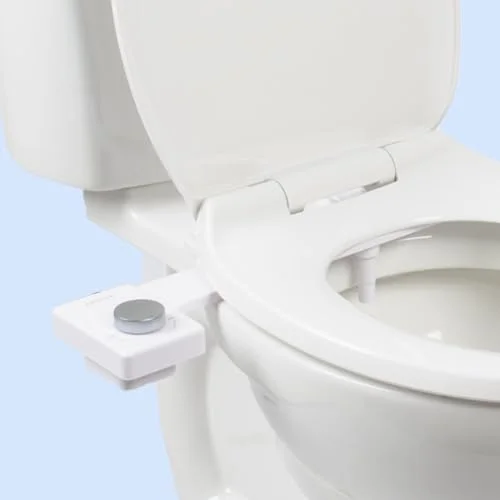 TUSHY Fresh Ultra-Slim Starter Attachment TUSHY Fresh Ultra-Slim Starter Attachment | Attachment | Any bowl — rides on your existing seat | $49.00 | Price |
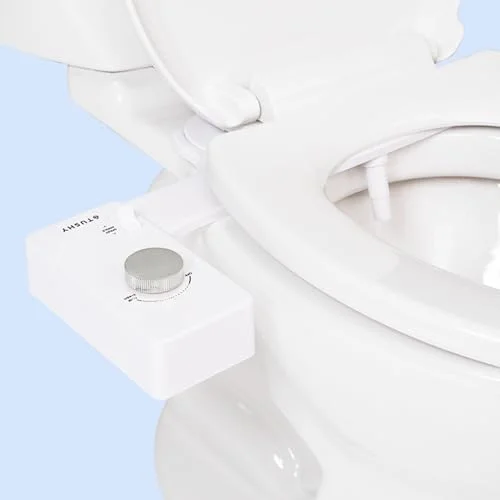 TUSHY Classic 3.0, Brushed Nickel TUSHY Classic 3.0, Brushed Nickel | Attachment | Any bowl — rides on your existing seat | $124.00 | Price |
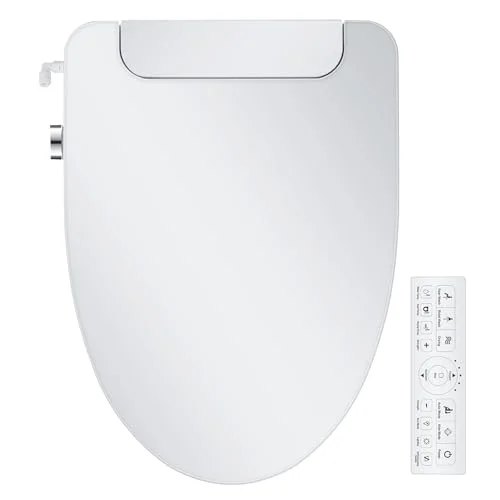 IYTATA Electric Bidet Toilet Seat IYTATA Electric Bidet Toilet Seat | Electric seat | Elongated only, per listing | $125.99 | Price |
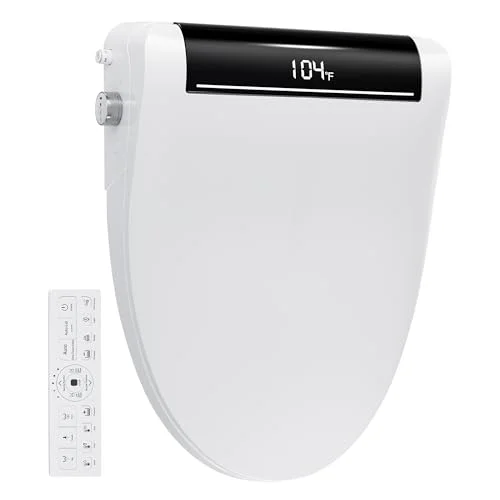 ZingPOP Voice Control Bidet Seat ZingPOP Voice Control Bidet Seat | Electric seat | Elongated only, per listing | $169.99 | Price |
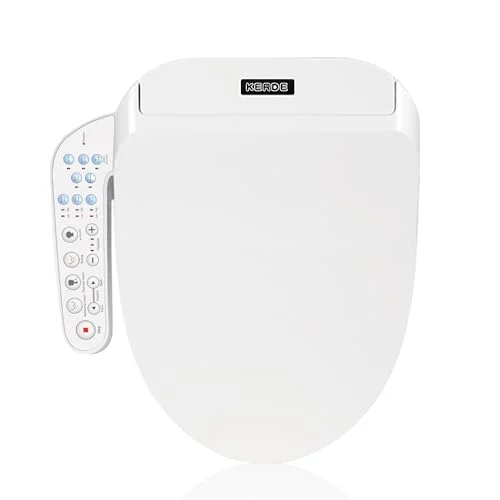 KERDE Electric Bidet Toilet Seat KERDE Electric Bidet Toilet Seat | Electric seat | Elongated only, per listing | $139.99 | Price |
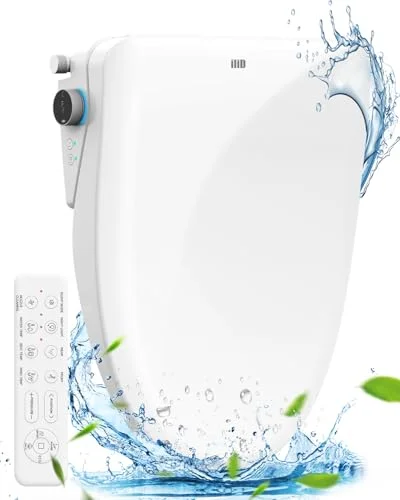 iliD Heated Bidet Toilet Seat with Remote iliD Heated Bidet Toilet Seat with Remote | Electric seat | Elongated only, per listing | $179.98 | Price |
Why this works
Attachments are the round-bowl escape hatch
Here's the structural reason a round bowl is a much smaller problem than the electric-seat aisle makes it look. An electric bidet seat replaces your toilet seat entirely — it has its own molded body shaped to a specific bowl outline, which is exactly why manufacturers have to tool a separate round version (and often don't bother). A bidet attachment, like both TUSHY products above, does the opposite: it's a thin unit that sits between your existing seat and the bowl, and your existing seat — the one already correctly shaped for your toilet — goes right back on top of it and bolts down through the same holes. The attachment never touches the bowl's outline at all. It rides on the seat, and the seat already fits.
That's why round-bowl shoppers hit far fewer dead ends in the attachment aisle than in the electric-seat aisle. You're not searching a listing's size dropdown hoping a "Round" option exists; there usually isn't one to look for, because the product doesn't need it. The trade-off is the one you'd expect: attachments run on your home's existing water pressure rather than a pump and heater, so you give up the warm-water and heated-seat features the elongated-only electric picks above advertise. For a fuller breakdown of that trade-off — and of when a full seat replacement is worth chasing down a round-specific SKU instead — see our bidet seat vs bidet attachment comparison.
Installation follows the same short checklist either way: shut off the supply valve, flush to clear the line, unbolt your existing seat, lay the attachment across the mounting holes, bolt the seat back down over it, then splice the included T-valve into the supply line and check for drips. It's a hand-tool job on a standard two-piece toilet. If you're weighing whether $49.00 is worth it before you've ever tried a bidet, our budget bidet seats under $100 guide covers that decision in more depth — the Fresh Ultra-Slim sits squarely in that price band.
The exceptions
What if your toilet is an odd shape, or French-curve?
Round and elongated cover the large majority of American toilets, but they're not the only shapes out there. A "French-curve" bowl — sometimes called a compact-elongated or D-shaped bowl — sits between the two standards: it's not quite as short as round, not as long as elongated, and it belongs to a handful of designer and imported toilet lines. Because it's neither standard measurement, it's the shape most likely to reject a seat that was designed for one of the two mainstream categories, attachment or electric alike.
If your seat-bolts-to-front-rim measurement lands somewhere between roughly 17 and 18 inches — outside both the ~16.5-inch round cluster and the ~18.5-inch elongated cluster — treat your toilet as a special case rather than rounding to the nearest standard. A few things help:
- Check for a manufacturer template first. Toilet and seat makers for non-standard bowls often publish a printed or downloadable fit template you can lay directly on the porcelain, which is far more reliable than a single tape measurement on an unusual shape.
- Lean toward an attachment, not a full seat. Since an attachment rides on your existing seat rather than replacing it, an odd-shaped bowl is largely the same non-issue it is for round bowls — the fit problem was already solved when your current seat was installed.
- Call the manufacturer with your toilet's model number before ordering an electric seat specifically. It's usually stamped inside the tank on two-piece toilets, or in the lid area on one-piece models, and support lines can confirm compatibility faster than guessing from a product photo.
The deeper dive on all of this — including one-piece versus two-piece tank clearance and skirted-bowl bolt access, which can complicate an odd-shaped bowl further — lives in our round vs elongated fit guide. It's worth five minutes before you order anything for a toilet that doesn't measure like either standard.