The Big Decision · 2026
Bidet Seat vs Bidet Attachment: Which One Should You Actually Buy?
By Ilane TallUpdated August 16, 2026Research-based
Best Bidet Seats is reader-supported. When you buy through our links we may earn a commission, at no extra cost to you. Commissions never change which products we recommend.
"Bidet seat" and "bidet attachment" get used interchangeably in casual conversation, and that's the whole problem: they're two different products, at two different price points, doing two different jobs. A bidet attachment is a thin plate that slides under your existing toilet seat and adds a wash function for $30 to $90. A bidet seat replaces your toilet seat outright, and depending on whether it's electric, runs anywhere from about $90 to $650. Confuse the two while shopping and you'll either overpay for features you didn't need or under-buy and end up disappointed.
We compared specs, prices, and thousands of verified owner reviews across both categories to lay out exactly what separates them: the install, the price band and what it buys, the warm-water question, the fit issues that trip people up in small bathrooms, and — the part most guides skip — who should start with which one. One honest note before we start: we don't run a fake testing lab, and we never pretend to. Everything here comes from published specifications, live pricing and verified Amazon buyer reviews, including the critical ones, because that's where the real trade-offs live.
The mechanics
What each one physically is
Both products tap the same source: a small T-valve that splits your toilet's existing cold-water supply line and routes some of it toward a nozzle. That part is identical. What differs is how much of your toilet each one touches, and how long it takes to put in place.
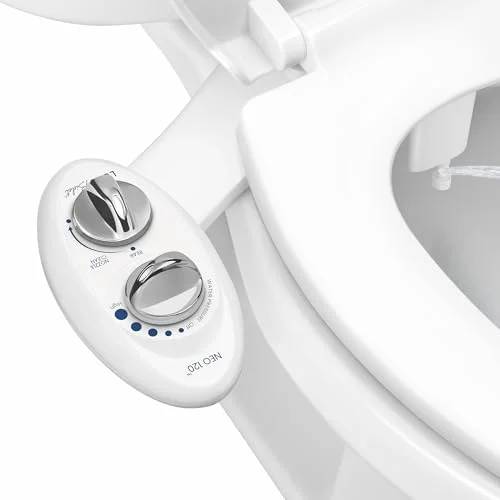
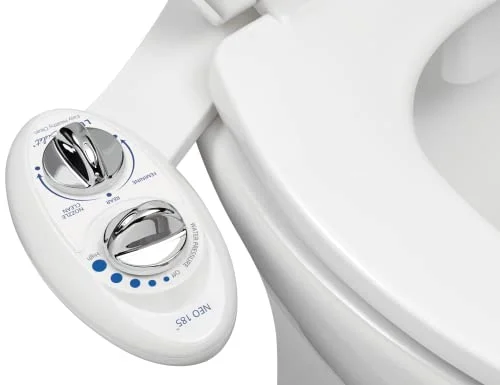
A bidet attachment is a slim plate — usually plastic with a control dial or lever on the side — that sits between your existing toilet seat and the bowl. You don't remove your seat at all; you unbolt it, lay the attachment's mounting plate across the same holes, and bolt the original seat back down on top of it. The whole footprint is maybe half an inch of extra height. Owners consistently describe the install as a 10-minute job: shut off the water, install the T-valve, drop the plate in, reconnect, done. That's how the LUXE NEO 120 and the dual-nozzle NEO 185 both keep their price under $50 — you're buying a valve and a nozzle, not a new seat.
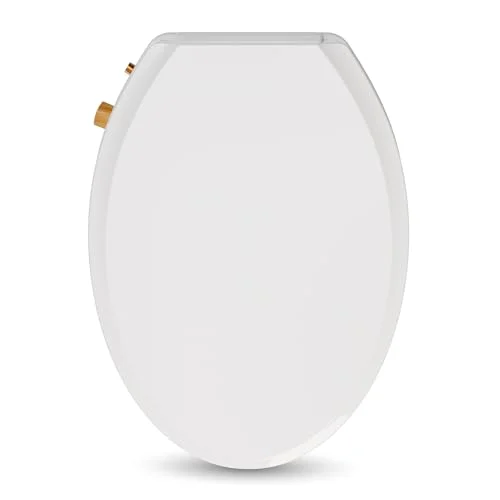
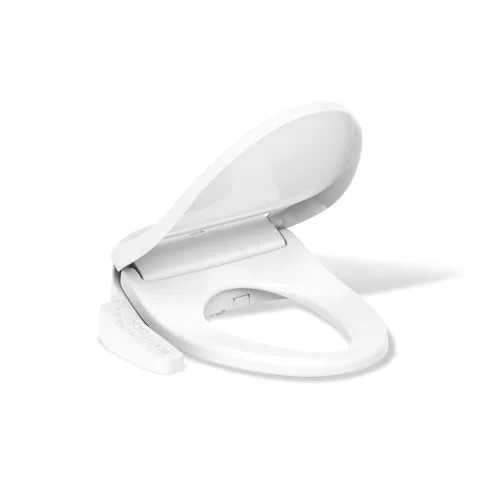
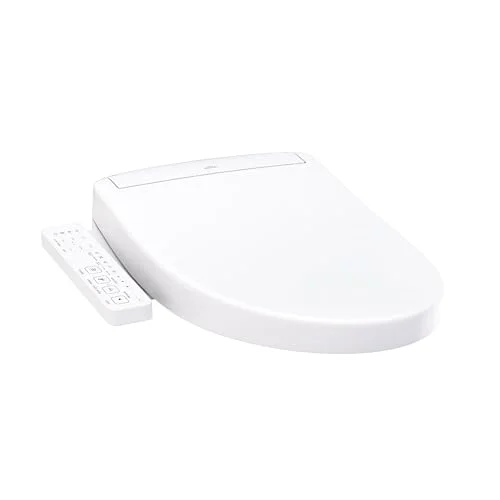
A bidet seat is a full replacement. The entire lid-and-seat assembly comes off your toilet and a new one — with the wash mechanism built directly into it — goes on in its place. Non-electric seats, like the VOVO Nature 7, still run on water pressure alone, just with the nozzle integrated rather than bolted underneath. Electric seats go further: a heater, a pump, motorized nozzle positioning, and often a warm-air dryer and remote all live inside the seat itself, which is why they need a nearby outlet. Because you're removing the old seat's mounting hardware and fitting a new bracket, owners report installs running closer to 20 to 45 minutes — more parts, more care taken to get the bracket square, and on electric models, a cord to route and plug in. Neither install needs a plumber; the difference is scope, not difficulty. Our 20-minute install guide walks the full seat process step by step if you want the specifics before you commit.
What the money buys
Price bands: $40–$150 vs $74–$420
The price gap between these two categories is real, and it maps directly onto what's inside the product — this isn't a case of the same thing marked up.
- Attachments, $40–$150. You're paying for a valve core, a retractable nozzle, and sometimes a second nozzle for a wider spray pattern — the LUXE NEO 185 ($49.99) adds a dedicated feminine-wash nozzle alongside the rear one for ten dollars more than the single-nozzle NEO 120. There's no pump, no heater, no electronics. Manufacturing cost stays low because there's almost nothing to manufacture beyond precision plastic and a couple of washers.
- Non-electric seats, roughly $74–$95. The VOVO Nature 7 ($79.00) costs about twice a basic attachment for the same cold-water-only function, because you're now buying an entire seat and lid assembly, not just a wash mechanism to bolt underneath one.
- Electric seats, $270–$500. Inside this band, price tracks features almost linearly. The Kohler PureWash E580 ($269.97) gets you a hybrid heater with continuously warm water, front and rear wash, and a self-cleaning stainless wand. The VOVO VB-6000SE ($299.00) adds a wireless remote and five levels of nozzle position on top of the same core comfort features. The TOTO WASHLET S2 ($420.00) sits at the top of what we cover here, from the manufacturer that created the category, adding PREMIST bowl-wetting and EWATER+ wand cleaning that nobody else bundles.
Put another way: for the price of one mid-range electric seat, you could buy the NEO 120 attachment nearly seven times over. That's not an argument against the seat — it's a reminder that the extra money is buying specific, nameable features, not "more bidet." If you're not sure warm water is one of them for you, our warm water guide breaks down exactly what each heating style delivers.
The catch attachments don't advertise
Warm water: why an attachment can only borrow it
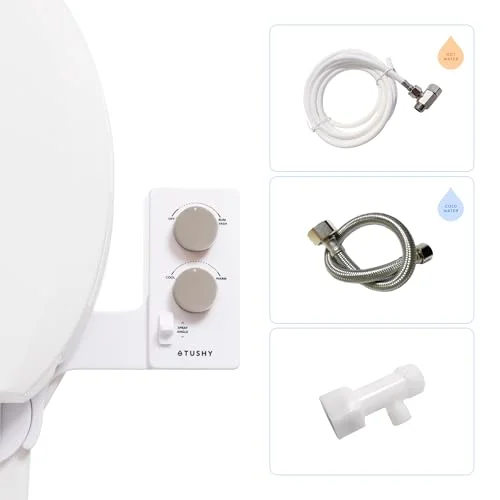
This is the single biggest functional gap between the two categories, and it's structural rather than a missing feature some attachment brand simply forgot to add. A non-electric attachment has no heater of its own. If you want anything other than cold tap water out of it, your only option is to plumb it into your sink's hot water line with a separate splitter kit and a length of tubing routed across the bathroom floor — which is exactly as inconvenient and unreliable as it sounds. Water pressure and temperature both drop by the time it travels that far, most bathrooms don't have a hot line anywhere near the toilet to begin with, and a visible hose running from the sink to the bowl is a trip hazard most households won't accept. In practice, the overwhelming majority of attachment owners run cold water only, full stop. There is one productised exception worth naming: the TUSHY Spa 3.0 ($149.00) is built around exactly this sink connection, with a proper mixing dial that runs cool through to warm. It still has to be installed beside a sink for that to work — it does not remove the constraint, it just engineers it properly instead of leaving you to improvise.
An electric bidet seat sidesteps the whole problem because it heats water on the spot, right at the seat, using either a small reservoir tank or an instant on-demand heater — no borrowed line, no hose across the floor, no dependency on your sink's plumbing layout at all. That's the trade you're actually making when you choose between the two categories: an attachment gives you the core hygiene function for a fraction of the price, but warm water is off the table in any practical sense. If warm water is the feature that would make or break the purchase for you, that alone is reason enough to skip the attachment tier and go straight to an electric seat.
Measure first
Seat height, bowl fit and the deal-breakers for small bathrooms
Fit problems are the top reason either product gets returned, and the two categories fail differently.
An attachment adds roughly half an inch to an inch of height under your existing seat, since it sandwiches between the seat and the bowl. In a normal-size bathroom that's unnoticeable. In a tight powder room where the door barely clears the toilet, or for a household with a tall user and a low toilet, that extra half-inch can be the difference between comfortable and cramped — worth test-sitting before you commit to the mounting bolts. The attachment's own footprint, meanwhile, is universal: it clamps to standard two-bolt seat mounting holes regardless of whether your bowl is round or elongated, which is part of why it's the lower-risk pick when you're not sure what you're working with.
A full seat replacement is the opposite trade: no added height, since it replaces the seat outright rather than stacking under it, but it's built for a specific bowl shape. The VOVO Nature 7 and both electric seats from Kohler and TOTO here are made for elongated bowls specifically — the shape most American toilets have used since the 1990s. Put an elongated seat on a round bowl and you'll get a visible overhang and a seat that doesn't seat properly; put a round seat on an elongated bowl and you'll get a gap at the front. Small bathrooms compound this: a seat that overhangs even slightly can catch on a nearby vanity or wall in a tight footprint where a stock seat cleared fine. Measure your bowl length and width before ordering either product — our round vs elongated fit guide shows exactly where to put the tape measure, and it takes about two minutes.
Who's actually buying
Who should buy which
The specs matter less than your actual living situation. Here's how the decision tends to shake out across the households we see most often in owner reviews.
Renters are close to an automatic attachment pick. You can't rewire a bathroom you don't own, you may not want to leave a bolted-down electric seat behind (or explain the extra hardware to a landlord), and an attachment travels with you — unbolt it, take it to the next apartment, remount it in ten minutes. The LUXE NEO 120 is specifically the kind of product renters gravitate to for this reason — cheap, reversible, and it leaves nothing behind.
Families with kids tend to land on either end depending on budget and how many bathrooms are in play. One attachment per bathroom is an affordable way to outfit a whole house; a single electric seat in the primary bathroom, reserved for adults, is the other common pattern. Either way, the added seat height from an attachment is worth checking against a smaller child's comfort on the toilet — it's minor, but noticeable to a five-year-old.
Cold-climate households are the group with the clearest case for skipping the attachment tier and going electric. As covered above, an attachment can't deliver real warm water without an impractical hose from the sink, and winter tap water in northern climates runs cold enough that owners describe the first second of a cold-water wash as genuinely jarring. If you live somewhere winters bite, the money buys comfort you'll use every single day for months at a time — that's a stronger case than in a mild climate where cold water barely registers.
Older users or anyone with mobility considerations should weight the full-seat option more heavily, for a reason that has nothing to do with warm water: a stock seat height and a stable, correctly-fitted seat matter more than a wash feature when balance or grip strength is a factor. An attachment's extra half-inch of height, and the two-layer stack of original seat plus attachment plate, is a small but real complication some older users find fiddly; a full seat replacement, chosen in the right bowl shape, sits and locks the way a standard seat always has.
Don't overthink the first purchase
The upgrade path: start with an attachment, move to a seat
If none of the categories above describes you cleanly, there's a lower-stakes path that shows up constantly in owner reviews: buy an attachment first. For $40–$50 you find out, in your own bathroom, with your own water pressure, whether a bidet is a daily habit or a novelty you forget about within a month. If it becomes the former — and for most people who try it, it does — you have a clean, informed case for the $270–$420 step up to an electric seat, plus a spare attachment you can hand down to a second bathroom or take with you if you move. The reverse path is much less common: it's rare to see an owner buy a $270 electric seat and downgrade to an attachment.
What doesn't make sense is skipping straight to the top of the electric range — a $600+ luxury seat — without ever having used any bidet at all. Reviewers who do this occasionally report the same regret: features they never end up using, on a seat they can't easily test-drive before committing. Starting at the bottom of the price range costs you almost nothing to find out what you'll actually use.