The mechanics
How each type actually works
Both types start the same way: a small T-valve splits your toilet's existing water supply line and routes some of it to a nozzle under the seat. That's the whole trick. Where they diverge is everything that happens between the valve and the water hitting the nozzle.
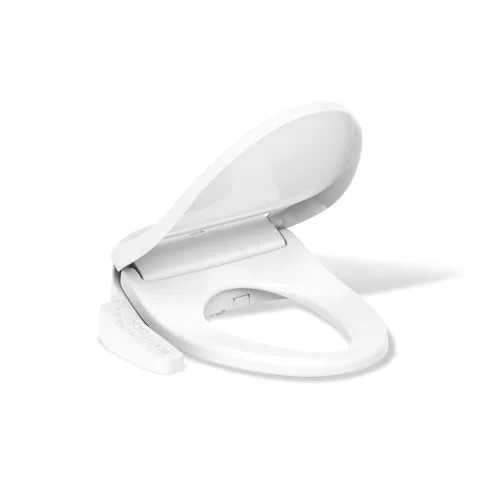
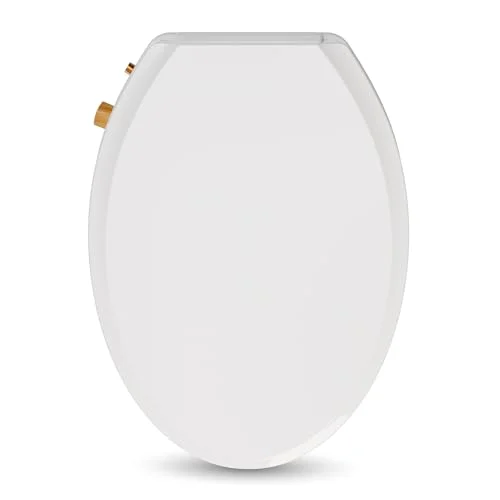
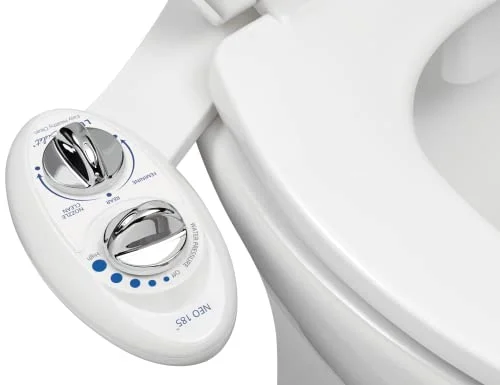
A non-electric bidet is plumbing, full stop. Turn a dial or press a lever, and household water pressure pushes cold tap water through a retractable nozzle. There is no pump, no heater, no circuit board — usually just a valve core, a couple of washers, and a nozzle that self-retracts behind a guard gate. That's why the LUXE NEO 185 attachment can cost $49.99: you're buying a well-made valve, not a machine. Non-electric options come in two forms — an attachment that clamps under your existing seat (like the NEO 185) or a full replacement seat with the sprayer built in (like the VOVO Nature 7), which looks tidier and doesn't raise your seat height the way an attachment can.
An electric bidet seat is a small appliance. It replaces your toilet seat entirely and plugs into a wall outlet, which powers a water heater, a seat heater, an electric pump for consistent pressure, position and oscillation motors for the nozzle, and often a warm-air dryer, a deodorizer, and an LED night light. The water heater is the component that matters most, and it comes in two flavors you should understand before spending a dime:
- Reservoir (tank) heating keeps a small tank of warm water ready at all times. It's cheaper to build — it is how most sub-$200 electric seats hit their price — but the tank holds roughly 30–45 seconds of warm water. Wash longer, or follow another family member too quickly, and it runs lukewarm, then cold.
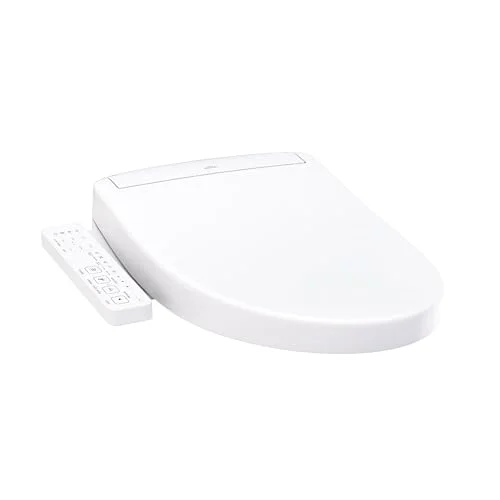
- Instant (tankless) heating heats water on demand as it flows, so warm water never runs out. It costs more to build, which is why it is the marquee feature on the TOTO WASHLET S2 ($420.00), whose instantaneous heater never runs out. The Kohler PureWash E580 ($269.97) uses a hybrid system that pairs a small tank with on-demand heating for the best of both.
If you remember one spec from this article, make it that one. Reviewers consistently note that the reservoir-vs-instant distinction — not brand, not button count — is what separates the electric seats people love from the ones they merely tolerate. In a one-person household a reservoir is fine. For two or more people, or anyone who likes a longer wash, instant heating is worth the premium.
The comfort gap
Warm water and a heated seat vs. beautiful simplicity
Here's the uncomfortable truth about non-electric bidets that the $30 price tag doesn't advertise: the water is exactly as cold as your cold tap. In Phoenix in July, that's genuinely pleasant. In Minneapolis in January, your supply line can run in the low 40s Fahrenheit, and owners describe the first second of a winter wash with words like "bracing," "a shock," and "my spouse refuses to use it until April." Some people adapt within a week and stop noticing. Some never do. You know your own tolerance — and your own climate — better than any reviewer does.
Electric seats erase that problem and then keep going. The heated seat, which sounds like a gimmick until the first cold morning, is the feature owners mention almost as often as warm water. Then come the extras: adjustable pressure and temperature from a remote, an oscillating or pulsing wash, a warm-air dryer that lets you cut toilet paper use dramatically, and on nicer models a night light and automatic deodorizer. On the WASHLET S2, a stainless-steel wand replaces the usual plastic one and cleans itself with electrolyzed water before and after every use — the most thorough self-cleaning implementation in the category.
The simplicity argument cuts the other way, though, and it's not just about money. A non-electric bidet has no standby electronics to fail, no remote to lose, no error codes, and no cold-boot moment when the power goes out. It never becomes obsolete. The VOVO Nature 7 does exactly one thing, with a manual dial, a soft-close lid and no electronics whatsoever — there is simply nothing in it to fail. For a guest bathroom, a rental, or a household that just wants clean without ceremony, that's not a consolation prize. That's the point. If you're still weighing whether any of this is worth it, our are bidet seats worth it? breakdown runs the full cost-benefit math.
The dealbreaker
The outlet question decides more than anything else
Before you fall in love with any electric seat, turn around and look at the wall next to your toilet. An electric bidet needs a grounded outlet — ideally a GFCI outlet, the kind with the little test/reset buttons that code requires in bathrooms — within reach of a power cord that typically runs about 3.5 to 4 feet. In most American bathrooms built or renovated since the 1990s, there's one behind or beside the toilet. In older homes, condos, and many apartments, the only outlet is across the room by the sink.
You have four options if you're outlet-less, in descending order of appeal:
- Hire an electrician to add a GFCI outlet. Typically $150–$350 depending on your market and how far the nearest circuit is. If you own your home and plan to stay, this is the correct answer — you're adding permanent value and opening the door to any electric seat forever.
- Buy non-electric and never think about it again. The zero-drama answer, and for renters usually the only realistic one.
- Run a cord cover along the baseboard from the sink outlet. Functional but ugly, and a tripping/moisture consideration in a small bathroom.
- An extension cord. Don't. Manufacturers explicitly prohibit it, it can void the warranty, and a cheap cord in a wet room is exactly the scenario GFCI protection exists to prevent.
One more electrical note: electric seats draw serious wattage in brief bursts — instant heaters can pull 1,200–1,400 watts while spraying, about what a hair dryer draws. Any modern 15-amp bathroom circuit handles this fine, but if your bathroom shares a breaker with someone's daily blow-dry, you may occasionally learn about it.
Getting it in
Installation: both are DIY, one is just heavier
Good news that surprises most first-time buyers: neither type needs a plumber. Both installs follow the same five steps — shut off the water at the supply valve, flush to empty the tank, install the included T-valve on the fill line, mount the seat or attachment, reconnect and check for leaks. The included parts are hand-tightened; the most technical tool involved is usually a flathead screwdriver for the old seat's bolts.
The differences are practical rather than technical. A non-electric attachment like the NEO 185 installs in about 20 minutes and weighs almost nothing — you unbolt your existing seat, lay the attachment plate across the mounting holes, and bolt the seat back down over it. An electric seat takes more like 30–45 minutes: you remove the old seat entirely, screw down a mounting bracket, slide the 10–12 pound seat onto the bracket until it clicks, connect the water, and plug in. The one extra consideration for electric models is fit — they're made for specific bowl shapes, and a round-bowl seat on an elongated toilet leaves an unsightly gap. Measure before you order; our round vs elongated fit guide shows exactly where to put the tape measure, and our step-by-step installation guide walks the whole process with pictures.
The DIY claim holds across the category: manufacturers spec these as hand-tool installs, and none of the seats here require cutting, soldering or a plumber. The most common install complaint for any model, electric or not, is a slow drip at the T-valve — solved in nearly every reported case by a wrap of plumber's tape and a quarter-turn more.
The meter is running
What each type costs to own
A non-electric bidet's running cost is a rounding error: a few extra gallons of water per week, worth pennies. Its real economic argument is what it saves — households consistently report cutting toilet paper use by half or more, which for a family of four can mean $100+ a year. A $30 attachment can genuinely pay for itself in a few months.
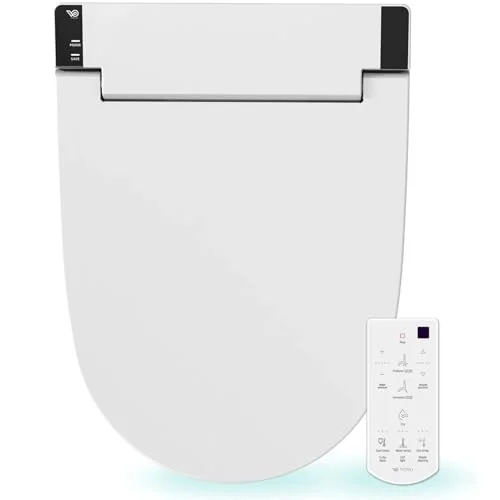
Electric seats add an electric bill line, but a smaller one than the wattage numbers suggest. The heaters only draw big power in short bursts; the meaningful cost is standby — keeping the seat (and, on reservoir models, the water tank) warm around the clock. Depending on your settings, climate, and local rates, expect roughly $15–$40 a year in electricity. Reservoir models are, counterintuitively, often the more expensive to run: they keep a tank hot 24/7, while instant models heat only on demand. Most electric seats offer an eco mode that lets the seat cool between uses and claws back a chunk of that standby cost — the VOVO VB-6000SE's automatic power-save mode is a good example.
Total it up over five years and the honest math looks like this: a NEO 185 costs about $50, period. A PureWash E580 costs roughly $270 plus perhaps $125 in electricity — call it $395, minus the same toilet paper savings. The comfort premium for warm water, five years running, works out to under $6 a month. Whether that's trivial or extravagant is a personality question, not a math one.
The long haul
Durability, and how each type eventually fails
Everything mechanical fails eventually; what matters is how, and how much it costs when it does. The two categories fail very differently.
Non-electric failure modes are cheap and boring. The valve core wears and gets stiff or drippy after a few years; a washer flattens and seeps; on bargain models, a plastic T-adapter can crack if overtightened during install (this, not long-term wear, is behind most of the leak reports you'll read — LUXE's metal-ceramic valve cores and braided steel hoses exist precisely to prevent it). When a $50 attachment fails at year four, you spend $50 and twenty minutes. There's no repair decision to agonize over.
Electric failure modes are the appliance kind. In rough order of frequency across owner reviews: remote batteries and pairing quirks (trivial), seat-occupancy sensors getting finicky (annoying — the seat won't spray if it doesn't believe you're sitting on it), heating elements weakening after years of service, and, rarely, a control board giving up. A well-treated electric seat typically delivers 5–8 years. This is the strongest argument for buying from Kohler, TOTO or VOVO rather than an unbranded reseller: when a wand or a control board does eventually fail, a manufacturer with a parts channel is the difference between a repair and a replacement. Warranties tell you what manufacturers expect: non-electric models usually carry a year, better electric models one to three, sometimes extendable.
Two habits meaningfully extend an electric seat's life: clean the nozzle with the built-in self-clean cycle rather than abrasives, and if your water is very hard, consider the supply-line filter most manufacturers sell for a few dollars — scale is the quiet killer of water heaters everywhere, and a bidet seat is no exception.