Disclosure: This article contains affiliate links. If you buy through them, we may earn a commission at no extra cost to you. We compare published specs, live pricing and verified Amazon buyer reviews — we do not physically test products, and we never invent scores.
Here's the short version: for most American households, yes — a bidet seat is worth it, and the case gets stronger the cheaper the entry point gets. A $50 attachment pays for itself in reduced toilet paper within months for many families. A $270 electric seat is more of a comfort purchase that happens to save money on the side. A $420 premium seat is a comfort purchase, full stop — and owners still rarely regret it.
But "worth it" depends entirely on which tier you're shopping, whether you have an outlet near the toilet, and what you're actually buying it for. So let's take the question seriously instead of hand-waving. We'll walk through the hygiene argument, run the savings math with real prices and stated assumptions, weigh the comfort upgrades, and — because most bidet articles read like ads — spend real time on the downsides. Then a verdict for each budget tier, with the specific model we'd point you to at each price.
One thing to know up front: we don't run a testing lab and we won't pretend to. Everything here is built from published specifications, current Amazon pricing, and thousands of verified buyer ratings — including the critical ones, which is where the honest trade-offs live.
The hygiene case: water versus dry paper
Strip away the novelty and a bidet seat is making one simple claim: washing with water cleans better than wiping with dry paper. You don't need a medical degree to evaluate that claim — you just need to think about literally any other cleaning task in your life. If you got something on your hands, you wouldn't consider the job done after rubbing them with a dry paper towel. You'd wash them.
That's the whole argument, and it's why bidets are the default in Japan, common across Europe and the Middle East, and steadily going mainstream in the US. Dry paper smears and abrades; water rinses. Owners describe the difference in blunt terms — "I feel actually clean now" is the sentiment that comes up again and again once people switch.
There's also a gentleness angle. Repeated wiping with dry paper is friction, plain and simple, and plenty of people find it irritating — especially anyone dealing with sensitive skin. Publications that cover this category consistently note that a stream of water is simply less abrasive than rubbing. We're not making any medical claims here, and if you have a health condition, that's a conversation for your doctor — but as a matter of everyday common sense, "rinse instead of scrub" is not a hard sell.
Worth flagging honestly: the hygiene benefit is the one part of the pitch that every tier delivers, from the $50 attachment to the $420 throne. Cold water cleans just as well as warm. What you pay for above the entry tier is comfort, not cleanliness.
The toilet paper math, with real numbers
Let's do the math out loud, with the assumptions visible so you can swap in your own numbers.
Say your household spends about $15 a month on toilet paper — a reasonable middle figure for a two-to-three-person American household buying mid-range rolls; bigger families and premium-brand buyers spend more. That's $180 a year.
A bidet doesn't eliminate toilet paper — most people still pat dry unless they have a seat with an air dryer. But owners routinely report cutting their usage by well over half once the bidet becomes habit, since paper shifts from doing the cleaning to just drying. To keep the math conservative, let's assume you only cut usage in half: that's $90 a year saved. If your household lands closer to the 75% reduction many owners describe, it's $135 a year.
Now run the payback clock against real 2026 prices:
| Tier | Example (current price) | Payback at $90/yr saved | Payback at $135/yr saved |
|---|---|---|---|
| $50 — Attachment | LUXE Bidet NEO 185, $49.99 | ~6 months | ~4 months |
| $74 — Non-electric seat | VOVO Nature 7, $79.00 | ~10 months | ~7 months |
| $270 — Electric seat | Kohler PureWash E580, $269.97 | ~3 years | ~2.5 years |
| $420+ — Premium seat | TOTO WASHLET S2, $420.00 | ~4.5+ years | ~3.5 years |
Two honest footnotes on that table. First, electric seats use electricity — the seat warmer and water heater add a modest amount to your bill, which owners generally describe as small at typical US rates, and most models include an eco mode that trims it further. It stretches the payback on the electric tiers a bit; it doesn't change the story. Second, a household of four or five with heavy paper habits will compress every one of those timelines dramatically — families are where the savings case gets genuinely compelling.
The takeaway is refreshingly clean: the $50 tier is a straightforward money-saver that pays for itself inside a couple of semesters. The $74 tier pays back in about ten months. The electric tiers eventually pay for themselves, but nobody should buy a $270 seat as an investment vehicle — you buy it for the next section, and the savings quietly cover the cost over a couple of years.
Comfort: the reason people say "I can't go back"
Read enough verified reviews in this category and a pattern emerges that has nothing to do with hygiene or savings. The phrase that keeps surfacing — on cheap units and expensive ones alike — is some variation of "I can't use a normal toilet anymore." Owners talk about bidet seats the way people talk about heated car seats or smartphones: an upgrade that was invisible until they had it, and unthinkable to give up afterward.
Three features drive that, and they're all exclusive to the electric tiers:
- The heated seat. Consistently the sleeper hit in owner reviews. It sounds like a gimmick until the first cold morning of winter, after which — per review after review — it becomes the feature people mention first. If you live anywhere with real winters, this alone moves people from the $50 tier to the $270 tier.
- Warm water. Cold-water bidets clean fine, but warm water is what turns the wash from "bracing" into something people describe as genuinely pleasant. It's the difference between a feature you tolerate and one you look forward to. If this is the upgrade you care about, our heated seats and warm water guide goes deep on tank versus tankless heating — the spec that decides whether your warm water lasts 30 seconds or forever.
- The remote and presets. Wireless remotes with user presets (position, pressure, temperature per person) sound like luxury excess and are, per owners, quietly wonderful. Side-panel controls work; remotes get used.
The theme that repeats across owner reviews: It's the cheapest thing I've done that made my house feel expensive." — a sentiment that appears, in various forms, throughout verified reviews of mid-range electric seats
None of this is necessary. All of it is why the electric tier exists, and why the people who buy it almost never trade back down.
The environmental math is quieter than advertised — but real
Bidet marketing sometimes oversells this, so let's keep it conservative. Toilet paper is a manufactured product with a real footprint: it takes wood pulp, energy, and — the part most people find surprising — a substantial amount of water to produce. Commonly cited estimates put the water cost of manufacturing a single roll at dozens of gallons once pulping and processing are counted. A bidet wash, by contrast, uses a small fraction of a gallon per use straight from your supply line.
So the counterintuitive-sounding claim — that spraying water saves water — holds up directionally, because the water embedded in paper manufacturing dwarfs what the nozzle sprays. Add the trees, the packaging, and the shipping of a bulky product you buy year-round, and cutting household toilet paper use by half or more is a genuine, if modest, environmental win.
We'd frame it this way: don't buy a bidet seat to save the planet. Buy it for the hygiene and comfort, and take the smaller footprint as a bonus that compounds every year you own it.
The people for whom "worth it" isn't even a question
For some households the calculus isn't marginal at all. Without wading into medical territory — we're a research site, not doctors — these are the situations most commonly cited by owners and by publications covering the category as the moments a bidet went from "nice" to "essential":
- Hemorrhoid and sensitive-skin sufferers. The most common recurring theme in reviews: people who find wiping painful describe warm-water washing as a dramatic quality-of-life change. Frequently mentioned; not medical advice — talk to your doctor about your situation.
- Limited mobility and older adults. Reaching and twisting to wipe is genuinely difficult for many people — after surgery, with arthritis, or simply with age. A wash-and-dry cycle at the press of a button restores independence, which is why adult children buying seats for parents is one of the most common purchase stories in this category.
- Postpartum recovery. New mothers frequently describe a gentle warm-water wash as far more comfortable than wiping in the weeks after childbirth — one of the most commonly cited reasons for a bidet purchase in reviews, and often the purchase that converts the whole household.
- Big families. Purely economic: more people means faster payback on any tier, and the end of the "we're out of toilet paper again" grocery-run cycle.
If your household includes anyone in those first three groups, skip the deliberation. Even the $50 tier is transformative, and the electric tiers are the rare product where "luxury" and "accessibility aid" are the same object.
The downsides, told straight
Every category has trade-offs, and bidet seats have five recurring ones. Here's what the one-star reviews actually complain about:
1. Electric seats need an outlet — and your bathroom probably doesn't have one in the right place
This is the single biggest practical blocker in the category. Electric seats need a GFCI outlet within cord's reach of the toilet, and a large share of US bathrooms — especially pre-1990s builds — don't have one there. Your options: hire an electrician to add one (a real cost that changes the math), run a properly rated extension solution (owners do it; electricians wince), or go non-electric. Check for the outlet before you fall in love with a $270 seat. Our electric versus non-electric comparison walks the whole decision.
2. Cold water on the cheap tiers
The $50–$95 non-electric units spray water at whatever temperature your cold line runs — refreshing in an Arizona summer, genuinely startling in a Minnesota January. Owners adapt (many say they stopped noticing within weeks), but this is the most common complaint on budget units, and it's why the electric tier exists. Some non-electric models — the TUSHY Spa 3.0 is the productised version — offer a warm-water hookup to the sink line, but the unit has to sit beside a sink and each use starts with a wait while warm water travels the line.
3. There's a learning curve, and the first week is undignified
Nobody talks about this, so we will: your first few uses involve a startle, some experimenting with pressure settings, and at least one moment of aiming confusion. Reviews are full of funny first-day stories. It passes in days, and pressure controls on even the cheapest units make it manageable — but expect a short adjustment period rather than instant mastery.
4. Guests will be confused
An attachment with a visible dial mostly explains itself. A full electric seat with a remote does not, and owners regularly mention houseguests either fascinated or too polite to ask. A sticky note or a 10-second tour solves it. Whether you find this a bug or a conversation piece is a matter of temperament.
5. Fit and installation gotchas
Installation itself is genuinely easy — 20 to 40 minutes DIY with an included T-valve, no plumber, per thousands of owner reports; our step-by-step install guide covers it. The real trap is fit: round versus elongated bowls, one-piece toilets with skirted or French-curve tanks, and tight mounting-bolt access can each turn an easy job into a return. Measure first — our fit guide takes five minutes and prevents the single most common cause of one-star reviews.
Worth it? A verdict for each budget
Pulling it all together — hygiene delivered at every tier, savings strongest at the bottom, comfort strongest at the top — here's our honest call at each price point, with the model that best represents it. We publish rating figures only where we hold verified per-product data, and we do not for these picks — so you will find specs and prices here, not invented stars. Prices move, so confirm before purchase.
LUXE Bidet NEO 185
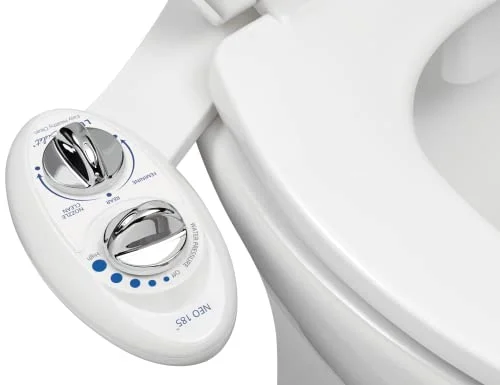
Pays for itself in roughly half a year, delivers the full hygiene benefit, and installs in about twenty minutes with no outlet needed. Two nozzles — a stronger rear wash and a softer front wash — retract behind a guard gate, and LUXE specifies metal-ceramic valve cores and braided steel hoses rather than the all-plastic fittings that define the cheapest tier. The only real costs are cold water and a manual dial. If you are bidet-curious, there is no cheaper way to find out.
VOVO Nature 7
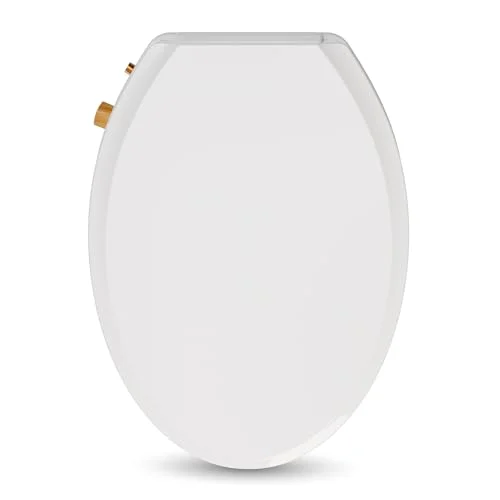
A full replacement seat rather than a clamp-on: the wash is built in, so there is no added height, no gap and no wobble, plus a quiet soft-close lid. Payback lands under a year. The honest question at this tier is whether you should stretch to electric instead — if you have an outlet, we would usually say yes; if you do not, this is the ceiling of the no-outlet world and a comfortable one. More options in our under-$100 roundup.
Kohler PureWash E580
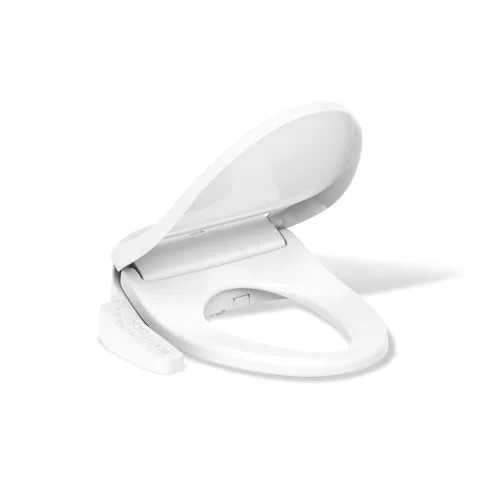
This is where the comfort features land — a hybrid heater giving continuously warm water, front and rear wash, an oscillating and turbo spray, and a self-cleaning stainless wand — from a plumbing brand that stocks parts. The savings math still works, with payback around three years, but that is not why you buy it. You buy it because this is the tier where a bidet stops being merely useful. If you have the outlet and the budget, this is the "worth it" answer for the typical American household.
TOTO WASHLET S2
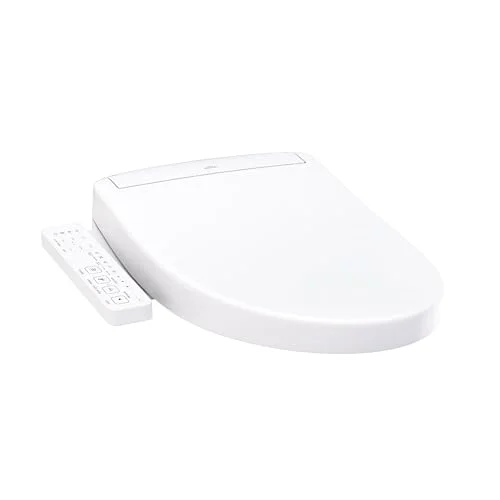
At $420 the payback clock stretches past four years — so stop thinking of it as an investment and start thinking of it as the best seat in the house. What the premium buys: instantaneous heating that never runs cold, a heated SoftClose seat, an adjustable warm-air dryer, an air deodorizer, a nightlight, and two things nobody else bundles — PREMIST, which wets the bowl before each use, and EWATER+, which cleans the wand with electrolyzed water. Nobody needs it. TOTO invented this category, and it shows.
The bottom line
Are bidet seats worth it? At $50: unambiguously — it's one of the rare purchases that's simultaneously a hygiene upgrade, a money-saver, and a low-stakes experiment. At $74: yes, if an outlet isn't in the cards. At $270: yes for most households — this is the tier where the product stops being a gadget and starts being the thing owners refuse to live without. At $420-plus: worth it the way a great mattress is worth it — not on a spreadsheet, but every single day.
The most telling pattern in the entire category isn't a spec. It's how rarely anyone goes back: across every tier, from the cheapest attachment to the most expensive flagship, the common story is people adding a second one for the other bathroom rather than removing the first. Start with our full guide to the best bidet seats of 2026 when you're ready to pick.
Common questions
Do bidet seats really save money on toilet paper?
Yes, with honest caveats. Most owners still use some paper for drying, but commonly report cutting usage by half to three-quarters. For a household spending around $15 a month on toilet paper, that's roughly $90–$135 a year saved — so a $50 attachment pays for itself in months, a $74 seat in about ten months, and a $270 electric seat in about three years. Electric models add a small amount to the power bill.
Do I need an electrician or a plumber to install one?
Usually neither. All the seats here install DIY in 20–40 minutes with an included T-valve on the existing water line. The catch is electric models need a GFCI outlet within reach of the toilet — if your bathroom doesn't have one, adding it is an electrician job, or you can choose a non-electric model that needs no power at all.
Is a bidet seat hygienic to share with family or guests?
Quality seats are designed for shared use: nozzles retract behind a guard when not in use, rinse themselves before and after each wash, and on many electric models are stainless steel or self-sanitizing. The wash water comes straight from your clean supply line — the same water as your sink tap — not from the bowl.
Is warm water worth paying extra for?
If you'll use the bidet daily, most owners say yes — warm water and the heated seat are the features people describe as turning a utility into a comfort. If you're just testing the concept, start with a $50 cold-water attachment; you can always upgrade once you're converted, and most people are.
Where to go next
Electric vs non-electric →
The outlet question, the warm-water question, and which side of the $150 line you belong on.
How to install a bidet seat →
The 30-minute, no-plumber install, step by step — T-valve, water line, and the mistakes to skip.
Round vs elongated fit guide →
Five minutes with a tape measure that prevents the most common cause of returns.