Best Bidet Seats
The 2026 Guide · Comfort Features

Heated seats and warm water: what's actually worth paying for.

The gap between an $89 bidet seat and a $489 one is almost entirely heat — in the water, in the seat, in the air. Here's how the three heater systems really differ, what they cost to run, and who can skip the whole thing.

By Ilane TallUpdated August 11, 2026Research-based — no testing lab, no invented scores

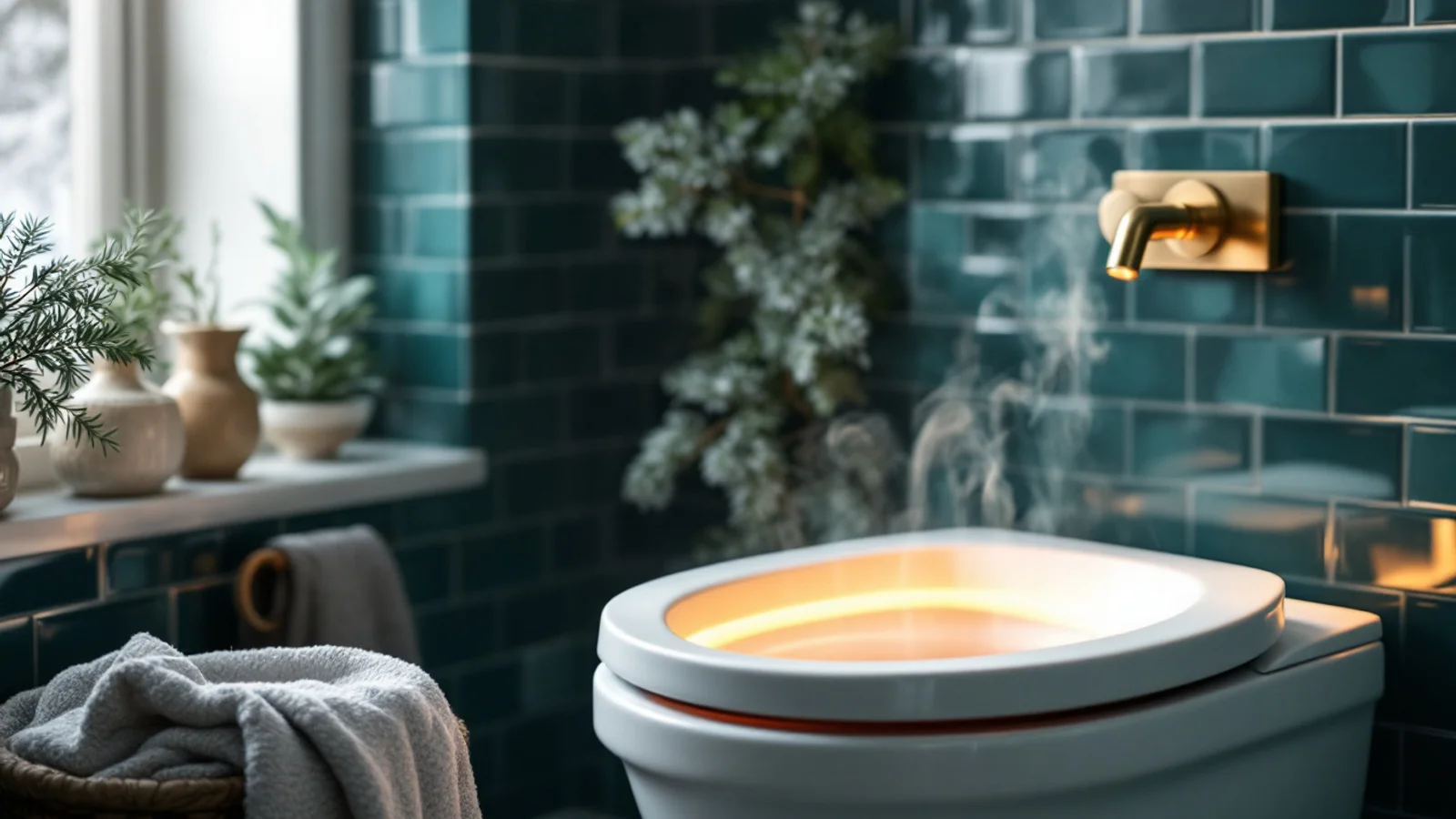
Warm cozy bathroom with a heated bidet seat and soft brass light on teal tiles

Walk the bidet seat aisle on Amazon and the price ladder makes no sense at first glance. A perfectly good non-electric seat costs $89. A seat that looks nearly identical costs $489. Same plastic, same bowl shape, same nozzle-in-the-middle idea. What are you paying five times more for?

Heat. Almost all of it is heat. Warm water instead of a cold-water jolt, a seat that's warm on a January morning, and — on the premium models — a warm-air dryer at the end. Once you understand how each of those systems works, the price ladder snaps into focus, and so does the honest answer to the question this guide exists for: which of these comfort features are worth your money, and which can you skip?

We'll say this plainly up front, because it shapes everything below: we don't run a fake testing lab. We haven't wired five seats into a plumbing rig with thermocouples. What we do is compare published specs, live prices, and thousands of verified Amazon buyer reviews — especially the critical ones, because that's where owners tell you which features they actually use a year in, and which ones turned out to be brochure filler.

Disclosure: Best Bidet Seats is reader-supported. If you buy through links on this page we may earn a commission from Amazon, at no additional cost to you. Ratings shown come from verified Amazon buyers; we never invent scores.

The core decision

The three water-heater types, decoded

Every warm-water bidet seat uses one of three heating systems. This single spec predicts your daily experience better than any other line on the box.

01

Reservoir (tank)

A small insulated tank keeps water warm and ready. You get roughly 30 seconds of properly warm water, then it slides to lukewarm as the tank drains. Cheapest to build — it's what you'll find in most seats under $200.

02

Instant (tankless)

A ceramic heating element warms water on demand as it flows. No tank means no limit: the wash stays warm for as long as you want, and there's less bulk at the back of the seat. This is the system the premium tier is built around.

03

Hybrid

A small tank for the first instant-warm second, backed by an on-demand element that keeps it warm indefinitely. Best of both — immediate warmth and no fade — at a price between the two.

Why the reservoir's "30 seconds" matters more than it sounds

Thirty seconds of warm water sounds like plenty — and for one quick wash, it usually is. The catch shows up in two situations owners describe over and over in reviews. First, longer washes: if you like a thorough rinse, the water goes from pleasant to pointedly lukewarm right in the middle of it. Second, back-to-back use: the tank needs several minutes to reheat, so the second person in the bathroom queue gets a distinctly cooler experience than the first. In a one-person household neither problem may ever bother you. In a family of four on a school morning, it's the difference between a feature and a complaint.

Reservoir seats also carry a quieter cost: the tank sips electricity around the clock to keep its water warm, even at 3 a.m. when nobody's home. It's not a big number — we'll do the math below — but tankless systems only draw meaningful power while you're actually washing.

What instant heating buys you

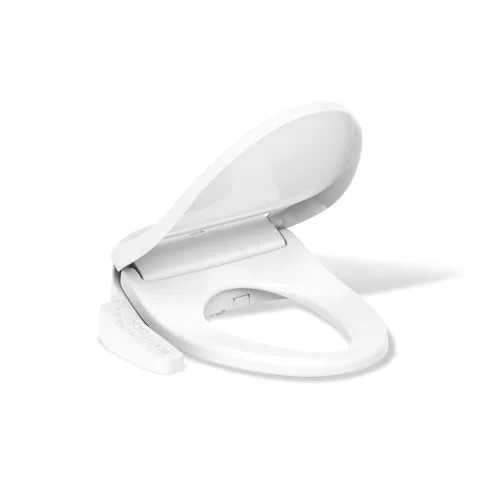
Endless warm water is the headline, but reviewers mention two side benefits almost as often. The seat itself is slimmer, because there's no tank humped up at the back — which is part of why low-profile designs like the ALPHA UX Pearl can look like a fixture instead of an appliance. And the temperature holds steady from the first second to the last, so you can set it once and forget the controls exist. If two or more people will use the seat daily, the step up to instant heating is the single most defensible upgrade in this category.

Where hybrid fits

Pure tankless systems have one small quirk: some take a beat to come up to temperature, so the first second of a wash can be cooler than the rest. Hybrid systems — like the one in the Bio Bidet BB2000 — solve this by keeping a small buffer of warm water ready, then switching to on-demand heating to sustain it. Owners of the BB2000 specifically praise that the wash "doesn't run cold," which is exactly what the design promises. You pay for the extra engineering, but at the premium end it's the most complete answer to the warm-water question.
The sleeper favorite

The heated seat: the feature owners rank first in winter

Here's a pattern we kept finding in reviews, and it surprised us: ask owners in July what they love and they talk about the wash. Ask them in January and the answer changes — it's the heated seat. "I bought it for the bidet, I kept it for the warm seat" is close to a genre of its own in the review sections of every electric model on this page. A cold toilet seat at 6 a.m. is a small misery you've simply stopped noticing; a warm one recalibrates what you expect from a bathroom.

Most electric seats offer three or four temperature levels, typically spanning roughly 86°F to 104°F (30–40°C) depending on the model. In practice, reviewers describe settling on a low or middle setting: the point isn't to feel heat, it's to never feel cold. Nearly every modern seat also includes an energy-saver mode that lowers the seat temperature during hours you don't use it, which matters for the running-cost math below.

One honest caveat from the critical reviews: heated seats are heated plastic seats. If you're used to the solidity of a wood or enameled seat, electric bidet seats — at every price — feel lighter and slightly more flexible underfoot. Owners overwhelmingly consider it a fair trade, but it's the most common "wish I'd known" note we found.

Managing expectations

The warm-air dryer: nice, but keep the paper nearby

Premium seats add a warm-air dryer, and it's the feature with the biggest gap between the marketing and the owner reports. The pitch is a paper-free bathroom. The reality, according to a large share of verified reviews across brands: the dryer is a gentle, warm breeze, and getting fully dry with air alone takes a few minutes of sitting patiently. Most owners report using the dryer to finish the job after a small amount of paper, not to replace paper entirely.

That's still worth something. Households report using dramatically less toilet paper after installing any bidet seat — the wash does the real work — and the dryer turns the last step from several sheets into one or two. For people with limited mobility or arthritis, reviewers describe the dryer as genuinely important rather than a luxury, since it reduces reaching and twisting. But if the dryer is the main reason you're considering a $450 seat over a $240 one, we'd redirect that money toward instant water heating, which owners value far more consistently.

"The dryer is pleasant, but nobody sits there for three minutes. You use a little paper and let the breeze do the rest." — the consensus across critical reviews, paraphrased

The electric bill question

What does a heated seat cost to run?

Back-of-envelope estimate

Around a dollar or two a month

Here's conservative, clearly-generic math — an estimate, not a measurement. Suppose the seat's heating element averages the equivalent of 50 watts for four hours a day of maintained warmth (a deliberately generous assumption once energy-saver modes are on). That's 0.2 kWh per day, or about 6 kWh per month. At a typical US residential rate of roughly $0.17 per kWh, you'd be paying about $1 per month. Double every assumption — a cold bathroom, high seat setting, no eco mode — and you're still near $2–3 per month.

Reservoir water heaters add always-on standby draw and instant heaters add brief high-draw bursts during washes, so real-world totals vary by model and habits. But the order of magnitude holds: this is night-light territory, not space-heater territory.

Estimate only. Your usage, seat settings, insulation and local electricity rate will move the number. We have not metered these devices.

The practical requirement

The outlet matters more than the bill

The real electrical question isn't cost — it's whether you have a GFCI outlet within reach of the toilet. Every warm-water seat on this page needs one. If your bathroom doesn't have an outlet near the toilet, adding one typically means an electrician visit, and that (not the seat's power draw) is the hidden cost to budget for. No outlet and no appetite for wiring? That's exactly the case for a non-electric seat — cold water, zero watts, and an install measured in minutes. Our installation guide walks through both paths.

Applied to our picks

Which of our picks has which heating system

The same five seats from our main guide, sorted by how they answer the warmth question. Prices move on Amazon — confirm before buying.

ModelWater heatingHeated seatPriceOwner rating
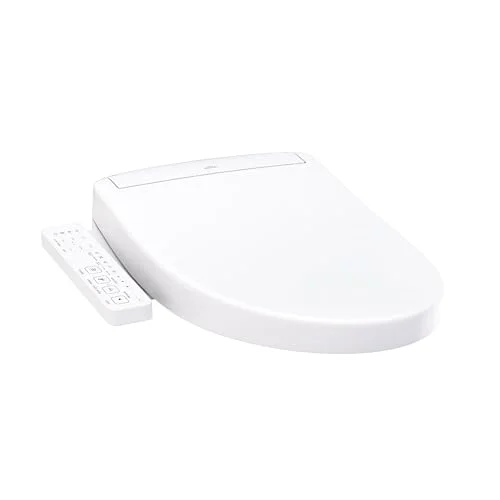
LEIVI ElectricInstant (tankless)Yes$239.98★★★★½ 1,430Price
Bio Bidet BB2000HybridYes$489.00★★★★½ 3,500Price
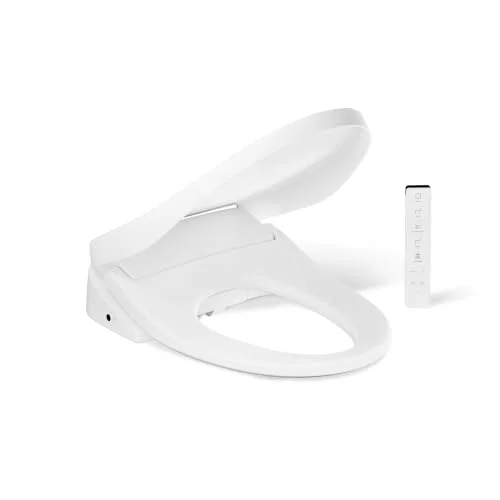
ALPHA UX PearlInstant (tankless)Yes$449.00★★★★½ 639Price
Heated LED SeatReservoir (tank)Yes$169.99★★★★½ 565Price
Brondell EcoseatNone (non-electric)No$89.63★★★★☆ 10,541Price
LEIVI Electric Bidet Seat

LEIVI Electric Bidet Seat

Instant heating at a reservoir price — the warmth sweet spot
★★★★½ 4.5 · 1,430 ratings

This is why the LEIVI is our overall pick: instant warm water plus a heated seat and a wireless remote at $240, when instant heating traditionally started around $400. Owners confirm the wash stays warm through long use, and "30 minutes, no plumber" remains the recurring install verdict. If this guide convinces you that tankless is the feature worth paying for, this is the cheapest credible way to get it.

$240
Instant · remoteCheck price →
Bio Bidet BB2000 Bliss

Bio Bidet BB2000 Bliss

Hybrid heating — instant warmth that never fades
★★★★½ 4.5 · 3,500 ratings

The endurance pick, and the most complete heating system here: a hybrid design that's warm from the first second and stays warm indefinitely. With 3,500 verified ratings — the deepest review history of any premium seat we track — the pattern is consistent: strong pressure, steady temperature, and years of daily service. For a busy family bathroom in a cold climate, this is the no-compromise answer.

$489
Hybrid · premiumCheck price →
ALPHA BIDET UX Pearl

ALPHA BIDET UX Pearl

Instant heating in the quietest, lowest-profile package
★★★★½ 4.5 · 639 ratings

Tankless heating is part of why the UX Pearl can be this slim — no reservoir hump, just a low, tailored profile owners say looks like a fixture rather than a gadget. Reviews single out how quiet it runs and how steady the warm water holds. If you want endless warm water and the bathroom's appearance is part of the purchase, this is the design-forward way to get both.

$449
Instant · low-profileCheck price →
Heated Bidet Seat with LED Display

Heated Bidet Seat, LED Display

The cheapest way into warm water — with the reservoir trade-off
★★★★½ 4.4 · 565 ratings

At $170, this is the least expensive warm-water seat we recommend, and it's honest about how it gets there: a reservoir heater. You get real warm water and a heated seat for winter mornings; you also get the ~30-second warm window and the reheat wait between users described above. For one person, or a guest bathroom, owners report that trade rarely stings. For a shared daily bathroom, spend the extra $70 on the LEIVI.

$170
Reservoir · LEDCheck price →
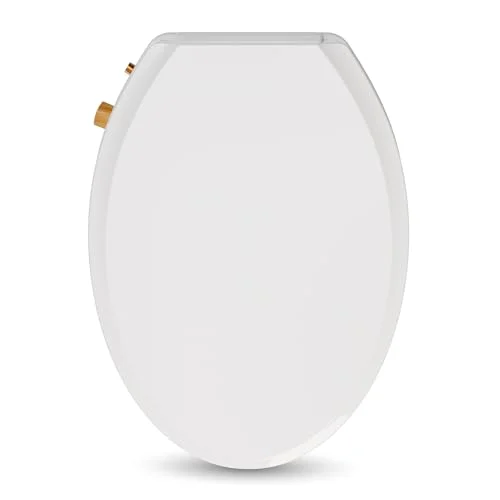
Brondell Swash Ecoseat

Brondell Swash Ecoseat

The contrast pick: no electricity, no warm water — on purpose
★★★★☆ 4.3 · 10,541 ratings

Every claim in this guide about what heat is worth has a control group, and this is it: a well-made non-electric seat with over 10,500 verified ratings and no heater of any kind. The wash is ambient-temperature — genuinely cold in winter in northern states, barely noticeable in summer or in the Sun Belt. If the running theme of those 10,541 reviews is any guide, plenty of people find that perfectly fine.

$90
Non-electricCheck price →
The contrarian case

Who can skip warm water entirely

Warm water is the feature this site is largely built around, so take it seriously when we say: a real minority of buyers shouldn't pay for it. You're a good candidate for skipping the heater — and saving $150 to $400 — if a few of these describe you:

  • You live somewhere warm. In Florida, Texas or Southern California, the cold-water line under your bathroom sink isn't very cold for most of the year. Thousands of Ecoseat and attachment reviews from warm states describe the unheated wash as "refreshing," not bracing.
  • There's no outlet near your toilet. If adding a GFCI outlet means opening a wall, the true cost of "warm water" isn't $240 — it's $240 plus an electrician. A non-electric seat sidesteps the whole question.
  • You're bidet-curious, not bidet-committed. If you're testing whether the habit sticks, start under $100 and upgrade later with conviction. Our under-$100 guide is built for exactly this.
  • It's for a guest bathroom. Occasional use is the weakest case for always-ready warm water and a continuously heated seat.

Who should not skip it: anyone in a cold climate who'll use the seat daily, anyone buying primarily for comfort or for an older family member, and anyone who has already tried a cold-water attachment in January and formed opinions. The full trade-off has its own page — electric vs non-electric, compared honestly — and if you're still weighing whether any of this is worth it, start with our worth-it breakdown.

The verdict

What to buy, by household

One person · milder climate

Reservoir is fine — or skip heat

Solo use hides the reservoir's weaknesses: no queue, no mid-wash fade for quick washes. The $170 Heated LED Seat covers the winter-morning heated seat and warm water for the lowest price of entry. In a warm state, the $90 Brondell Ecoseat is the honest budget answer — the money you save buys a lot of electricity you won't be using.

Couples & families · cold climates

Pay for instant — it's the one upgrade that matters

Two or more daily users is exactly the scenario where tankless heating earns its price: no reheat wait, no lukewarm second turn, steady temperature through long washes. The LEIVI at $240 is the value route; the BB2000's hybrid system at $489 is the endurance route for a busy main bathroom; the UX Pearl splits the difference for design-minded buyers. In a cold climate, treat the heated seat as non-negotiable — it's the feature owners rank first all winter.

And whichever tier you land in, check fit before you check out: bowl shape sinks more purchases than any heater spec. Two minutes with a tape measure and our round-vs-elongated fit guide will save you a return label.

FAQ

Warm-water questions, answered

How long does the warm water actually last?

It depends entirely on the heater type. Reservoir (tank) seats deliver roughly 30 seconds of properly warm water before sliding to lukewarm, then need a few minutes to reheat. Instant (tankless) and hybrid seats heat water on demand, so the wash stays warm for as long as you run it. If more than one person uses the bathroom daily, that difference is the main reason to spend more.

Do heated bidet seats use a lot of electricity?

No. By our conservative, clearly-labeled estimate — about 50 watts of equivalent average draw for four hours a day at a typical US rate of ~$0.17/kWh — a heated seat costs on the order of $1 per month to run, and a few dollars at worst with heavy settings. Most seats also include energy-saver modes that lower seat temperature during idle hours. The bigger electrical consideration is simply having a GFCI outlet within reach of the toilet.

Can the warm-air dryer replace toilet paper completely?

For most people, honestly, no. Verified owners across brands consistently describe the dryer as a gentle warm breeze that takes a few minutes to fully dry with air alone; the common pattern is a small amount of paper followed by the dryer to finish. Households still report using far less paper overall — the wash does the real work — but if a paper-free bathroom is the sole reason you're eyeing a premium seat, adjust expectations first.

Can I get warm water without an electrical outlet?

Not from the seats in this guide — every warm-water model here needs a GFCI outlet near the toilet. Some non-electric seats sold elsewhere can tee into a bathroom's hot-water line, but that adds plumbing complexity and a long wait for warmth to arrive through the pipe. If you have no outlet, the practical choices are hiring an electrician to add one or choosing a quality non-electric seat like the Brondell Ecoseat and skipping heat altogether.

Keep reading

Where to go next

The main event

The 6 Best Bidet Seats of 2026

All of our picks — electric, non-electric and budget — compared in one place, with who each one is for.

Read the full guide →
The fork in the road

Electric vs Non-Electric

The complete trade-off behind everything on this page: what electricity buys you, and when cold water is genuinely enough.

Compare the two →
Before you install

How to Install a Bidet Seat

The 30-minute, no-plumber install, step by step — including the GFCI outlet question that decides your options.

See the steps →