Fit Guide · 2026
Will a bidet seat fit your toilet?
One tape measurement answers it: about 16.5 inches means round, about 18.5 inches means elongated. Here's how to measure, the one-piece and skirted-toilet exceptions, and what actually happens when you buy the wrong shape.
By Ilane TallUpdated August 16, 2026Research-based — no testing lab, no invented scores
Affiliate disclosure: we may earn a commission when you buy through links on this page, at no additional cost to you. All ratings quoted come from verified Amazon buyers — we don't run a fake testing lab and we never invent scores.
Shape mismatch is the least glamorous problem in the entire bidet category, and it's also the most common one. Read a few hundred one-star reviews on any bidet seat listing — we have — and the same story keeps surfacing: the seat arrived, the buyer bolted it on, and it either overhung the porcelain like a diving board or left a crescent of bare rim exposed at the front. Owners consistently name wrong bowl shape as the top reason bidet seats go back in the box, ahead of water pressure complaints and ahead of installation trouble.
The frustrating part is how avoidable it is. Checking fit takes one tape measure and about ninety seconds, and the measurement is nearly binary — American toilets cluster so tightly around two standard dimensions that ambiguous cases are rare. This guide walks through that measurement, then covers the exceptions that trip people up: one-piece toilets with sloped tanks, skirted bowls with hidden bolts, French-curve designs that reject almost every seat on the market, and the tank-clearance issue that's specific to electric models. At the end you'll find fit notes for the seats we recommend and a checklist you can run before you spend a dollar.
Step one
The only measurement that matters
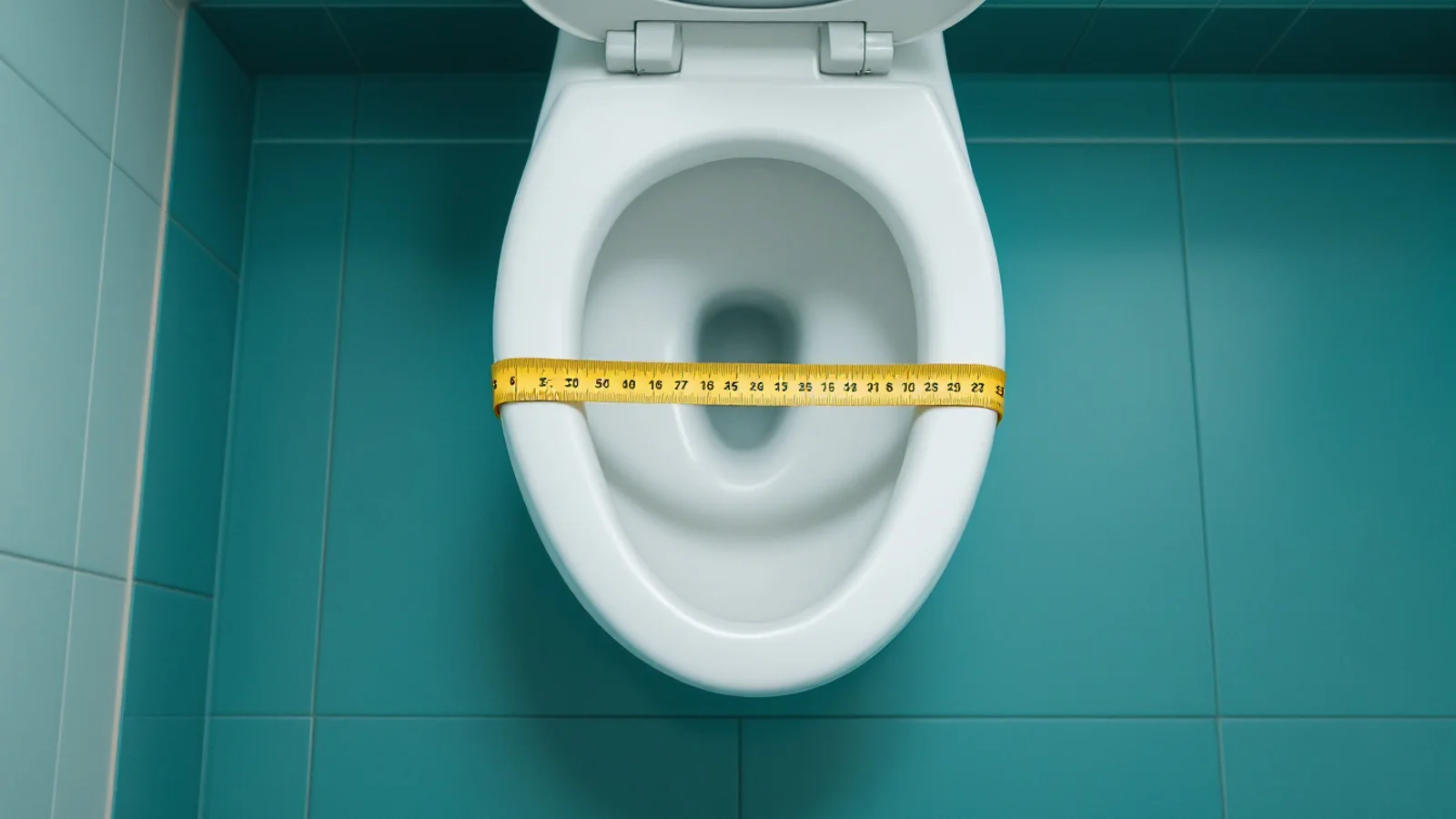
Grab a tape measure and lift the existing seat and lid so you can see bare porcelain. At the back of the bowl you'll find two bolt holes — the ones your current seat is anchored through, usually hidden under snap-off plastic caps. Hook or hold your tape at the midpoint between those two holes, then run it straight forward to the outer edge of the front rim. That single number tells you almost everything:
~16.5″
Round bowl
Roughly 16 to 17 inches from bolt holes to front rim. Circular footprint, common in older and compact bathrooms.
~18.5″
Elongated bowl
Roughly 18 to 19 inches. Oval footprint, the modern US default — most seats are designed for this first.
Notice the gap between the two standards: about two full inches. That's why this measurement is so forgiving. If your tape reads 16.25 or 16.75 inches, you have a round bowl. If it reads 18.25 or 19 inches, it's elongated. You don't need calipers or millimeter precision; you need to know which of two clusters your toilet falls into. A reading between 17 and 18 inches is genuinely unusual — it usually means a compact-elongated bowl or a non-US fixture, and in that case you should treat the toilet as a special case and check the seat maker's printed fit template before ordering (most brands offer a downloadable PDF you can lay on the bowl).
Two habits make the measurement more reliable. First, measure to the outer edge of the rim, not the inner opening — seat makers spec against the outside of the porcelain. Second, keep the tape parallel to the floor rather than letting it dip into the bowl, which can shave off a half inch and muddy the reading. If the old seat is still mounted and you'd rather not remove it, measuring from the seat's hinge bolts to the front of the bowl rim works fine.
While the tape is out, take two more numbers. You'll want them for the sections below:
- Bolt-hole spacing: the distance between the centers of the two mounting holes. On US toilets this is standardized at 5.5 inches, and virtually every bidet seat sold in the US assumes it.
- Bolt holes to tank: from the bolt holes straight back to the face of the tank (or to the wall, on tankless setups). Electric seats need flat real estate back there — more on this in the tank-clearance section.
The two standards
Round vs elongated: what the shapes mean for a bidet seat
Round bowls are the older American standard — compact, roughly circular, and still common in homes built before the 1990s, in powder rooms, and anywhere floor space was tight. Elongated bowls add about two inches of oval-shaped porcelain at the front and have become the default in new construction and remodels. Neither shape is wrong, but the market has voted: manufacturers design for elongated first, and several of the best electric seats never get a round version at all.
That asymmetry matters when you shop. If you have an elongated toilet, essentially the whole catalog is open to you, including our top overall pick and every premium seat we recommend. If you have a round bowl, your choices narrow — Kohler, VOVO, TOTO and a few others make dedicated round models, but many popular listings are elongated-only, and the round variant (when it exists) is a separate ASIN you have to select deliberately. The single most useful habit for round-bowl owners is to check the listing's size dropdown before falling in love with a seat: if there's no "Round" option, no amount of enthusiasm will make the elongated version sit right.
One category escapes the problem almost entirely. Non-electric attachments — thin spray units that bolt underneath your existing seat rather than replacing it — are effectively shape-agnostic, because your own round or elongated seat stays on the toilet and does the shape-matching for you. That's a real advantage if your toilet is unusual, and it's part of why we point bidet-curious readers with odd fixtures toward an attachment first. Our electric vs non-electric guide covers the rest of that trade-off.
01
Elongated owners
Nearly every seat fits. Confirm the listing says elongated (most default to it) and move on to tank clearance.
02
Round owners
Shop the size dropdown first. Round versions exist but are separate ASINs — never assume a listing includes one.
03
Unusual bowls
Compact-elongated, French-curve, imported fixtures: use the manufacturer's printed fit template, or choose an under-seat attachment.
04
Not sure?
Measure. Sixteen-and-a-half inches vs eighteen-and-a-half is a two-inch difference — the tape settles it in seconds.
Toilet construction
One-piece vs two-piece toilets
Bowl shape is only half the fit question. The other half is what's happening behind the bolt holes, and that's where the one-piece versus two-piece distinction comes in.
A two-piece toilet — separate tank bolted onto a separate bowl, the configuration in the large majority of American bathrooms — is the easy case. The tank rises vertically from the back of the bowl, leaving a flat shelf of porcelain around the bolt holes. Bidet seats were designed with exactly this geometry in mind: the seat's body (which houses the water heater, nozzle mechanism and electronics on electric models) sits on that shelf, and the tank wall behind it is vertical, so nothing collides. If you have a standard two-piece toilet with the right bowl shape, fit problems are rare enough that you can order with confidence.
One-piece toilets — tank and bowl molded as a single sculpted unit — are where you need to slow down. Designers of one-piece fixtures love a continuous line, which often means the tank's front face slopes down and forward toward the bowl instead of rising vertically. That slope eats into the flat area a bidet seat's body needs. On many one-piece models there's still enough room and a seat fits without drama. On others, the seat's body hits the sloping porcelain before the mounting holes line up, or the seat installs but sits pitched slightly forward, which owners describe as feeling like the seat is trying to slide them off. Reviewers with sloped one-piece toilets report this more than any other single fit complaint outside of wrong bowl shape.
The practical test: lay a ruler flat on the porcelain behind the bolt holes. If you have at least a couple of inches of reasonably flat, level surface before the tank starts to rise or curve, most seats will sit correctly. If the porcelain starts climbing almost immediately behind the holes, check the seat manufacturer's compatibility list before buying — Kohler, TOTO, VOVO and Brondell all publish lists of one-piece models known to work or known to fail, and the big brands' customer service will answer fit questions with your toilet's model number (it's usually stamped inside the tank on two-piece units, or under the lid area on one-piece).
The exceptions
Skirted toilets, hidden bolts, and the French-curve problem
Two more modern design trends complicate fit, and it's worth knowing which one you're facing because they're very different problems.
Skirted and concealed-trapway toilets: usually fine, occasionally annoying
A skirted toilet hides the trapway — the S-curve of porcelain on the side of a traditional bowl — behind a smooth, straight side panel. It looks cleaner and it's easier to wipe down, and the good news is that skirting by itself rarely blocks a bidet seat: the seat mounts on top of the bowl, and the skirt lives below it. The complication is access. Bidet seats install with a flat mounting plate secured through the bolt holes from above (top-mount), which works on most skirted models. But some skirted designs pair the skirt with concealed seat hardware that expects bolts fed from underneath — and there is no underneath to reach. If your current seat's bolts are accessible from the top, or your toilet came with top-tightening hardware, you're fine. If the bolt holes are only reachable from inside a sealed skirt, you'll need the toilet manufacturer's top-mount adapter kit (Kohler and American Standard both sell them for their skirted lines) before any bidet seat can go on.
French-curve toilets: the genuine incompatibles
The hard cases are the sculptural one-piece designs sometimes described as French curve — Kohler's San Souci and Rialto are the names that come up constantly in reviews and manufacturer FAQs. On these, the tank flows into the bowl in one continuous low arc, leaving essentially no flat surface behind the bolt holes. Most bidet seats, including every electric model we recommend, simply do not fit them; the seat body has nowhere to sit. Bidet makers are unusually direct about this — several listings carry an explicit "does not fit French curve toilets" warning. If you own one, your realistic options are a slim under-seat attachment (which uses your existing curved-compatible seat), a handheld sprayer, or replacing the toilet. No amount of creative bracket work reliably fixes it, and reviewers who tried tend to say so in vivid terms.
Mounting hole spacing: the check that almost always passes
US toilets use a standardized 5.5-inch center-to-center spacing for the seat bolts, and every mainstream bidet seat's mounting plate is built for it, usually with slotted holes that give a quarter inch of play in each direction. Measure yours anyway — it takes ten seconds — but expect it to pass. The exceptions are some European and Asian imports and a handful of designer fixtures with non-standard spreads; if your holes measure meaningfully off 5.5 inches, you're back to checking the manufacturer's template. The slots also help when holes are standard but the tank sits slightly off-center, which is common on older toilets that have been re-seated over the years.
Electric seats only
Tank clearance: the measurement electric-seat buyers skip
Here's the fit issue that surprises people who did measure their bowl shape: an electric bidet seat is not shaped like a normal toilet seat. Behind the hinge, it carries a body several inches deep — the housing for the water reservoir or instant heater, the nozzle motor, and the electronics. That body occupies the porcelain shelf between the bolt holes and the tank. If your tank's face is vertical and your bolt-to-tank distance is around 1.75 to 2 inches or more of flat surface, virtually every electric seat clears it. If the tank leans forward over the bolt holes, or a decorative tank lid overhangs the shelf, the seat body can butt against it — the seat either won't seat flush on its mounting plate or the lid won't open fully.
Three quick checks handle it:
- Flat depth: measure from the bolt holes straight back to where the tank face begins. Compare it against the "required clearance" figure in the listing's fit section — most electric seats state one, typically in the 1.7-to-2-inch range.
- Tank overhang: hold a straightedge vertically against the tank face. If the tank or its lid leans out over the bolt holes, flag it and check the seat's compatibility notes.
- Lid swing: remember the bidet seat's lid needs to lean back against the tank like a normal seat lid. Shelves, tank-top storage, or a window sill directly above a low tank can block it.
Non-electric seats and attachments mostly sidestep this — their mechanisms are thin — but electric buyers should also confirm the boring prerequisite while they're crouched down there: a GFCI outlet within cord reach, usually about four feet. Our installation guide covers outlet placement, T-valve fitting and the rest of the thirty-minute job.
Why it matters
What actually happens when the shape is wrong
It's tempting to think a two-inch mismatch is cosmetic. The review record says otherwise, in both directions.
Elongated seat on a round bowl: the seat overhangs the front rim by roughly two inches, cantilevered past the porcelain with nothing under it. Sitting toward the front loads the unsupported plastic, and owners report flexing, creaking, stress-cracked hinges over time, and a seat that shifts sideways because the bumpers on its underside don't land on the rim where the designer intended. On an electric seat, the misplaced bumpers also mean the seat-occupancy sensor — which must detect a seated user before the wash will run — can behave erratically.
Round seat on an elongated bowl: the opposite failure. The seat ends two inches short of the front rim, leaving a crescent of bare porcelain exposed. It looks unfinished, the exposed rim collects exactly what you'd fear, and the ergonomics are wrong — you sit further back than the bowl was designed for, and the nozzle geometry (tuned for a body positioned over an elongated opening) sprays off-target. Reviewers describe this configuration as the one that goes back to Amazon the fastest.
Either way you're into return shipping on a fifteen-to-twenty-pound box, and — for the electric seats — a product that can't simply be re-shimmed into working. This is the cheapest problem in home improvement to prevent and one of the more tedious ones to unwind. Measure first. And before you conclude the category isn't worth the homework, the answer from several hundred thousand verified owners is that it very much is — we make that case with the numbers in "Are bidet seats worth it?"
Applied to our picks
Fit notes for the seats we recommend
The seats from our main guide, viewed purely through the fit lens — including the two families that ship in both bowl shapes. Prices move, so confirm before you order.
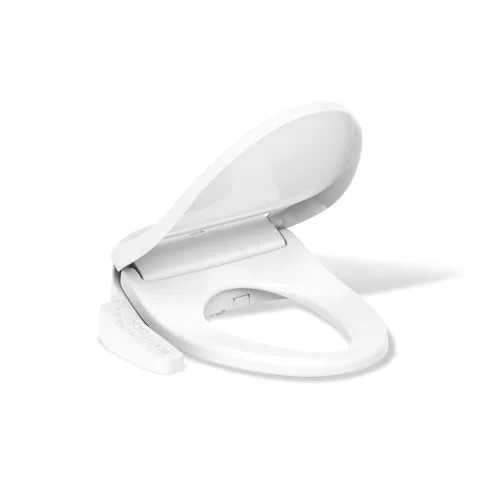
Kohler PureWash E580
Elongated — with a round sibling in the same family
Our top overall pick is the elongated version of the PureWash E580, so measure before ordering. Kohler does make a round E580, which is a separate listing rather than a size dropdown — the distinction that catches round-bowl buyers out. It is a full-body electric seat, so run the tank-clearance checks above if your toilet is one-piece with a sloped tank. Kohler does not accept returns on toilet seats once opened, so the measurement genuinely has to come first.
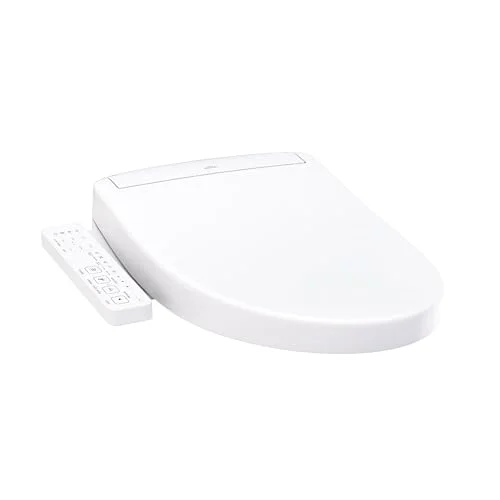
TOTO WASHLET S2
Elongated · the premium fit reference
Elongated-only in this configuration, and worth naming here because TOTO publishes unusually precise fit documentation — the WASHLET line has been sold in the US long enough that compatibility lists for awkward one-piece toilets are easy to find. If rear clearance is marginal on your bowl, this is the premium seat whose fit question you can actually answer before buying rather than after.
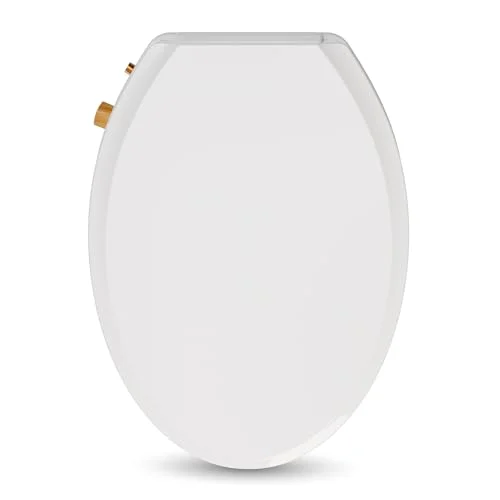
VOVO Nature 7
Comes in round and elongated versions
The recommendation that serves round-bowl owners properly: VOVO sells this non-electric seat as the Nature 7 for elongated bowls and the Nature 8 for round bowls, both at $79.00. Note these are two separate products rather than one listing with a size dropdown, so pick the right one deliberately. No electronics body means no tank-clearance worries either, which makes it the straightforward answer for one-piece toilets with sloped tanks. It also anchors our under-$100 roundup.
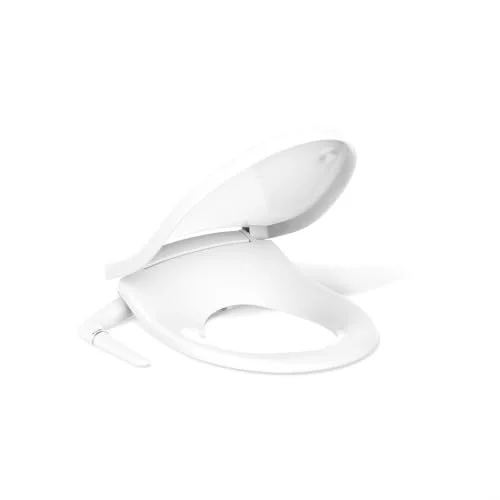
Kohler PureWash M250 (Round)
A dedicated round seat from a fixture brand
For round bowls specifically, this is the pick with a plumbing brand behind it. Kohler builds the PureWash M250 in a dedicated round version — not an elongated seat you are hoping will sit right — with Quick-Attach hardware, Grip-Tight bumpers to stop it shifting, a self-rinsing wand and a quiet-close lid. It is manual and non-electric, so there is no tank clearance to worry about at all. The elongated M250 exists too if you measure and find you needed that instead.
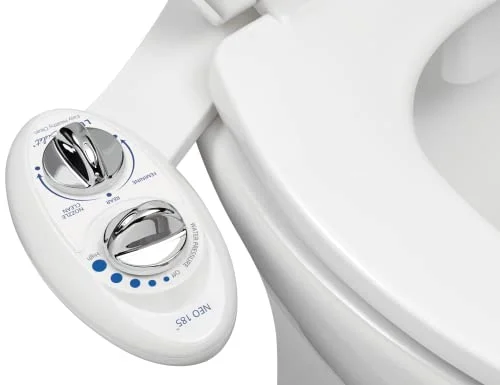
LUXE Bidet NEO 185
Fits under most existing seats — the shape-agnostic option
Because it clamps underneath the seat you already own, bowl shape barely matters: your round or elongated seat keeps doing the shape-matching. That makes it the default answer for the awkward toilets in this guide — French-curve one-pieces, non-standard imports, rentals you cannot modify. It fits standard two-piece toilets; the one dimension to check is that you have room under the seat for the extra few millimetres it adds.
One pattern worth naming: the electric seats we recommend are elongated-only, and that's typical of the category — warm-water models for round bowls exist but are a much shorter list. The non-electric tier is where round-bowl owners are properly served, and both families above ship a round twin at the same price: the VOVO Nature 8 and the Kohler PureWash M250. If you have a round bowl and your heart is set on heated water, expect to shop specifically for it; our warm-water guide flags which heater types come in round versions.
Before you order
The 90-second fit checklist
- Measure bolt holes to front rim. ~16.5″ = round, ~18.5″ = elongated. In between? Get the manufacturer's printed template.
- Match the listing to your shape. Open the size dropdown and confirm your shape is the one in the cart — round versions are separate ASINs.
- Check bolt spacing. 5.5″ center-to-center is standard and almost always passes; anything else means template time.
- Check the flat shelf behind the bolts (electric only). About 2″ of flat, level porcelain before the tank rises = clear. Sloped one-piece tank = consult the brand's compatibility list.
- Rule out the hard exceptions. French-curve one-piece (Kohler San Souci, Rialto and lookalikes) = attachment or handheld sprayer, not a seat. Sealed skirted bolts = top-mount adapter kit first.
- Confirm the outlet (electric only). GFCI within ~4 feet of the toilet, or budget for an electrician — or go non-electric.
Six checks, one tape measure, ninety seconds. That's the entire difference between the owners who describe installation as "thirty minutes, no plumber" and the ones printing a return label.
FAQ
Fit questions we hear most
How do I tell if my toilet is round or elongated?
Measure from the center point between the two seat mounting bolts to the outer edge of the front rim. About 16.5 inches means round; about 18.5 inches means elongated. The two standards are a full two inches apart, so the tape settles it — you can also eyeball it (elongated bowls look distinctly oval from above), but measure before spending money.
Can I put an elongated bidet seat on a round toilet?
It will bolt on, but it will overhang the front rim by roughly two inches with no porcelain underneath. Owners who tried report flexing, creaking, misaligned seat bumpers, and on electric models an occupancy sensor that misbehaves. Wrong-shape purchases are the most-cited reason bidet seats get returned — buy the round version or choose an under-seat attachment instead.
Do bidet seats fit one-piece toilets?
Usually, yes — the deciding factor is whether there's about two inches of flat porcelain behind the bolt holes before the tank rises. Many one-piece toilets have it; sculpted designs with tanks that slope forward may not, and French-curve models like the Kohler San Souci and Rialto don't fit standard bidet seats at all. Check the seat maker's compatibility list with your toilet's model number.
Will a bidet seat fit a skirted toilet?
Most of the time. The skirt hides the trapway below the rim, while bidet seats mount on top of the bowl, so they rarely conflict. The exception is skirted models whose seat bolts are only reachable from underneath, inside the sealed skirt — those need the toilet manufacturer's top-mount hardware kit (Kohler and American Standard sell them) before any seat, bidet or otherwise, can be swapped.
Keep reading
Now that you know it fits