Do Bidet Seats Need an Electrical Outlet? The Honest Answer
By Ilane TallUpdated August 16, 2026Research-based
Best Bidet Seats is reader-supported. When you buy through our links we may earn a commission, at no extra cost to you. Commissions never change which products we recommend.
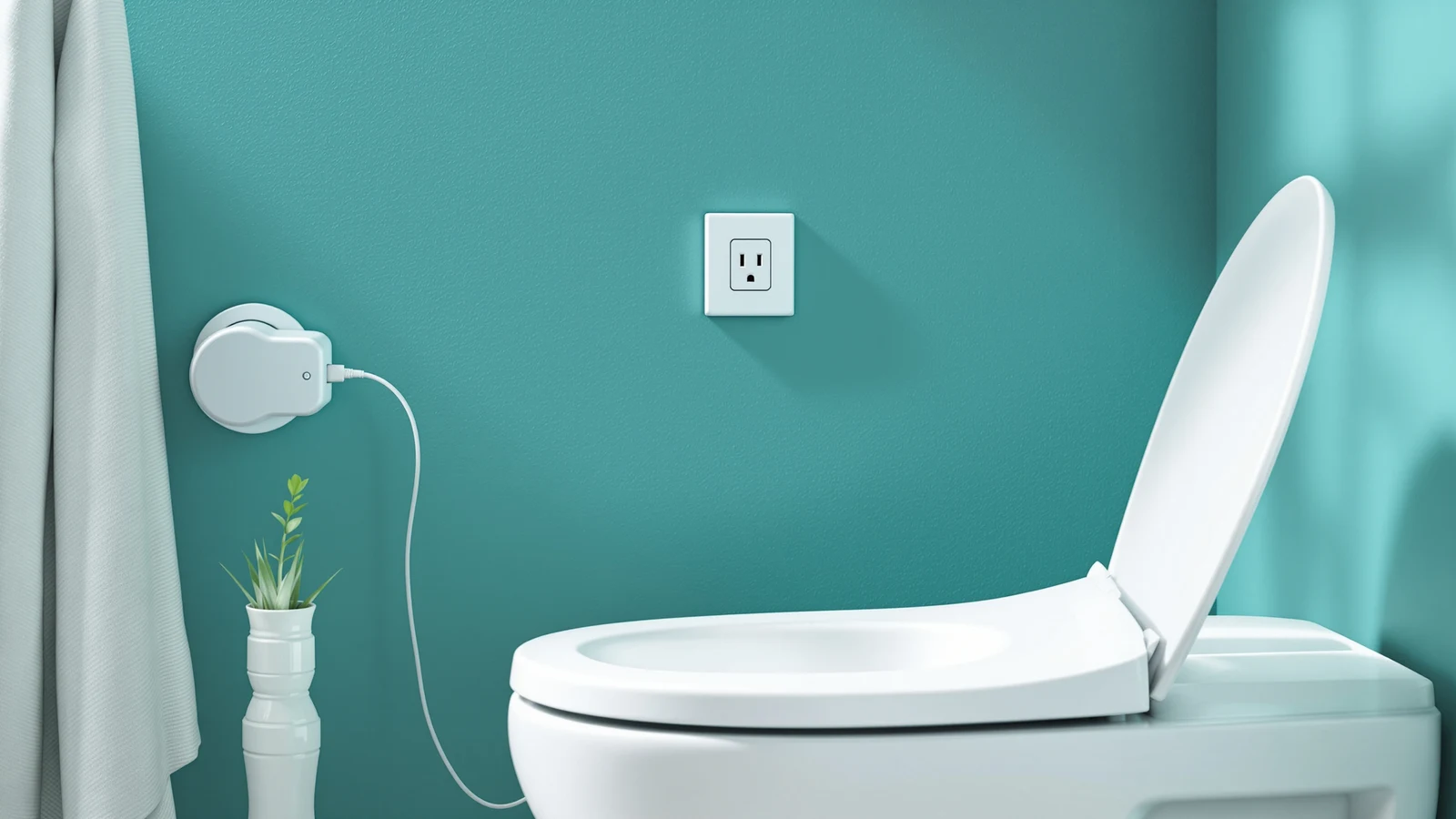
You've picked out a bidet seat, you're ready to order, and then you notice the spec sheet mentions a power cord. Now you're standing in your bathroom looking at the wall behind your toilet, and there's no outlet in sight. It's one of the most common last-minute snags in bidet shopping, and the short answer is simple: only electric bidet seats need power. Non-electric seats and attachments run on your home's existing water pressure alone and need nothing but the supply line already feeding your toilet.
But "only the electric ones need power" doesn't fully answer the practical question, which is really: what do you do if you want the warm water and heated seat that make electric models worth buying, and your bathroom simply wasn't built with an outlet nearby? That's what this guide covers — why electric seats need electricity at all, exactly what kind of outlet the code requires, what your three real options are when there isn't one, what an electrician visit typically involves and costs, and what a heated seat actually adds to your power bill once it's running.
One honest note before we get into it: we don't run a testing lab and never claim to. Everything below comes from published product specifications, standard U.S. electrical code for bathrooms, and verified owner reviews — including the install complaints, which is where outlet problems usually surface first.
The short answer
Do you need an outlet? It depends which seat you buy
Yes, if it's electric
A GFCI outlet, within a few feet
Every electric bidet seat — anything with a heated seat, warm water, or a warm-air dryer — needs a grounded, GFCI-protected outlet close enough for its power cord to reach, typically within about 3 to 4 feet of the toilet. No outlet in range means no electric seat, full stop, until you add one.
No, if you go non-electric
Water pressure does the whole job
A non-electric bidet seat or attachment connects only to your toilet's cold water line. There's no heater, no pump and no cord, so there's nothing to plug in — you can install one in a bathroom with zero outlets and it works exactly the same as it would anywhere else.
The mechanics
Why electric seats need power at all
A non-electric bidet is pure plumbing: a valve splits your existing water line, and household pressure pushes cold water through a nozzle when you turn a dial. An electric seat is a different kind of product entirely — it's a small bathroom appliance, and every one of its headline features runs on electricity rather than water pressure alone.
The water heater. This is the single biggest reason electric seats need a cord. Warming water from tap temperature to a comfortable wash temperature takes real wattage, whether the seat holds a small reservoir of warm water ready to go or heats it instantly as it flows. Either way, there's a heating element inside drawing power the moment you start a wash.
The seat heater. A separate low-wattage element keeps the seat itself warm, usually on a low standby draw between uses so it's ready the instant you sit down. It's a small, constant drain rather than a burst — but it's still power the seat needs around the clock, not just while spraying.
The pump and motors. Electric seats use a motorized pump to deliver consistent spray pressure regardless of your home's water pressure, plus small motors that move the nozzle through oscillating or pulsing patterns and retract it after each use. None of that motion happens on stored energy — it's all drawing current live.
The dryer, if the seat has one. A built-in warm-air dryer is effectively a small hair dryer aimed at exactly one spot, and it is typically the single highest-wattage component in the whole unit while it's running.
Stack a water heater, a seat heater, a pump and a dryer together and you can see why manufacturers don't even attempt a battery-powered version — the sustained and peak wattage required is well beyond what a battery pack could deliver for a useful number of uses. A cord to a wall outlet is the only practical way to run this feature set, which is exactly why the presence or absence of an outlet ends up being the single biggest factor in whether an electric seat is even an option for your bathroom.
The code, in plain English
GFCI requirements and typical cord lengths
Any outlet within reach of a sink, tub or toilet has to be GFCI-protected under modern U.S. electrical code — that's the outlet with the small "test" and "reset" buttons built into its face, or one protected by a GFCI breaker back at the panel. A ground-fault circuit interrupter cuts power in a fraction of a second if it senses current leaking somewhere it shouldn't, which is exactly the failure mode you want guarded against in a room where water and electricity share the same few square feet. If your bathroom was built or rewired any time in the last few decades, the existing outlets are almost certainly already GFCI outlets; if you're not sure, the test/reset buttons are the giveaway.
Distance matters just as much as outlet type. Electric bidet seat power cords are short by design — typically in the neighborhood of 3 to 4 feet — because manufacturers assume the seat will sit close to an existing bathroom outlet, not that you'll be routing power across the room. That short cord is the practical reason so many electric-seat shoppers discover an outlet problem only after the seat arrives: the bathroom has power somewhere, just not within reach of the toilet.
Extension cords are the tempting shortcut here, and manufacturers explicitly forbid them. It's not overcaution. A bathroom is a wet environment by definition, and a standard indoor extension cord isn't rated for that exposure the way a listed appliance cord and a GFCI outlet are together. Running one also typically voids the seat's warranty outright, and it does nothing to add the ground-fault protection that a proper GFCI outlet provides at the source. If the cord can't reach a real outlet, that's a sign you need one of the options below — not a workaround.
No outlet nearby?
Your three real options
In roughly the order most people should consider them.
01
Buy non-electric instead
Zero-drama, zero-cost path. A non-electric seat or attachment needs only your existing water line. Read bidet seat vs. attachment to pick the right form factor.
02
Hire an electrician
Adds real value if you own the home and plan to stay. One visit and the outlet problem is solved permanently, for this seat and every future one.
03
Route power differently
A cord cover along the baseboard from a sink or vanity outlet. Functional, not pretty, and worth checking your local code on before you commit.
No
Not an option: extension cords
Forbidden by every manufacturer for this product category. See the GFCI section above for why.
Walking through the first two in more detail:
Option 1 — go non-electric. This is the right call for renters, guest bathrooms, or anyone who'd rather not touch the wiring at all. A non-electric seat or attachment installs the same way regardless of whether the bathroom has power, because it never needed any. You lose warm water and a heated seat, but you keep the core hygiene benefit that draws most people to a bidet in the first place, at a fraction of the price and with nothing electrical to plan around. If you're weighing whether the comfort features are worth chasing an outlet for, our heated seats and warm water guide breaks down exactly what you'd be giving up, and our budget picks under $100 covers the non-electric side of the market in more depth.
Option 2 — call an electrician. For a homeowner planning to stay put, this is usually the better long-term answer than working around the limitation. A licensed electrician runs a new circuit or extends an existing one to a GFCI outlet placed within reach of the toilet, and once it's in, it's in for good — for this seat, a future replacement, and anything else in the bathroom that might eventually want power.
What to expect
What an outlet install typically costs and involves
The general shape of the job, if you go the electrician route: they'll assess where the nearest circuit with available capacity is, run new wiring (often through the wall cavity or, if that's not accessible, in surface-mounted conduit) to a point near the toilet, and install a GFCI receptacle at code height, then test it. Straightforward jobs where a bathroom circuit already runs nearby tend to be quicker and cheaper; jobs that require fishing wire a long distance, opening drywall, or adding a dedicated new circuit at the panel take longer and cost more.
Nationally, adding a single GFCI outlet in a bathroom commonly falls in the rough range of $150 to $350, though your actual quote depends heavily on your local market, how far the nearest circuit is from the toilet, whether drywall needs to be opened and patched, and whether your panel has room for the load. Always get a quote from a licensed local electrician rather than budgeting off any single number — this range is general guidance, not a price promise.
It's a one-time cost that pays off if you expect to own an electric bidet seat for years, or if you'd like the option open for future ones. Compare that against the alternative of never having the choice: once an outlet exists, every electric model on the market becomes available to you, not just the ones you can awkwardly cord-cover your way to.
The running cost
Power draw and what a heated seat adds to your bill
Once an electric seat is plugged in, the wattage numbers can look alarming out of context. Instant water heaters and warm-air dryers can draw well over a thousand watts in short bursts while active — roughly in the range of a hair dryer — which is exactly why these seats need a dedicated GFCI outlet and not a shared, overloaded one. But peak wattage while spraying isn't what shows up on your electric bill; it's a burst that lasts seconds at a time.
The cost that actually accumulates is standby draw: the low, constant wattage that keeps the seat and, on tank-style models, a reservoir of water warm and ready between uses. Add it up over a full year and a heated electric bidet seat typically adds somewhere in the neighborhood of $15 to $40 to an annual electric bill, depending on your settings, your local electricity rate, and how many people are using it. Most electric seats include an eco or power-save mode that lets the seat cool down between uses rather than holding temperature around the clock — using it meaningfully cuts the standby portion of that cost, at the price of a few extra seconds' wait for the first wash after the seat has been idle.
Put in perspective, a heated bidet seat's electricity draw sits closer to a nightlight left on year-round than to a major appliance. The outlet is a hard requirement — the ongoing bill, in most households, is not the part worth worrying about.
If you have the outlet
Electric bidet seats worth plugging in
Once the outlet question is settled, here's how the electric seats we track compare on price. Confirm the live price before buying.
Best budget electric — the outlet is the only added cost
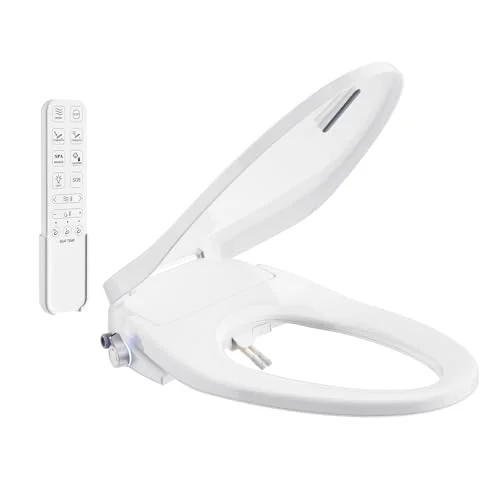
The lowest-priced electric seat in this lineup, built for elongated bowls, at $99.98. It's the model to consider if the outlet install is already the bulk of your budget and you'd rather keep the seat itself inexpensive.
Best value — warm water and a heated seat, without the premium price
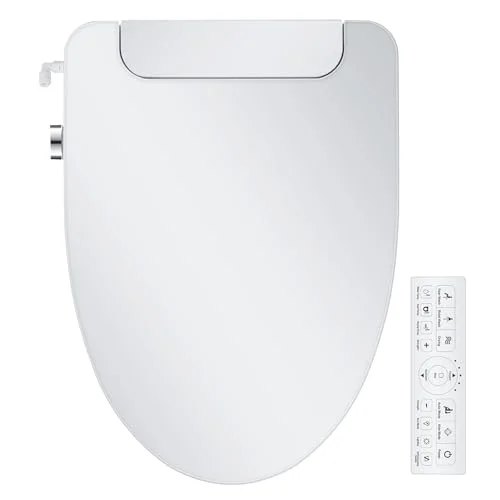
Warm water and a heated seat for an elongated bowl at $125.99, sitting right in the middle of this lineup on price. A sensible middle ground once you've confirmed you have somewhere to plug it in.
Best full-featured — heated seat plus a warm-air dryer
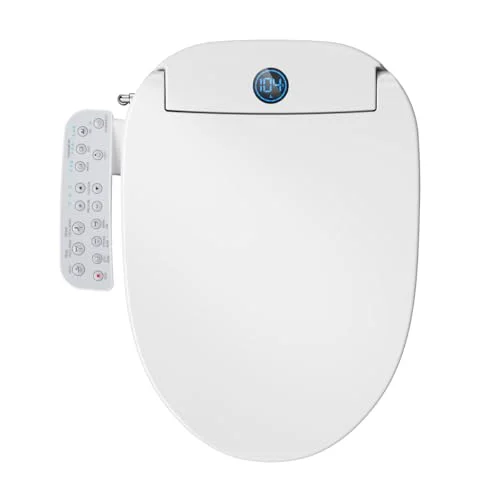
The most feature-complete seat here at $189.96, pairing a heated seat with a warm-air dryer — the component most likely to be the highest-draw item on the whole unit, and a good example of why a proper GFCI outlet, not an extension cord, is the right way to power it.
The Combier Round ($113.04) and the WLJBIDET O7L-1V ($159.99) round out the lineup above for round and elongated bowls respectively — see the table for details. Not sure which bowl shape you have? Our round vs. elongated fit guide shows exactly where to measure before you order any electric seat.
Putting it together
So what should you actually do?
If there's a GFCI outlet within a few feet of your toilet already, none of this matters — pick the electric seat with the features you want and install it. If there isn't, the decision comes down to how long you plan to be in this bathroom. Renting, or not sure you'll stay? Buy non-electric and skip the whole question; you'll still get the core benefit that made you start shopping for a bidet in the first place. Own the home and planning to stay for years? An electrician visit in the neighborhood of $150 to $350 is a one-time cost that opens up every electric seat on the market, not just this one. And whichever way you go, an extension cord is never the answer — it's the one shortcut every manufacturer explicitly rules out.
Once your bathroom's power situation is settled, the rest of the decision is just picking features: warm water and a heated seat if you have power, or the simplicity of nothing to plug in if you don't. Either way, you're getting the meaningful upgrade — our full worth-it breakdown covers the hygiene and cost case for both types if you're still deciding whether to buy at all.
FAQ
Bidet seats and outlets: common questions
Can I run a bidet seat on an extension cord?
No — manufacturers explicitly prohibit it. A bathroom is a wet environment, and a standard indoor extension cord isn't built or rated for that exposure the way a proper GFCI outlet and listed appliance cord are together. Using one typically voids the seat's warranty and skips the ground-fault protection a GFCI outlet provides. If the seat's cord can't reach an outlet, add one or buy non-electric instead.
Do non-electric bidet seats need any power at all?
No. A non-electric bidet seat or attachment connects only to your toilet's existing cold water supply line and runs on household water pressure. There's no heater, pump, or motor inside, so there's nothing to plug in — it installs and works the same whether or not your bathroom has an outlet.
How much does it cost to add an outlet near a toilet?
As general guidance, adding a single GFCI outlet in a bathroom commonly runs about $150 to $350, depending on your local market, how far the nearest circuit is, and whether drywall needs to be opened and patched. Get a quote from a licensed local electrician for your specific bathroom rather than budgeting off any single figure.
Do heated bidet seats raise your electric bill much?
Not dramatically. Most heated electric seats add roughly $15 to $40 a year in electricity, mainly from keeping the seat (and, on some models, a water reservoir) warm on standby between uses rather than from the brief high-wattage bursts while spraying. Using the seat's eco or power-save mode, if it has one, reduces that further.