By Ilane TallUpdated September 13, 2026Research-based.
Best Bidet Seats is reader-supported. When you buy through our links we may earn a commission, at no extra cost to you. Commissions never change which products we recommend.
The lights flicker, the fridge hums back to life a beat late, and somewhere in the bathroom a bidet seat that was warm a minute ago is now just a very expensive toilet seat. If you've never lost power with an electric bidet installed, it's an easy thing to overlook until the moment it happens — usually during a storm, usually at the least convenient time, and usually followed by the same question: does this thing still work at all?
The honest answer depends entirely on which kind of bidet is bolted to your toilet. Electric seats are small bathroom appliances, and every comfort feature they're known for runs on household current. Non-electric seats and attachments are pure plumbing, powered by nothing but the water pressure already in your walls, and a blackout does not touch them at all. This guide walks through exactly which functions stop and which keep going, what that actually feels like mid-outage, why the water temperature question matters more than people expect, and which non-electric products are worth keeping around — or installing outright — in a storm-prone home or a second bathroom you don't check on daily.
One honest note before we get into it: we don't run a testing lab and we've never claimed to. Everything below comes from how these two product categories are built, published manufacturer specifications, and verified owner reviews — including the ones written by people describing exactly this scenario.
The short answer
If the power goes out right now
Electric seat installed
Everything electrical stops immediately
No heated seat, no warm water, no warm-air dryer, no remote or lit side panel, and on some models the nozzle simply won't extend at all. The seat becomes a plain lid until the power returns — it doesn't fail permanently, it just goes fully dark.
Non-electric seat or attachment installed
Nothing changes, because nothing was ever electric
A non-electric wash runs on your home's water pressure alone. The lever or dial still works exactly the same way in a blackout as on any ordinary Tuesday, cold water and all. It's the one part of the bathroom a storm can't touch.
Where the line actually falls
Which functions are electric, and which are plumbing
It helps to think of an electric bidet seat as two products stacked on top of each other: a plumbing layer underneath, and an appliance layer on top that does everything people actually associate with the word "bidet seat." An outage only takes out the second layer — but on most electric models, that's nearly everything you interact with.
Runs on electricity — stops in an outage: the water heater (whether it's a reservoir or an instant/tankless design), the seat heater, the pump that builds spray pressure, the oscillating and pulsing nozzle motors, the warm-air dryer, the wireless remote or lit side panel, the automatic deodorizer, and any LED nightlight in the bowl.
Runs on plumbing — keeps working no matter what: the water supply itself. Your toilet's tank still fills and flushes on gravity and municipal or well pressure, which is a separate system from anything the bidet seat controls electrically.
The gray area — depends on the model: some electric seats route their spray nozzle through the same motorized valve that controls pressure and oscillation, meaning the nozzle won't extend or spray at all without power. Others use a simpler mechanical valve for the core spray function and reserve the motor for extras — on those, you may get a very basic cold-water spray even with the power dead, though nothing in the seat's marketing will have told you which category yours falls into.
That gray area is the reason you shouldn't assume anything about your specific electric seat mid-storm. If you want warm-air drying to survive an outage too, it's worth knowing that the dryer is one of the highest-draw components in the whole unit and is never available on battery or backup power — it goes out with everything else, first.
The lived experience
What an outage actually leaves you with
01
A cold, silent seat
No heater means the seat itself is at room temperature — noticeably colder than the warmed surface you're used to, especially in winter.
02
A short warm-water window, if any
Reservoir models may hold a little residual heat right after the outage starts, but it fades within minutes and won't recover until power does.
03
No remote, no lights
Wireless remotes and lit side panels are powered by the seat itself. Dead seat, dead controls — you can't operate what has no power to receive the signal.
04
No drying, no deodorizer
Anything that moves air or masks odor electronically goes first, since it's usually the single highest-wattage feature on the unit.
There's one detail worth calling out because it surprises people the first time: a reservoir-style electric seat holds a small tank of already-warm water, so the very first flush after the lights go out can still feel normal. That warm water isn't being replenished, though — once it's used up, it's gone until the heater comes back online, and depending on tank size and how recently it was topped up, that window can be anywhere from a few minutes to essentially nothing. If you want the fuller picture of how that stored heat behaves even when the power is on, how long the warm water lasts on a bidet seat walks through it — the same reservoir physics apply, they just run out permanently instead of refilling.
None of this means the electric seat is broken. It means the appliance layer has gone quiet while the plumbing layer underneath keeps doing its job — assuming your model's nozzle mechanism isn't fully gated behind the motor, per the gray area above. For a lot of households, that ambiguity during the one week a year they actually lose power is exactly the argument for having a second, purely mechanical option somewhere in the house.
The one thing a storm can't touch
Non-electric seats and attachments: the fallback that always works
These run on water pressure alone, so there's nothing in them for an outage to interrupt.
A non-electric bidet — whether it's an attachment that clamps under your existing seat or a full replacement seat with the sprayer built in — is deliberately simple: a T-valve splits your toilet's cold-water supply line, and turning a dial or pressing a lever lets household pressure push water through a nozzle. There's no pump, no heating element, no circuit board, and nothing plugged into a wall. Our full roundup of no-electricity bidet attachments goes deeper on the category if you want to compare more of the field, but the point for this guide is narrower: because none of it depends on your home's electrical service, none of it depends on your home's electrical service continuing to work. A hurricane can take the grid down for days and a non-electric bidet in the next room won't notice.
That's also exactly why a non-electric unit makes sense as a deliberate second layer of redundancy even in a house that already has a nice electric seat in the primary bathroom. You're not choosing one over the other — you're accepting that the electric seat is genuinely nicer on a normal day, and that a $43–$90 non-electric backup a few steps away means "the power's out" never has to mean "we have no working bidet in the house."
The trade-off is the one thing non-electric bidets have never solved on their own: the water is exactly as cold as your cold supply line, storm or no storm. Worth understanding fully before you decide how much that matters to you.
The trade-off
Water temperature without a heater
Every non-electric bidet on the market, attachment or full seat, delivers what manufacturers describe as ambient water temperature — plain language for "whatever your cold tap water happens to be." There's no reservoir to warm it and no inline heater to boost it, by design; that absence of a heating element is precisely what keeps the price low and keeps the product working with zero power dependency. Both VOVO models covered below are specified this way, and it's an honest, accurate description rather than a euphemism — the water really is just your supply line's ambient temperature, no more and no less.
What that means in practice varies a lot by season and by where you live. In a warm climate, or during summer almost anywhere, ambient tap water is genuinely comfortable and most people stop noticing the absence of a heater within days. In a cold climate in the depth of winter, incoming municipal water can run cold enough that the first second of a wash is a real jolt — the kind of thing new owners mention in reviews, positively or negatively, more than almost any other spec. This isn't a defect; it's the physical trade-off you're accepting in exchange for a product with nothing electrical to fail, and during an actual power outage it's also the trade-off you're accepting in exchange for the wash working at all.
If ambient water is a dealbreaker for your household on an ordinary day, that's a genuinely useful thing to know before you buy — it just doesn't change the outage math. When the grid is down, an electric seat's warm water isn't cold, it's absent entirely (beyond whatever residual heat is left in a reservoir), while a non-electric unit's ambient water is available exactly as advertised, every time, on batteries or on blackout.
Where this matters most
Storm-prone homes and second bathrooms
Two situations make this whole question more than academic. The first is geography: households in hurricane, ice storm, or wildfire-adjacent regions where multi-day outages are a real annual possibility have a much stronger case for at least one non-electric bidet in the house than someone whose grid has never gone down for more than an hour. If that's you, treat a non-electric unit the way you'd treat a battery lantern or a manual can opener — a small, cheap piece of preparedness that costs nothing to own and only matters on the handful of days a year it actually matters.
The second is the second bathroom itself — the guest bath, the basement half-bath, the one attached to a home office nobody checks on during a storm. It's rarely worth the cost and installation hassle of a second electric seat with its own outlet requirement for a room that gets occasional use, but it's also the room most likely to get overlooked entirely if the power goes out while guests are staying over. A non-electric attachment solves both problems at once: it's inexpensive enough to install in a rarely-used bathroom without a second thought, and it needs no outlet, no GFCI proximity, and no wiring plan — the same reason it doesn't care whether the outlet it doesn't need has power or not. If you're deciding which bathroom gets which type of control panel in the first place, side panel or remote? is worth a read, since both of those controls go dark right along with everything else in an outage — one more reason a purely mechanical lever in at least one bathroom in the house is worth having.
The picks
Non-electric options worth keeping in the house
All three run on water pressure alone. Prices move on Amazon — confirm the live price before buying.
Best budget fallback — clamps under the seat you already have
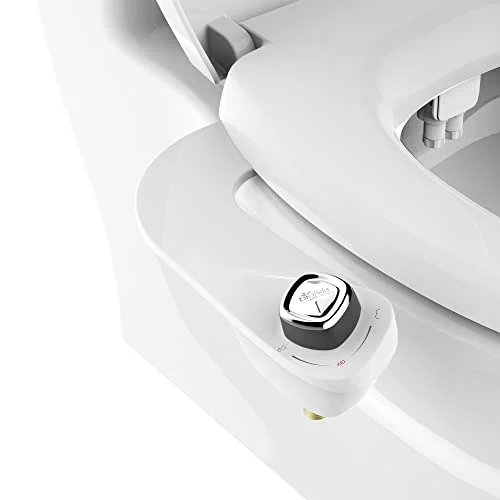
A non-electric attachment with dual nozzles for a separate front and rear cold-water wash, plus an adjustable water pressure dial. It installs under your existing toilet seat rather than replacing it, which makes it the cheapest and fastest way to add a power-outage-proof wash to any bathroom in the house, at $42.79 for one unit.
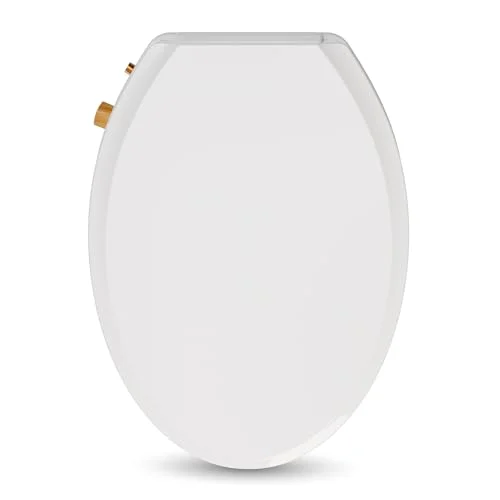
A complete non-electric seat rather than an attachment, built for round toilets, delivering ambient-temperature water with no reservoir and no heater to lose power to in the first place. It replaces your seat outright, so there's no added height or gap the way a clamp-on attachment can leave. $79.00, and an easy install with no outlet involved anywhere in the process.
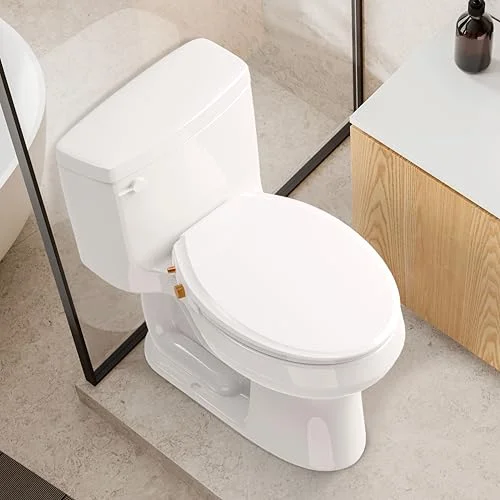
The identical seat to the Nature 8 above, built instead for elongated bowls — check our elongated-toilet fit guide if you're not sure which shape your toilet is before ordering either one. Same ambient water temperature, same soft-close lid, same complete independence from your home's electrical panel. $79.00.
If you already own an electric seat and love it, nothing here is an argument to replace it — it's an argument to know exactly what stops working the next time the power drops, so it isn't a surprise mid-wash. If you live somewhere storms mean multi-day outages, or you have a second bathroom that would otherwise go completely without a working bidet whenever the grid does, a non-electric attachment like the SlimEdge is a low-cost, install-once answer: $42.79, twenty minutes with a screwdriver, and it works identically whether the lights are on or the whole block is dark. If you'd rather have a seat that looks and feels like a normal seat replacement rather than something clamped under one, the VOVO Nature 7 or Nature 8 — picked by whether your bowl is elongated or round — does the same job with a cleaner install and no added height.
Either way, the underlying logic doesn't change: electricity buys comfort, plumbing buys certainty. The best setup for a storm-prone home, or simply a cautious one, keeps both — an electric seat where the outlet and the warm water make daily life nicer, and at least one purely mechanical option somewhere in the house that a blackout can't touch.
FAQ
Bidet seats and power outages: common questions
Will my electric bidet seat spray at all with no power?
It depends on the model. Some electric seats route the nozzle's extend-and-spray function through the same motorized valve that handles pressure and oscillation, in which case nothing happens without power. Others use a simpler mechanical valve for the basic spray and reserve the motor for extras like oscillation, in which case a very basic cold-water wash may still work. Manufacturers rarely spell this out clearly, so treat any spray during an outage as a bonus, not a guarantee.
Does an outage damage an electric bidet seat?
No. Losing power simply stops the seat's electrical functions — heating, pumping, drying, the remote — the same way any appliance stops when unplugged. There's nothing about a normal power outage that harms the unit, and everything resumes working once electricity returns, with no reset or repair needed in the vast majority of cases.
Can a non-electric bidet run on hot water instead of cold?
Not on its own. A standard non-electric bidet or attachment — including all three products in this guide — connects only to your toilet's cold supply line, so the spray is always at ambient temperature. A small number of specialty non-electric products tap a separate hot line from under the sink, but that's a different, less common design and isn't how a standard attachment or replacement seat is built.
Is it worth keeping a non-electric bidet installed even if I have an electric one?
For anyone in a storm-prone area, or with a second bathroom that doesn't get daily attention, yes — it's a low-cost form of redundancy. A $42.79–$89 non-electric unit costs little to install and needs zero maintenance tied to the grid, so it keeps working through any outage regardless of how long it lasts, without asking you to give up the electric seat's comfort features the rest of the time.