Comparison · 2026
Side Panel or Remote? Choosing How You Control a Bidet Seat
By Ilane TallUpdated September 7, 2026Research-based
Best Bidet Seats is reader-supported. When you buy through our links we may earn a commission, at no extra cost to you. Commissions never change which products we recommend.
Nobody test-drives a bidet seat's controls before buying it. You compare heater type, price, and maybe the bowl shape, then the seat arrives, and within a week you've discovered a preference you never knew you had about how you tell the thing to spray water at you. That preference — side panel or remote — turns out to shape your daily experience more than almost any other spec on the box, and it's the one buyers spend the least time thinking about before checkout.
This isn't a trivial styling choice. A side panel is bolted to the seat and always exactly where the seat is. A remote is a separate object that lives wherever you last set it down, needs its own batteries, and can be lost, dropped in the bowl, or borrowed by a toddler. Both approaches work. Both have owners who wouldn't switch. The right one for you depends on things about your body, your bathroom, and your household that no spec sheet lists — which is exactly why we're laying them out here.
One honest note before we start: we don't run a fake testing lab, and we never pretend to. Everything in this guide comes from published product specifications, listed control types, and the patterns that repeat across thousands of verified owner reviews — including the complaints, which is where control-related trade-offs show up most clearly.
The side panel
Reaching a side panel: the ergonomics nobody tests in store
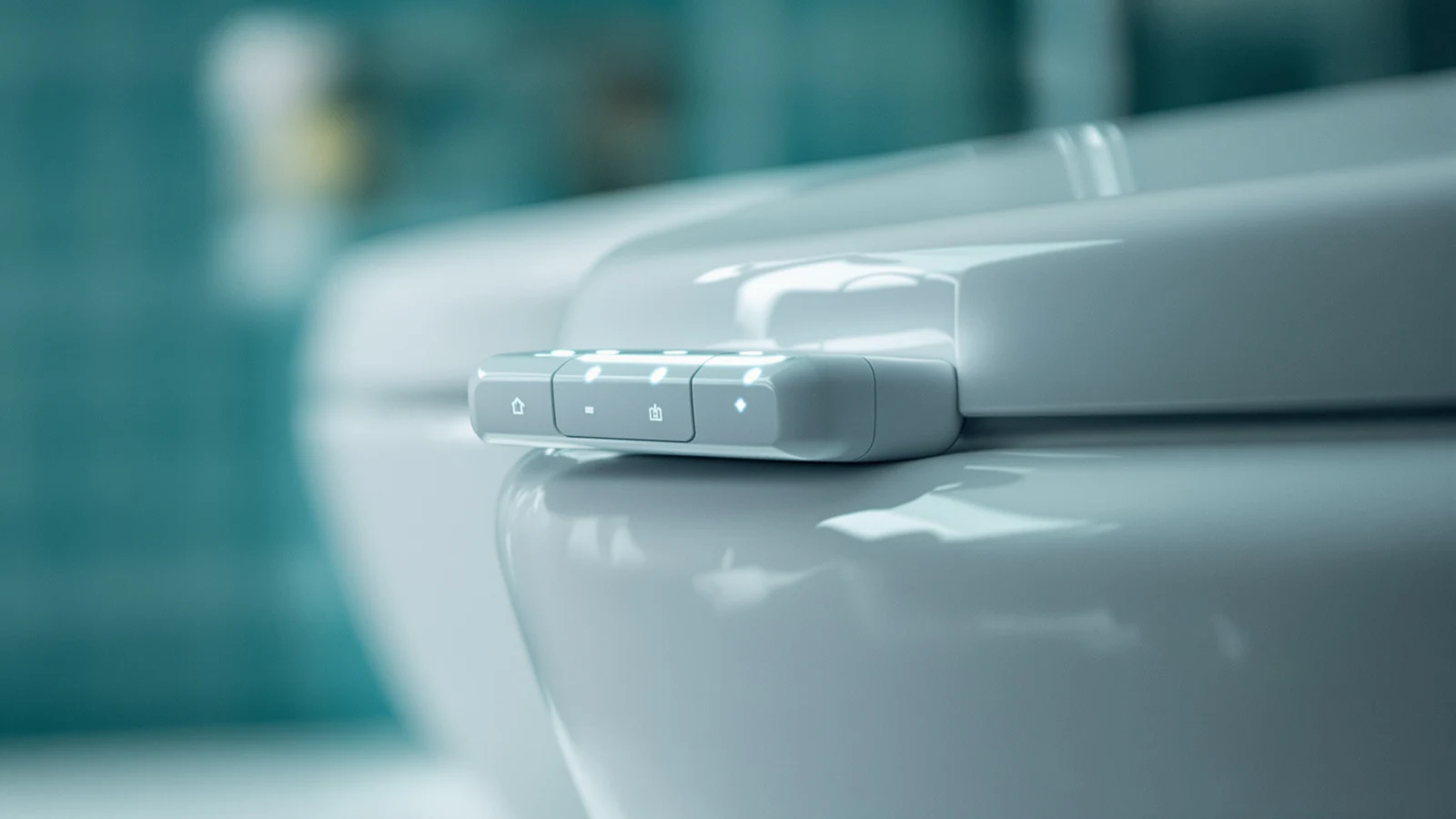
A side control panel sits flush against the rim of the seat, usually on the right-hand side, with a row of buttons or a small dial for wash mode, pressure, seat temperature, and stop. It's wired directly into the seat, so it never loses power, never needs its own batteries, and can't end up on the wrong side of the bathroom. From a pure reliability standpoint, there is nothing simpler: fewer parts means fewer things to fail, lose, or forget to charge.
The catch is entirely physical, and it's the part nobody thinks to check before buying. To use a side panel, you have to reach down and to the side, often twisting at the waist, to find buttons you can't fully see from a seated position. For an able-bodied adult of average size, that's a minor, forgettable motion. For a lot of real households, it isn't: reviewers with limited shoulder mobility, larger body types, pregnancy, or recovery from surgery consistently describe the same problem — the reach is awkward, sometimes painful, and occasionally impossible without bracing on the wall or the seat itself. This is exactly the kind of ergonomic detail a showroom floor or a five-minute test sit can't reveal, because you're not actually seated and reaching in the position you'll use every single day.
Side panels also have a smaller, more common annoyance: pressing the wrong button in the dark. Most panels use small, similarly-shaped buttons distinguished mostly by position and a tiny icon, and a middle-of-the-night trip to the bathroom is not when most people want to hunt by touch for "stop" instead of "turbo." Some panels solve this with a slightly raised or textured stop button; check the product photos and listing description before buying if this matters to you, since it isn't a spec that's consistently documented.
None of this makes a side panel a bad choice — it's the majority approach in the category for a reason, and for anyone without a reach limitation, it's simply one motion, learned once and repeated without a second thought. It's worth being honest about who it's for: people who don't mind a small twist-and-reach, who want the fewest possible parts to manage, and who'd rather never think about a remote's battery level again.
The remote
Remotes: wall mount, batteries, and losing them
A wireless remote solves the reach problem completely — you hold it in your hand, at whatever angle is comfortable, and press whatever you want without moving your torso. It's the single ergonomic advantage remotes have over side panels, and it's a real one: reviewers who mention switching from a side-panel seat to a remote-equipped one almost always describe it as an upgrade they didn't expect to care about and then couldn't stop noticing.
That convenience comes with three trade-offs baked into the format itself.
Batteries. A remote runs on its own small battery, typically a coin cell or a pair of AAAs depending on the model, and unlike the seat itself, it isn't hardwired to anything. It will eventually run down, and because it's a low-drain device used briefly several times a day, that can take a long time — long enough that most owners forget the remote uses batteries at all until the day it doesn't respond.
Wall mounts. Most remote-equipped seats ship with a small adhesive or screw-mounted holster that sticks to the wall near the toilet, giving the remote a fixed home when it's not in your hand. Reviewers who install the mount and actually use it report far fewer "where did it go" moments than those who leave the remote loose on the tank lid or a nearby shelf — it's a small step that solves most of the format's biggest downside.
Losing them. This is the complaint that shows up more than any other in remote-equipped seat reviews. A remote is a loose object in a small, humid room with a water feature in it, used by every member of a household, sometimes handed to kids who are curious about the buttons. It ends up on the floor, behind the tank, in a robe pocket that goes through the wash, or — reviewers report this often enough that it's a real pattern, not a one-off — dropped straight into the bowl. A wall mount cuts this risk dramatically but doesn't eliminate it if nobody's in the habit of putting it back.
None of these are dealbreakers on their own. They're just the price of the convenience: a remote gives you comfort a side panel can't match, in exchange for one more small object to keep track of.
The failure mode
What happens to a remote seat when the battery dies
This is the question that matters most before you buy a remote-controlled seat, and it's also the one buyers ask least until they're already dealing with it: if the remote's battery dies, or the remote goes missing entirely, can you still use the toilet normally?
On every seat we cover here, the answer is yes — the seat itself keeps functioning as a normal toilet seat regardless of the remote's battery state, because the remote only controls the wash and dryer features, not basic use. What you lose access to without a working remote is everything the bidet function adds: warm water, seat heat, drying, and any auto-open or voice features the model includes. You are not locked out of the bathroom; you're locked out of the bidet.
Where models differ is what backup control they offer, if any, while you replace the battery or hunt down the remote. Some remote-primary seats include a small set of manual buttons directly on the seat body, as a fallback for exactly this situation — check the listing photos closely, since this detail isn't always called out in the bullet points. If a physical fallback matters to you, recent reviews for the specific model are the best way to confirm it, since owners who've hit this situation tend to mention it.
The practical takeaway: a dead remote battery is an inconvenience, not an emergency, and it's almost always solved with a fresh battery from a drawer rather than a service call. Keep a spare battery of the correct type on hand — check the listing for whether your model uses a coin cell or AAAs — and the failure mode becomes a five-minute fix instead of a week without warm water.
Beyond the buttons
Voice and auto-open, and whether they last
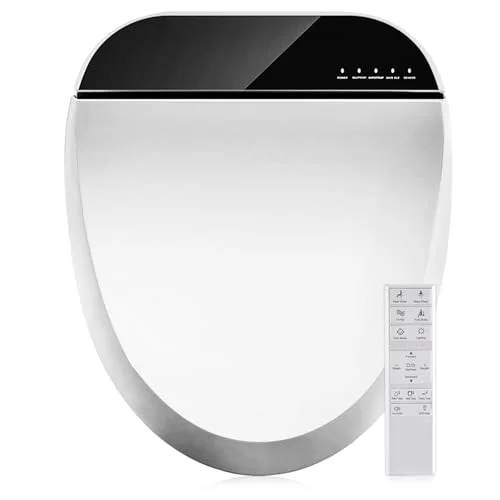
Some seats push the control question a step further with voice control and auto-open lids, both aimed at the same goal as a remote: reducing how much you have to physically touch or reach for. The ZingPOP Bidet Toilet Seat ($125.99) is the model in our lineup built around exactly this pairing — voice control alongside an auto-open lid — and it's worth understanding what that combination changes about daily use, and what it doesn't.
Voice control on a bidet seat typically handles a short list of commands — lid open and close, wash on and off, maybe a wash mode — rather than replacing every function a remote or panel offers. Reviewers who value it describe it as a genuine convenience for hands-free moments, not a full replacement for manual controls. Auto-open lids respond to proximity or motion, lifting the lid as you approach — more about the hygienic, hands-off feel of never touching the lid than about wash controls specifically.
The honest question with either feature is durability over years of use, not the first month. We don't have long-term teardown data on any specific unit's voice sensor or lid motor, and no manufacturer publishes a "years until failure" spec for these components — so the fair thing to say is that they add a moving part or a listening component beyond what a manual seat has, and more parts generally means more that can eventually need attention. That's a general mechanical principle, not a claim about this seat specifically. If either feature is the reason you're buying, recent reviews are the most current signal available on how a specific unit is holding up. What we can say with confidence is that both are wash-and-lid conveniences layered on top of the seat's core controls, not a replacement for them.
The decision
Which control suits which bathroom
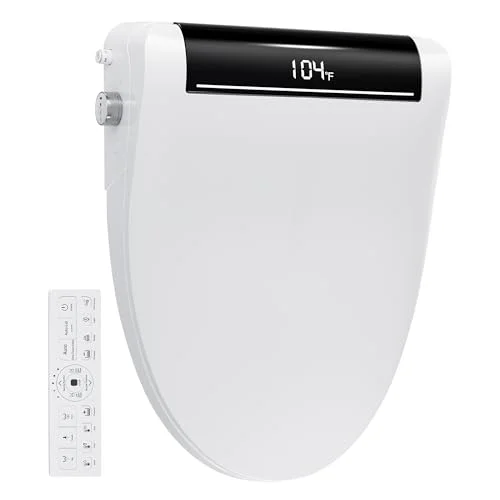
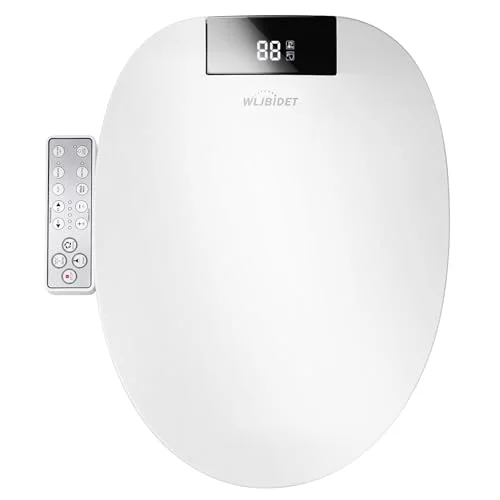
Choose a side panel if you don't have a reach or mobility limitation, you'd rather have one fewer object in the bathroom to keep track of, and you like the idea of controls that are physically part of the seat and can never be misplaced. It's the lower-maintenance format in the plainest sense: no batteries to buy, no wall mount to install, nothing that ends up on the floor. The WLJBIDET O7L-1V is a straightforward example if this is your preference.
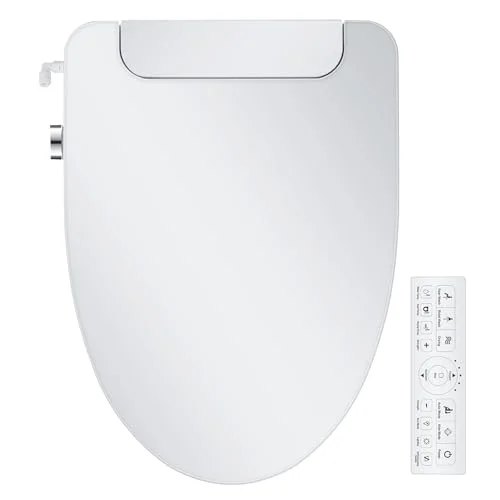
Choose a remote if twisting toward the seat's edge is uncomfortable for any reason, more than one person in the household uses the seat and each wants their own settings without leaning over, or you simply prefer adjusting things without having to look for buttons on the seat itself. Install the wall mount on day one — it's the single habit that prevents most of the "where's the remote" frustration reviewers describe. The Combier and IYTATA both fit this preference without adding voice or auto-open on top.
Choose voice and auto-open if you've already decided you want a remote-style, hands-off experience and are willing to accept a couple more moving parts — a lid motor, a microphone — in exchange for not touching the seat or a remote at all. The ZingPOP is the model here built specifically around that combination.
Bowl shape narrows the field before control type even enters the picture — the Combier is round-bowl only, while the ZingPOP, IYTATA and WLJBIDET are elongated, so measure your toilet first. If you're not sure which shape you have, our best bidet seats for elongated toilets guide covers how to check. And if control type feels like a smaller decision than warm water reliability, our how long the warm water lasts guide tackles the spec most buyers actually regret skipping.