Buying Guide · 2026
The Best Bidet Seats for Elongated Toilets
By Ilane TallUpdated September 4, 2026Research-based
Best Bidet Seats is reader-supported. When you buy through our links we may earn a commission, at no extra cost to you. Commissions never change which products we recommend.
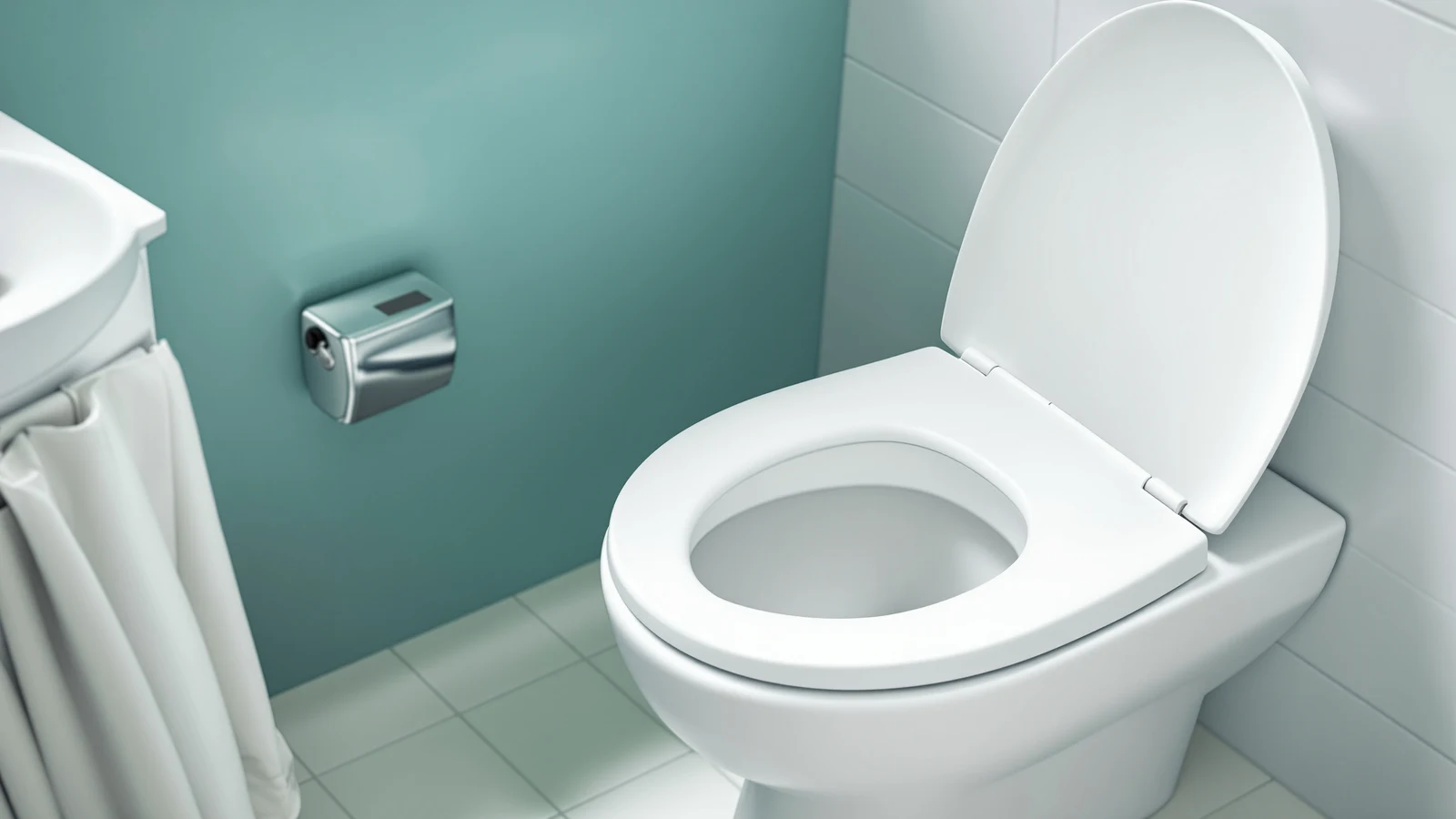
Here's the fact that catches a lot of first-time buyers off guard: most American toilets are elongated, and most bidet seats on Amazon are sold in a single listing that claims to fit "both" shapes. Sometimes that's true — the seat ships with two mounting templates and you pick one. Sometimes it means the seat is really built for one shape and merely tolerated on the other, with a gap at the back that the product photos never show. The word "elongated" on a listing title is not, by itself, proof of anything.
This guide is about closing that gap between what a listing implies and what actually sits flush on your bowl. We compared published dimensions, mounting-hole specs and verified owner reviews for seats sold specifically for elongated bowls, and we're upfront about the limits of that approach: we don't have a bathroom full of test toilets, and we're not going to pretend otherwise. What follows is the measuring method that actually works, the symptoms of a badly-fitted seat, and the specific models — manual and electric — that owners with elongated bowls report fitting properly.
Before anything else
How to be certain your bowl is elongated
Don't guess from looking at it — round and elongated bowls can look similar from a standing angle, and "it looks kind of oval" has led plenty of people to order the wrong seat. There are two measurements that settle it, and both take about thirty seconds with a tape measure:
- Bolt-to-rim length. Measure from the two mounting bolts at the back of the bowl (the ones your current seat is attached to) straight forward to the outer edge of the bowl's front rim. An elongated bowl measures roughly 18.5 inches. A round bowl measures roughly 16.5 inches. That two-inch difference is the entire question, and it's why a seat sized for one shape leaves either a gap or an overhang on the other.
- Bolt spread. Measure the center-to-center distance between the two mounting bolts. Nearly all US residential toilets use a standard 5.5-inch spread regardless of bowl shape, so this measurement mostly rules out the rare non-standard bowl rather than telling you round from elongated — but it's worth confirming, because a seat that's the right shape but the wrong bolt spread won't mount at all.
If your total bolt-to-rim measurement lands close to 18.5 inches, you have an elongated bowl — the shape used in the large majority of US toilets manufactured in the last two decades, particularly two-piece models. If it's closer to 16.5, you have a round bowl and a seat built for elongated will overhang the front. Write the number down before you shop; it's the one spec every listing on this page assumes you already have.
Worth knowing why this even needs saying: elongated became the default shape in new US residential construction and remodels over the past twenty-plus years, largely because plumbing codes and manufacturer catalogs shifted toward it as the more comfortable option for adults. That shift is exactly why so many listings default to describing a seat as fitting "most" or "standard" toilets — the assumption baked into that language is elongated, and it's usually right, but "usually" isn't the same as "confirmed for your bowl." A toilet installed before the mid-2000s, a guest bathroom in an older building, or a compact toilet marketed for small spaces are the situations most likely to break that assumption, which is exactly when the two-measurement check above earns its thirty seconds.
The tell
Where a badly-fitted seat shows itself
A seat that's the wrong shape for your bowl rarely fails to install — it bolts down fine, which is exactly what makes the mismatch easy to miss until you've lived with it for a week. The symptoms show up in use, not in the box:
- A visible gap at the sides or a lip at the front. A round seat on an elongated bowl sits short — the porcelain rim extends past where the seat ends, which shows as an exposed ledge you can see and feel when you sit down.
- Rocking or a soft, spongy feel when you sit. If the seat's hinge posts don't land square on the bolts because the geometry is off, the seat can rock slightly side to side even when the bolts are tightened all the way.
- The lid or seat not closing flush. Mismatched geometry often shows up first at the front — the lid or seat lands a few degrees off level, which reviewers describe as the seat "not quite sitting right" long before they diagnose it as a shape issue.
- Spray or wash coverage that misses. On electric and non-electric bidet functions alike, the nozzle position is calibrated for a specific bowl length. A shape mismatch is one of the most common reasons owners report wash coverage that feels off-center, even when every other function works.
The fix, almost always, is not a defective unit — it's the wrong shape variant of a seat that's sold in both. Reviewers consistently note that re-ordering the correct elongated or round variant resolves the exact same complaints that a return-for-refund would.
The decision
Manual or electric on an elongated bowl
Bowl shape doesn't decide this part for you — both manual and electric seats are made in elongated variants, and an elongated bowl accepts either just as well as a round one accepts either. What decides it is the same list that applies to any bidet seat purchase: whether there's a GFCI outlet within reach of the toilet, how much you want to spend, and whether warm water and a heated seat matter enough to you to pay for them. Our electric vs. non-electric comparison walks through that decision in full.
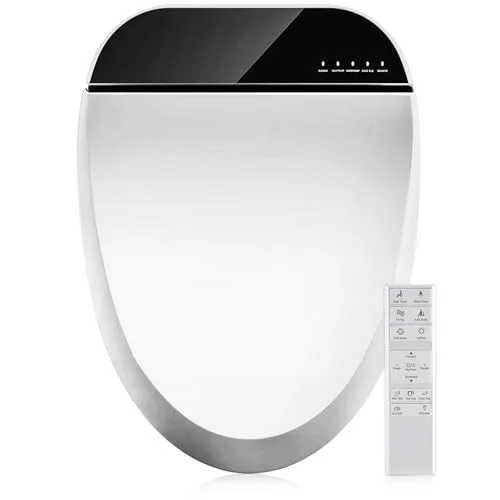
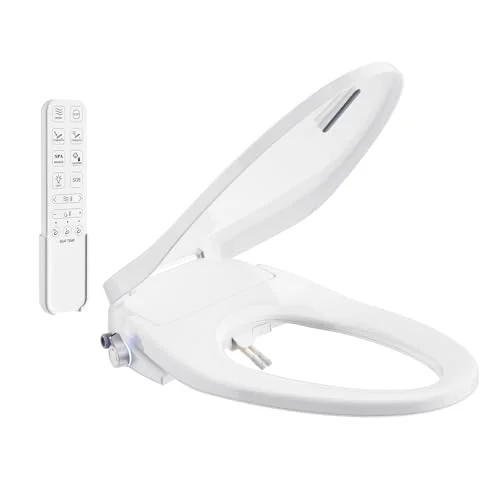
The one place bowl shape does interact with the electric-vs-manual choice is size and clearance. Electric seats are physically larger than manual ones — they house a heater, a pump, and often a control panel — and an elongated bowl gives that hardware more room than a round one would. If your bathroom is tight, an elongated bowl paired with an electric seat is a more comfortable fit than the same seat on a round bowl in the same space; our best bidet seats for small bathrooms guide covers clearance in more detail if that's a constraint for you.
What nobody photographs
The gap at the back nobody photographs
Product photography for bidet seats is shot from the side or the front three-quarter angle almost without exception — the angle that makes any seat look like a clean, flush fit. What it hides is the back: the point where the seat's hinge assembly meets the bowl and the tank. On some elongated seats, particularly ones with a bulkier electric hinge unit, that assembly sits slightly proud of the bowl's back edge rather than tucking under it, leaving a narrow gap between the hinge and the tank that a straight-on photo never shows.
This isn't a defect — it's a consequence of packing a heater, pump and control electronics into a hinge post that a manual seat doesn't need. It matters for two practical reasons. First, it's the spot where cleaning gets awkward, since a narrow gap collects the same dust and moisture as any other tight seam behind a toilet. Second, on some two-piece toilets with a low tank, that hinge clearance is what determines whether the seat's lid can open past vertical without contacting the tank — a fit issue that has nothing to do with round versus elongated and everything to do with tank height, which no bowl-shape measurement will catch.
The practical takeaway: check a listing's Q&A section and photos for the rear three-quarter view specifically, and if your toilet has a low-profile tank, look for owner mentions of tank clearance before you buy an electric seat rather than after.
There's a second, quieter version of the same problem worth checking before you order: side clearance. An elongated bowl is longer front-to-back than a round one, but it isn't any wider, and an electric seat's control panel — when it's mounted on the side rather than built into a remote — adds a few inches of width that a manual seat doesn't. In a bathroom where the toilet sits close to a wall, a vanity, or a tub, that side panel can end up wedged against something you didn't measure for. It's a five-minute check: measure from the center of your existing seat's mounting bolts to the nearest obstruction on each side, and compare that against the seat's listed width before you assume "elongated fit" also means "fits my bathroom."
If you're not sure
What to measure if your bowl is neither shape
A small number of toilets — mostly older or imported models, and some compact "elongated-compact" designs meant to save floor space — don't cleanly match either the ~18.5-inch elongated or ~16.5-inch round bolt-to-rim measurement. If your number lands in between, or if the bowl looks unusually short-and-wide or long-and-narrow compared to a standard shape, don't guess from the closest listing category. Take three additional measurements before you order anything:
- Full bowl width at the widest point, so you can compare against a seat's own listed exterior dimensions rather than just its shape label.
- Distance from the bolts to the seat hinge covers on your current seat, since some compact and European-style bowls use a different hinge spacing than the standard 5.5-inch US spread.
- Tank-to-rim clearance if you're considering an electric seat — the extra hinge height an electric unit adds can matter more on a bowl that's already non-standard.
With those three numbers in hand, use a listing's own stated dimensions and Q&A section — where other buyers with unusual bowls often report back — rather than trusting the "elongated" or "round" label alone. When a bowl is genuinely non-standard, a seat's compatibility statement is a starting point for verification, not a guarantee, and it's worth a message to the seller before you buy if the listing doesn't answer the question directly.