Bidet Seats for Postpartum Recovery and Sensitive Skin
By Ilane TallUpdated September 25, 2026Research-based
Best Bidet Seats is reader-supported. When you buy through our links we may earn a commission, at no extra cost to you. This article is general product information, not medical advice — see your OB-GYN or midwife for guidance specific to your recovery.
Somewhere around week two of postpartum recovery, a lot of new parents discover the same small, unglamorous problem: toilet paper hurts. Between stitches, hemorrhoids, engorgement-related swelling, and skin that's simply more reactive than it was a month ago, the bathroom stops being a place you don't think about. It's why so many hospitals send you home with a peri bottle in the first place — a plastic squeeze bottle of warm water is gentler than wiping, and it works. A bidet seat is really just a plumbed-in, always-there version of that same idea, and it's why the search "bidet for postpartum" spikes every single month among people who never thought about bidets before they gave birth.
This guide is not medical advice, and we say that plainly rather than as a disclaimer buried in the footer: we are not clinicians, we don't know your delivery, your stitches, or your skin, and nothing below should override what your OB-GYN or midwife tells you at your postpartum visit. What we can do is the same thing we do for every product on this site — read the specs, compare what three real listings actually claim about pressure control and nozzle design, and tell you honestly which details matter for this specific use case and which are marketing filler. We don't physically test these products or run a testing lab; everything here comes from published specifications, listing claims, and verified buyer reviews.
Quick answer
If you just want the short version
What actually matters here
A real pressure dial, not a marketing word
"Gentle" only means something if you can turn a dial and feel the pressure drop. Of the three listings we cover, look for adjustable pressure and a dedicated front (feminine) wash — not just a single fixed-pressure rear spray. See the side-by-side in the listings.
Before you buy anything
Ask your doctor first if you have stitches
If you have perineal stitches, a C-section incision, or any wound your provider is actively monitoring, ask them directly whether a bidet is appropriate yet and at what pressure. See when to just ask your doctor below.
Why water, generally
Why water-based cleaning gets recommended after birth
The peri bottle is the clue. It's standard postpartum-care equipment in the US precisely because a stream of warm water is gentler on healing or irritated tissue than dry (or even wet) wiping, and nurses hand it out to essentially every new parent before discharge, regardless of delivery method. The general logic — again, general, not a prescription for your specific situation — is that friction and repeated wiping can aggravate skin that's swollen, stitched, or simply more sensitive than usual during the postpartum weeks, and rinsing with water reduces that friction. A bidet seat is the same mechanism made permanent: instead of reaching for a bottle each time, the wash is built into the seat.
We want to be careful about the word "recommended" here. We're describing a widely shared, general pattern in postpartum care — the same reasoning behind the peri bottle — not a specific medical recommendation for you. Delivery types differ, healing timelines differ, and some providers have specific instructions about when internal or external washing is appropriate. This is general information, not medical advice, and it's not a substitute for what your own provider tells you at your six-week check or sooner if something feels wrong.
The dial that matters
Adjustable pressure: why "gentle" has to be a real dial
Every bidet listing on Amazon uses the word "gentle" somewhere in its bullet points. It's meaningless on its own — it's marketing copy, not a spec. What actually matters for postpartum and sensitive-skin use is whether pressure is adjustable, meaning there's a physical dial, lever, or button that changes the water pressure across a real range, low enough that you can start well below what feels like a normal bidet wash and work up only if it's comfortable.
This is the single most important thing to check on any listing before buying for this use case. A fixed-pressure nozzle — common on the cheapest bidet attachments — sprays at one intensity, full stop. If that intensity happens to suit a healing body, fine. If it doesn't, there's no way to soften it. An adjustable-pressure model lets you dial down to something closer to a gentle rinse and adjust upward over the following weeks as healing progresses, which is the whole point: your comfortable pressure in week one is not your comfortable pressure in week six.
Below, we go through what each of the three listings we cover actually states about pressure control, because "gentle" printed on a box is not the same claim as a numbered pressure dial in the spec sheet — and only the spec sheet is something we can hold a manufacturer to.
Front vs rear
Dual nozzles: the difference between front and rear wash
A single-nozzle bidet washes one area — typically the rear. A dual-nozzle bidet adds a second, separate nozzle positioned and angled for a front (often labeled "feminine") wash, and the two are not interchangeable. This distinction matters more for postpartum use than almost any other buying criterion on this site, for a simple anatomical reason: after a vaginal delivery, the perineal area between the front and rear openings is very often where stitches, swelling, or general soreness are concentrated, and a rear-only nozzle simply isn't positioned to reach it comfortably or precisely.
A genuine dual-nozzle design gives you two things a single nozzle can't: a front wash aimed and angled for that specific area, independent of the rear wash, and — on the better-specified listings — independent pressure or position control for each nozzle. That second detail is worth hunting for in the spec sheet or the Q&A section of any listing you're considering, because some products marketed as "dual nozzle" simply move one nozzle between two preset positions rather than running genuinely separate wash modes. If a listing doesn't say which it is, that's a question worth asking the seller directly before you buy, not an assumption to make in either direction.
One more general note, not a medical one: many postpartum care instructions distinguish between washing the outside (vulva, perineum) versus anything intended to clean inside — a bidet, like a peri bottle, is designed for external rinsing. If you have any question about what's appropriate for your specific healing process, that's exactly the kind of question your provider answers in thirty seconds and we can't.
Side by side
What the three listings actually claim
Prices move on Amazon — confirm the live price before buying. Ratings shown only where the listing carries one; a blank field means we don't have a verified figure to print.
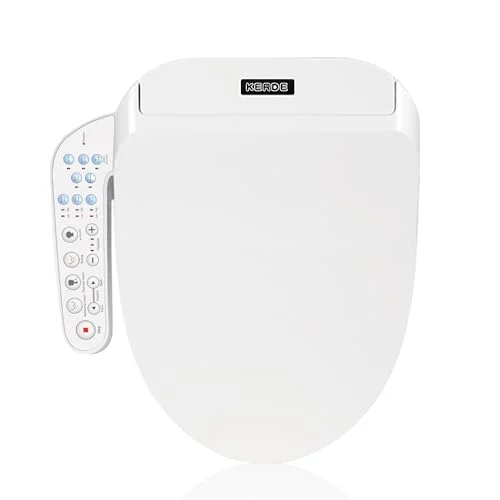
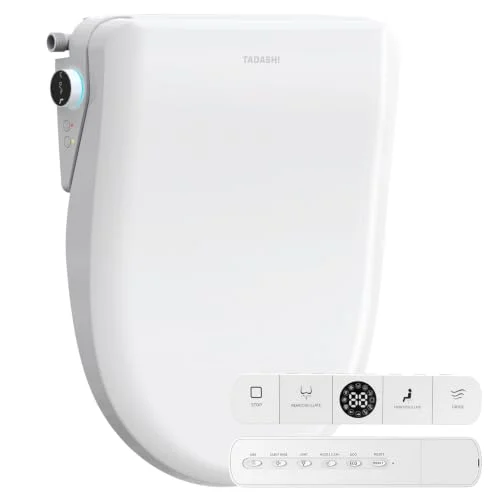
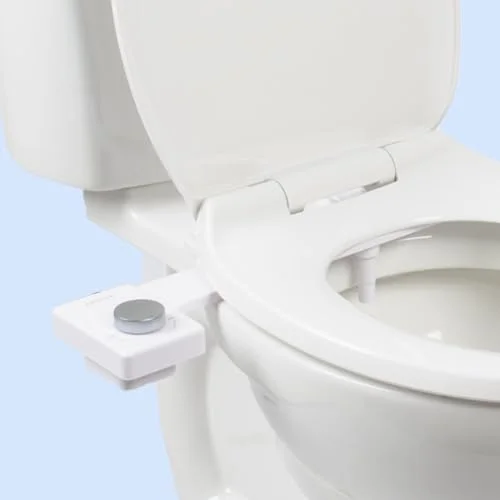
A word on how to read that table: the TUSHY Fresh is a non-electric attachment with a control knob, which is the simplest possible implementation of "adjustable pressure" — you turn the dial, the pressure changes, there's no electronics between your hand and the water. The KERDE listing names warm-water cleaning and a one-click operation but its listing text doesn't specify a numbered pressure scale or confirm a second front-wash nozzle, so we're not going to claim either exists — check the current listing's images and Q&A directly before assuming. The Tadashi listing is the only one of the three that names both a distinct feminine wash mode and rear wash as separate, labeled functions, which is exactly the dual-nozzle distinction discussed above.
The picks
Our picks for postpartum and sensitive-skin use
TUSHY Fresh Ultra-Slim Starter Bidet Attachment
Best for a real pressure dial without electronics
This is an attachment, not an electric seat: it clamps under your existing seat and connects to your toilet's cold supply line via a T-valve, with a control knob that adjusts spray pressure across a real range. (If your bathroom only has a single angle stop with no room for that second line, our guide to installing a bidet without a spare valve covers the kits that solve it.) That mechanical simplicity is a genuine advantage for this use case — there's no remote to fumble with one-handed while holding a newborn, just a dial you turn until the pressure feels right, and turn down again the next time it doesn't. It has a single, rear-facing wash rather than a separate front nozzle, so if a front wash is the priority, see the Tadashi below. As with any non-electric bidet, the water is exactly as cold as your tap — worth knowing before your first use in a chilly bathroom at 3 a.m., and if you're setting this up mid-winter, our cold-weather freeze guide covers what else can go wrong when a supply line runs through an unheated room.
The only one of the three listings that names feminine wash and rear wash as two distinct, separately selectable modes — the exact dual-nozzle distinction that matters most for postpartum use, per the discussion above. It also lists instant warm water, a self-clean nozzle cycle, and a wireless remote, which matters more than it sounds: adjusting pressure or switching wash modes one-handed, without twisting around to reach a side panel, is a real convenience in the first weeks home. Its listed size is 20 inches by 14.7 inches — measure your bowl against that before ordering, since that's the only size/fit detail we have confirmed for this product. If a wand or valve does eventually need replacing, our warranty and support comparison by brand is worth reading before you buy, not after.
Its standout feature for this use case is instant warm-water cleaning combined with a heated seat that stays at a constant temperature — a genuine comfort upgrade in winter, when a cold seat and cold spray are the last thing a healing body wants. The listing describes one-click intelligent operation, which is convenient but also means we can't confirm from the listing text whether pressure is adjustable across a real range or whether it offers a distinct front wash — check the current listing's photos and specification panel directly on those two points before buying if either is a priority for you.
Everything above applies just as directly to sensitive skin generally — eczema-prone skin, hemorrhoids, IBD flare-ups, or simply skin that reacts poorly to fragranced wipes and dry paper. The same two questions decide whether a bidet helps: can you turn the pressure down to something genuinely gentle, and does the design let you target the specific area that needs it without also spraying everywhere else. If your sensitivity is a diagnosed condition rather than general reactivity, the same rule applies as for postpartum use — this is general product information, and your dermatologist or gastroenterologist is the right person to ask about anything condition-specific.
If there's already a toddler or a pet at home, it's also worth cross-checking our guide to bidet seats that are safe around kids and pets — a curious kid pressing every button on a seat you're still healing around is its own separate hazard.
It's also worth repeating our one honest caveat about all three products above: we compare published specifications, listing claims, and verified buyer reviews. We don't physically test these products and we don't run a testing lab, so anything a listing doesn't clearly state — a numbered pressure range, a confirmed second nozzle, an exact bowl-fit spec — we've flagged as something to verify on the current listing rather than something we're willing to assert on your behalf.
The one caveat that matters most
When to just ask your doctor before buying anything
A bidet seat is a bathroom fixture, not a treatment, and there are specific situations where the right move is a phone call before an Amazon order:
You have perineal stitches or tearing that's still healing. Ask your OB-GYN or midwife whether water pressure against the area is appropriate yet, and if so, roughly how gentle "gentle" needs to be at your stage of healing.
You had a C-section and the incision is nearby. A standard bidet wash is aimed lower and further back than a C-section incision, but if you have any doubt about spray direction or positioning, ask your provider rather than guess.
You're experiencing unusual pain, unusual discharge, fever, or anything that doesn't match what you were told to expect during recovery. That's a call to your provider regardless of what bathroom fixtures you own.
You have a diagnosed skin condition or a healing wound anywhere near the intended use area. General "sensitive skin" advice doesn't account for a specific diagnosis — your dermatologist does.
None of that is a reason to avoid a bidet. It's a reason to buy one with real pressure control, and to use the lowest setting first, on your provider's go-ahead, exactly the way you'd introduce anything new to healing skin.
FAQ
Common questions
Is a bidet seat safe to use right after giving birth?
This is general information, not medical advice: many people are sent home with a peri bottle specifically because water-based rinsing is generally considered gentler than wiping on healing tissue, and a bidet seat with adjustable pressure works on the same principle. Whether it's appropriate for you, and at what pressure, depends on your specific delivery and healing — ask your OB-GYN or midwife at your postpartum visit or sooner if you're unsure.
What's the difference between a front wash and a rear wash?
A rear wash nozzle is positioned and angled for the area behind, while a front (often labeled "feminine") wash is a separate nozzle positioned and angled for the front. A true dual-nozzle bidet runs these as two distinct, separately selectable modes rather than one nozzle in two positions — of the three listings here, the Tadashi Electric Bidet Toilet Seat is the one that names both explicitly.
Why does "adjustable pressure" matter more than other bidet features for this use case?
Because a fixed-pressure nozzle sprays at one intensity with no way to soften it, and a comfortable pressure in the first week postpartum is rarely the same as a comfortable pressure six weeks later. A real pressure dial or remote-adjustable range — like the control knob on the TUSHY Fresh attachment — lets you start low and increase only as healing allows.
Should I buy an electric seat or a simple attachment for postpartum use?
Both can work; the deciding factors are pressure control and, if you want it, a separate front wash — not whether it's electric. The TUSHY Fresh is a non-electric attachment with a mechanical pressure dial; the KERDE and Tadashi are electric seats that add warm water and, on the Tadashi, a distinct feminine wash mode. None of this substitutes for asking your provider whether a bidet is appropriate for your specific recovery.