The Fine Print · 2026
Bidet Seat Warranty and Support, Compared by Brand
By Ilane Tall · Updated September 18, 2026 · Research-based.
Best Bidet Seats is reader-supported. When you buy through our links we may earn a commission, at no extra cost to you. Commissions never change which products we recommend.
A bidet seat is the rare bathroom fixture that mixes plumbing and electronics, which means when something finally goes wrong — a nozzle that won't retract, a heater that stops warming, a remote that stops pairing — the question of who actually fixes it, and for how long, is not the same across every brand you'll find on the same search results page. A $270 seat from an established plumbing manufacturer and a $39 attachment from a name you've never heard of can carry warranty language that reads almost identically on the listing page and means something completely different in practice once you're actually holding a broken part in year two.
This guide compares the stated warranty and support posture across three tiers that show up in almost every bidet seat search: premium plumbing brands with decades of US service infrastructure (TOTO, Kohler), mid-tier bidet-specific brands that sell mostly direct to consumers (VOVO, TUSHY), and budget-generic brands where the manufacturer and the Amazon seller are effectively the same small operation (the kind of attachment Hibbent makes). We're not going to invent specific warranty durations for products where the exact term isn't published in a way we can verify — where that's the case, we'll tell you to read the current listing or the manufacturer's own warranty page, and explain what actually changes in practice depending on which tier you're buying into.
One honest note before we get into it: we haven't personally filed a warranty claim against every brand in this guide, and we don't run a fake testing lab pretending we have. What follows is based on how each brand structures its published warranty documentation and customer-support process, and the patterns that repeat across verified owner reviews when something eventually breaks. Where a specific number matters — a term length, a registration deadline — confirm it on the current listing or the manufacturer's site before you buy, since terms do get revised.
The fine print
What a bidet-seat warranty typically covers — and what it never does
Across nearly every brand in this category, a bidet-seat warranty is a limited warranty against defects in materials and workmanship for a stated period from the date of purchase — not a general promise that nothing will ever go wrong. A heater element that fails on its own after six months is typically a covered defect; a heater element that fails because a supply line was hooked up wrong during a DIY install usually is not. The document draws a hard line between things the manufacturer built badly and things that happened after the box was opened, and reading which side of that line your specific failure falls on is most of what a warranty claim actually comes down to.
What's typically covered, assuming normal residential use: the core mechanical and electronic components — pump, heater, nozzle assembly, control board, remote — failing under ordinary use within the stated term. Most manufacturer warranties in this category cover replacement parts; fewer clearly cover the labor of removing a defective seat and installing its replacement, which matters more than it sounds like given these are appliance-grade products with an internal heater and, on higher-end models, a control board doing much the same job a small water heater does. If labor coverage matters to you, it's a line worth reading rather than assuming.
What's typically excluded: damage from installation error (an overtightened supply-line fitting is the single most common cause of the "warranty didn't cover a leak" complaint in owner reviews, and that's an installation issue, not a defect), commercial or rental-property use where the stated term is often shorter, cosmetic wear, and — on electric models — heater scale from hard water where no supply-line filter was used. None of that is unique to one brand; it's close to universal. What does vary meaningfully by brand is whether the clock starts automatically at purchase or requires registering the product first — worth checking the moment you unbox it, not after something breaks.
One more variable that has nothing to do with the brand's warranty document: who's actually selling you the unit. A listing marked "Ships from and sold by Amazon.com" puts Amazon's own return policy in play immediately; a listing fulfilled by a third-party seller means your first point of contact for a defective unit is that seller's message center, with Amazon's A-to-z Guarantee as the backstop if they go quiet. Check the "Sold by" line before you buy, not after a part fails.
The established manufacturers
Premium brands: TOTO and Kohler's stated terms
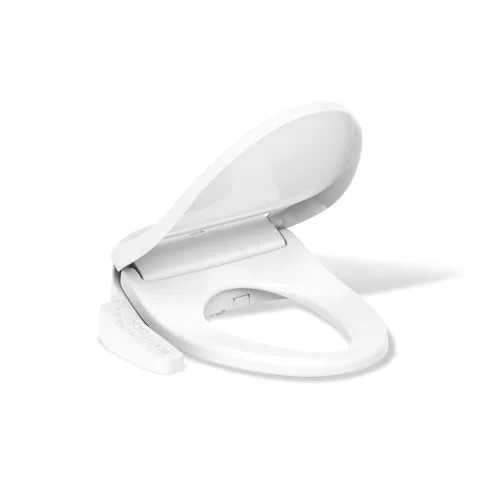
TOTO has been making plumbing fixtures since 1917 and effectively invented the modern electric bidet seat category in Japan decades before "smart toilet" was an American marketing term — WASHLET is TOTO's own trademark, not a generic name every electric bidet seat gets to use (our bidet seat vs washlet guide covers why that distinction matters when you're comparing brands). The TOTO WASHLET S2 ($420.00) sits near the top of that lineup, with instantaneous water heating, PREMIST bowl-wetting and EWATER+ wand cleaning. TOTO publishes its own warranty terms for each WASHLET model and backs them with a US customer-care line and an authorized-parts and service structure — the exact duration and what's covered for parts versus labor is stated on TOTO's own warranty page for this specific model, and because that page is the authoritative source (and different WASHLET generations have carried different terms), it's the one to actually read rather than take a secondhand number on faith.
Kohler has built plumbing fixtures in the US since 1873, and its PureWash line brings that same manufacturer infrastructure to electric bidet seats. The Kohler PureWash E580 ($269.97) is an elongated seat with a quiet-close lid that prevents slamming, a self-cleaning wand and adjustable water pressure across multiple cleansing options. Like TOTO, Kohler publishes its own limited warranty for the model and routes support through Kohler customer care and its authorized service network rather than through a third-party seller — again, the specific term and exactly what it covers is stated on Kohler's own page for this product, and that's where to check it, not here. See how the two compare head-to-head, including where the extra money over a mid-tier seat actually goes, in our TOTO Washlet vs KOHLER PureWash comparison.
What buying from either brand actually buys you, beyond whatever term is printed on the card, is depth behind the paper: a company that manufactures its own control boards and wand assemblies, and tends to still stock them years after your model has been superseded. That's the practical difference, years in, between a sourced wand replacement and being told the part no longer exists. Our best luxury bidet seats roundup covers the rest of the premium field if TOTO and Kohler aren't the only two names you're weighing.
The bidet-first brands
Mid-tier: VOVO and TUSHY's registration and support process
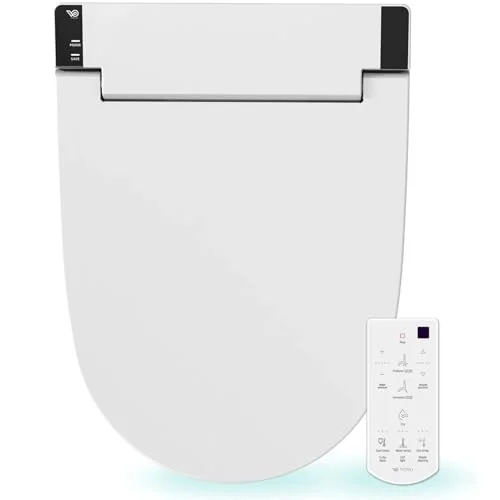
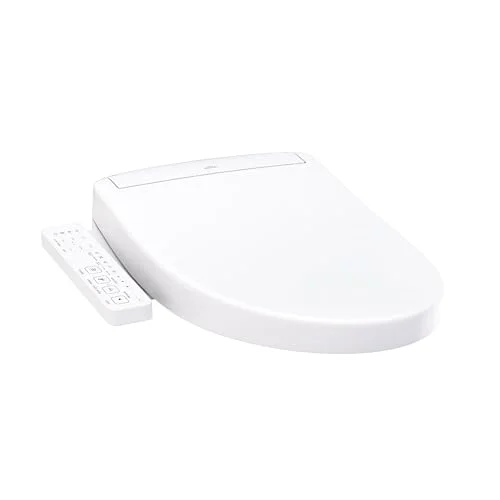
VOVO is a Korea-based manufacturer that builds nothing but bidet seats, and the VOVO VB-6000SE ($299.00) is a full electric seat with a wireless remote instead of a side panel, a heated seat, warm-air drying, an LED light and a stainless-steel nozzle — genuinely comparable in features to the premium tier above, at a price between the two. What's different is the support structure behind it: rather than a century-old plumbing manufacturer with regional service centers, VOVO runs its own customer-support channel and generally asks buyers to register the model and serial number after purchase to formally activate coverage. That registration step is worth doing the day the seat arrives, not filed away with the manual — a missed registration window is one of the most common reasons a legitimate claim gets delayed later.
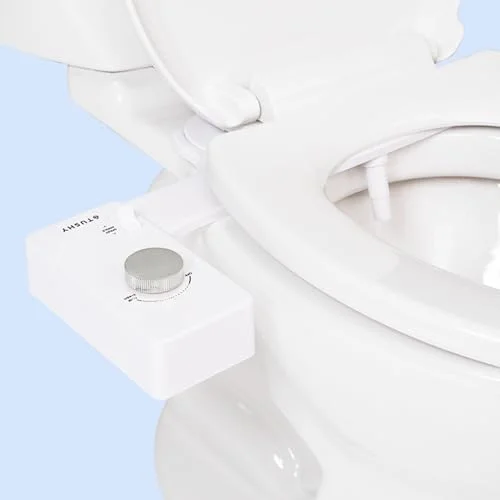
TUSHY is a direct-to-consumer brand best known for non-electric bidet attachments, and the TUSHY Classic 3.0 ($124.00) is exactly that — a brushed-nickel attachment with no heater, pump or control board, which narrows the list of things that can actually fail down to the valve, hose fittings and nozzle assembly. Support runs through TUSHY's own site and account system rather than a call center, which means opening a claim looks more like a customer-service ticket than a phone call to a plumbing manufacturer's authorized network. It's a smaller support footprint than TOTO or Kohler's, but it's also backing a mechanically simpler product with far fewer of the appliance-grade failure points that make a big-brand parts network matter in the first place.
The pattern across both: mid-tier brands often publish a warranty term that reads just as reassuring as a premium brand's — a defined duration, defect coverage — but the infrastructure behind that document is a smaller, direct-to-consumer operation rather than a century-old manufacturer with a nationwide service network. That's not automatically a downgrade; it just means support is email or account-portal based rather than a technician dispatch. If VOVO's remote-based controls versus a traditional side panel is part of your decision too, our side panel vs remote guide breaks down that trade-off.
When the seller is the whole company
Budget-generic brands: what changes when the seller is the only support line
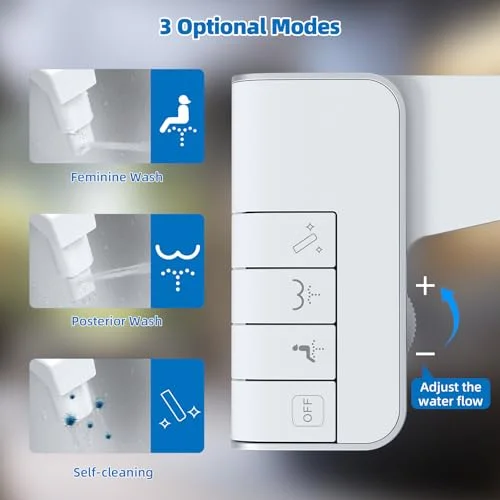
The Hibbent Bidet Attachment ($38.99) is representative of the budget-generic tier: a non-electric dual-nozzle attachment with adjustable water pressure and a self-cleaning sprayer, sold by a brand whose primary presence is the Amazon marketplace rather than a broader US retail and service footprint. That doesn't make it a bad product — non-electric attachments in this price range have very little to go wrong in the first place, just a valve core and a couple of nozzles — but it does change what "warranty" practically means. There typically isn't a nationwide authorized-service structure standing behind it the way there is with TOTO, Kohler, or even VOVO and TUSHY's own direct-support channels.
What actually protects you in the first weeks and months is less a formal manufacturer's warranty document and more Amazon's own return and replacement policy, plus how responsive the seller is through the message center. If a message goes unanswered, Amazon's A-to-z Guarantee is the real backstop, not a warranty card in the box — a meaningfully different relationship than calling a manufacturer's customer-care line, and worth going in with that expectation rather than assuming it behaves like a Kohler or TOTO warranty once the return window has closed.
The trade-off cuts in the budget option's favor for the right buyer: the lower the price and the more generic the brand, the more a "warranty" resembles a return window rather than a repair path — which matters far less on a product with almost nothing complex to fail than on a $300-plus electric seat with the same thin support. A simple non-electric attachment for a rarely-used bathroom is exactly that scenario; see our best bidet seats for guest bathrooms guide for more picks built around the same low-stakes math.