Bidet Seats in Cold Weather: What Actually Freezes
By Ilane TallUpdated September 20, 2026Research-based
Best Bidet Seats is reader-supported. When you buy through our links we may earn a commission, at no extra cost to you. Commissions never change which products we recommend.
Every winter, the same question shows up in bidet forums and product Q&As: "Will my bidet seat freeze and crack?" It's a reasonable worry, and it's aimed at the wrong part of the system. The seat itself — the plastic housing, the nozzle, the electronics on an electric model — is rarely what fails in a cold snap. The part that actually splits, cracks and floods a bathroom floor is almost always upstream of the seat: the thin supply line and the small valve that feeds it, sitting exposed in an unheated space with nothing but a few millimeters of copper, braided steel or plastic between the water and the outside temperature.
That distinction matters because it changes what you should actually do about it. Buying a "cold-weather" bidet seat doesn't protect a bathroom the way people hope it will, and a heated seat solves a completely different problem than a frozen line does. We compared how these systems are built, where the published fit and material specs point to added winter durability, and what plumbers and owners report about freeze damage, so you know exactly what's at risk in your bathroom and what to do about it before a hard freeze — not after a burst pipe.
One honest note before we start: we don't run a fake testing lab, and we never pretend to. Everything here comes from published specifications, manufacturer guidance and verified Amazon buyer reviews — including the ones describing what went wrong, which is where the real risk patterns live.
The actual risk
What freezes first: the supply line, not the seat
Freezes easily
The supply line and T-valve
A bidet's water path starts at a small T-valve spliced into your toilet's cold supply, then runs through a thin flexible hose — often braided steel or reinforced plastic — up to the seat. That hose holds a small, mostly still column of water in a narrow tube with almost no thermal mass. In an unheated space, it can drop to freezing well before the room "feels" cold enough to worry about, and ice expanding inside a rigid valve body or a weak hose fitting is the classic way these things crack.
Rarely freezes
The seat and its internals
The seat itself is mostly air, plastic housing and — on electric models — a sealed water path that's usually shorter and, on some designs, partially heated just by being in "standby." It isn't immune to cold, but the water sitting inside a bidet seat's internal tubing is a much smaller volume than the line feeding it, and it's typically the last thing to freeze, not the first. Owners who report freeze damage are describing a burst line or valve, not a cracked seat housing, in the large majority of cases we found in review threads.
The practical upshot: winterizing a bidet-equipped bathroom is a plumbing problem first and a bidet-seat problem second. Protect the line and the valve, and the seat mounted on top of it is very unlikely to be the thing that fails.
Where this actually happens
Cabins, garages and unheated bathrooms: the real risk cases
Freeze damage to a bidet line isn't a general winter risk — it clusters in a small number of predictable situations.
01
Seasonal cabins
A property left unheated between visits is the highest-risk case by far. If the heat is off and the pipes aren't drained, both the toilet's supply line and the bidet's T-valve are exposed to whatever the building's interior actually drops to — which in an unheated structure can track close to outdoor temperature.
02
Garage or barn bathrooms
Detached or minimally insulated structures with a half-bath are a close second. Even with the main house heated, a garage bathroom often runs on a separate, thinner-insulated supply run that's the first thing in the building to go below freezing on a hard-cold night.
03
Exterior-wall plumbing
Even in a heated home, a supply line routed through an exterior wall or an unheated crawlspace below the bathroom can sit meaningfully colder than the room's thermostat reading. This is the case that surprises people — the bathroom feels warm, but the pipe run doesn't follow the room's temperature.
04
Heat left off overnight
Vacation homes and rentals where the thermostat gets set low (or off) to save on heating bills during a cold snap put every exposed line in the building at risk for the duration, even if it's only a matter of days.
If none of these describe your bathroom — a normally heated, occupied home with interior plumbing — the freeze risk to a bidet line is genuinely low. This guide is aimed squarely at the cases above.
A common mix-up
Heated seats solve comfort, not the freeze risk
It's an easy assumption to make: if the seat has a heater in it, surely it keeps the whole system from freezing too. It doesn't, and understanding why clears up most of the confusion in this category.
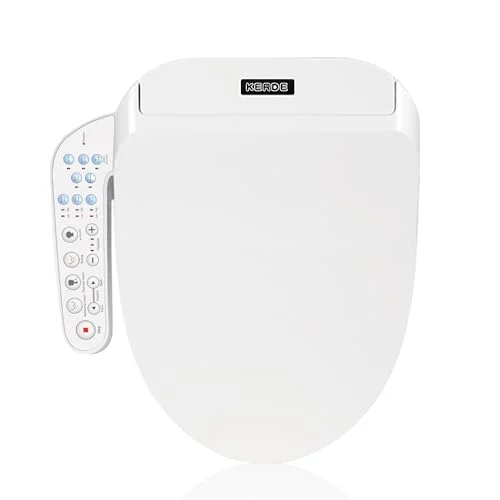
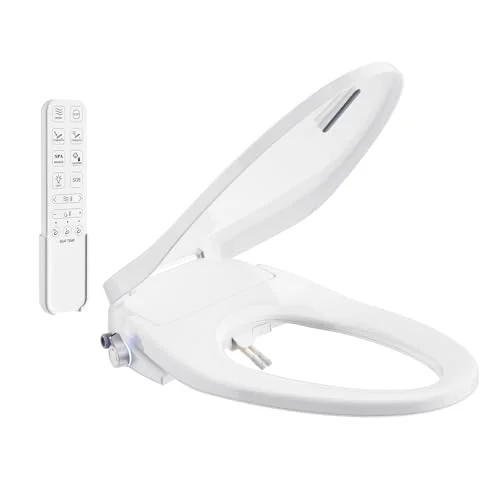
A heated seat warms the surface you sit on, and on models with a water heater — reservoir or instant — that heating element only activates the water that's about to be sprayed, right before or during use. Between uses, most electric bidet seats do not keep the full length of the supply line warm; the heater is downstream of the T-valve and the hose run, not upstream of it. So a heated model like the KERDE Electric Bidet Toilet Seat, which advertises a seat cushion that keeps a constant temperature in winter, is solving the part of winter that makes a cold seat unpleasant to sit on — it is not a claim about protecting the line feeding it from freezing.
That's not a knock on heated seats — a warm seat surface is a genuine, well-liked feature, and reviewers consistently note it as one of the first things they notice in cold months. It's simply a different problem than pipe protection. If your bathroom is in one of the risk cases above, a heated seat is a comfort upgrade you can enjoy right up until the night the line itself freezes, and then it's off the same as everything else until that's fixed.
Before a hard freeze
Draining or shutting off the line before a hard freeze
If your bathroom falls into one of the risk cases above and a hard freeze is forecast, the fix is the same one plumbers give for any exposed fixture: get the water out of the line, or get the line entirely dry, before the temperature drops. In practice that means:
Shut off the T-valve. The small valve that splits water to the bidet has its own on/off handle in almost every install. Turning it off isolates the bidet's hose run from the rest of the supply without touching the toilet's main water.
Open the bidet's controls briefly to relieve pressure, then let any remaining water in the line drain by gravity where possible — this matters most for the flexible hose section, which has no other way to empty itself.
For a property you're leaving unheated for weeks, shut off the main supply to the toilet as well, and flush to clear the tank and bowl, exactly as you would for winterizing any fixture in a seasonal home.
Unplug an electric seat if the room will go unheated for an extended period. It won't prevent a line freeze on its own, but it's good practice any time a bathroom is left powered-on and unattended in freezing conditions.
None of this is bidet-specific engineering — it's the same logic as winterizing an outdoor spigot, applied to a smaller, more exposed line indoors. The reason it's worth stating plainly is that a bidet's T-valve and hose are easy to forget precisely because they're new and small compared to the fixtures people are used to protecting. If your bathroom only has a single angle stop and no spare port for the bidet's T-valve, our guide to installing without a spare valve covers the fittings that make the split possible in the first place — worth checking before you assume your install can even be isolated cleanly.
A hard freeze is also, not coincidentally, the same kind of severe weather that knocks out power. If you're weighing how an electric seat behaves when the lights go out along with the cold, our guide on what a bidet seat does when the power goes out walks through what still works and what doesn't.
The picks
Seats built with cold rooms in mind
None of these prevent a frozen supply line — nothing marketed for a home bathroom does — but each addresses the comfort side of a cold-weather install in a documented way.
KERDE Electric Bidet Toilet Seat (Armrest)
Best for a heated seat surface in winter
Warm water cleaning paired with a seat cushion the listing describes as keeping a constant temperature in winter, plus slow-close and one-click operation. It's the clearest match on this list for someone whose main cold-weather complaint is a cold seat, not a frozen line — the two are separate problems, and this addresses the one it can.
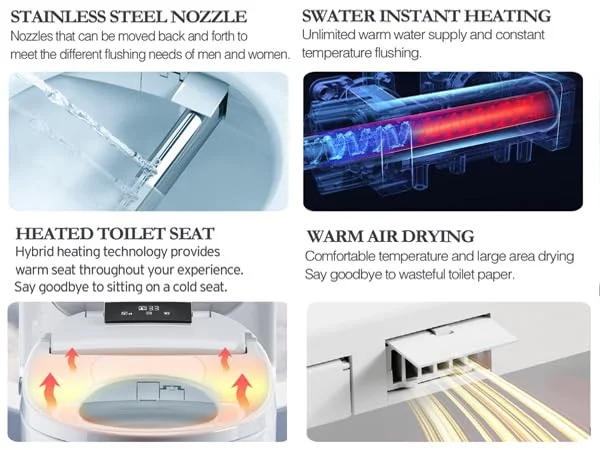
Best for instant warm water plus a warm-air finish
Instant warm water and a heated seat are joined here by a warm air dryer — a feature that matters more in a cold bathroom than a warm one, since air-drying after a wash is far less pleasant when the room itself is cold. The remote and LED display mean you're not reaching for a cold side panel with wet hands, either.
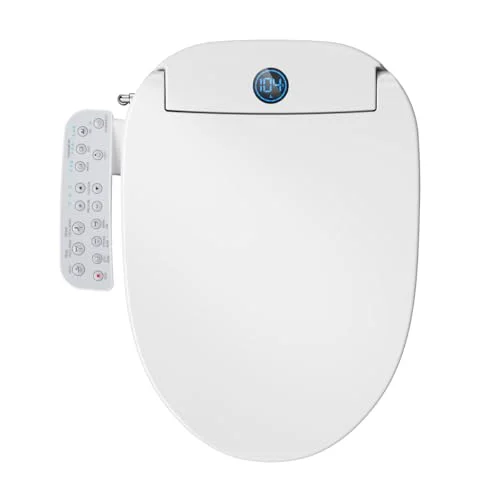
A heated seat and warm air dryer bundled together at the top of this list's price range. If you're outfitting a bathroom you expect to be genuinely cold for parts of the year — a converted garage, a three-season room — this pairs the two comfort features that matter most in that setting rather than making you choose one.
The lowest-priced electric option here, for a household that mainly wants to stop sitting on a cold seat every winter morning without paying for a full luxury feature set. It's an elongated-fit seat; check the listing's own dimensions against your bowl before ordering, since bowl shape is the one spec we won't guess at.
If a hard freeze already happened before you read this, the question changes from prevention to diagnosis. A handful of signs point specifically to freeze damage rather than an ordinary fault:
Water at the wall or floor when the valve is opened. This is the classic sign of a cracked line or valve body — ice expanded inside a rigid section, split it, and the crack only shows once liquid water is flowing through it again. Shut the valve immediately and inspect before using the bidet again.
No flow, or a weak trickle, with the valve fully open. A line that's still partially frozen, or one with ice fragments lodged in it, will restrict flow even after the room has warmed up. Don't force it or apply heat directly to a pressurized line — let it thaw gradually and check for leaks as it does.
A hose or fitting that looks swollen, bulged or discolored compared to how it looked when installed. Flexible supply hoses can survive one freeze-thaw cycle and still show visible stress that predicts a future failure — worth replacing rather than waiting to see.
An electric seat that won't power on, or throws an error, after the room has been below freezing. This points at the seat's internals rather than the line, and is worth checking against the manufacturer's troubleshooting guide before assuming the unit needs replacing — a GFCI outlet that tripped during the cold snap is a common, easily fixed cause.
Any of the first three signs warrant shutting off the water supply and, if you're not confident diagnosing plumbing damage yourself, a call to a plumber before turning the water back on. A cracked valve or hose under pressure is exactly the kind of small failure that turns into a large repair bill if it's reconnected and left unattended. And if the seat itself needs replacing after a bad freeze rather than just a hose or valve, it's worth knowing what's actually covered before you buy the replacement — our breakdown of bidet seat warranty and support by brand compares what five manufacturers promise when a part fails.
FAQ
Cold weather and bidet seats: common questions
Can a bidet seat actually freeze and break?
The seat itself rarely does — the far more common failure is the supply line or the small T-valve that feeds it, both of which hold a thin column of water with little thermal mass. In an unheated bathroom, cabin or garage, that line can freeze and crack before the seat's own internals are affected.
Does a heated bidet seat prevent the line from freezing?
No. A heated seat warms the seat surface and, on some models, the water right before it's used — it does not keep the length of hose and the T-valve upstream of it warm. Heated seats solve comfort, not pipe protection; treat them as separate problems.
Should I shut off my bidet's water before a hard freeze?
If your bathroom is in an unheated cabin, garage, or a space with exterior-wall plumbing, yes. Shut the T-valve, relieve pressure through the controls, and let the flexible hose drain where possible — the same logic used for winterizing any exposed fixture.
My bidet had no flow after a cold snap — what now?
Don't force the valve or apply direct heat to a pressurized line. Let the bathroom warm gradually, then check for leaks at the valve and hose fittings once flow returns — a crack from expanding ice often only becomes visible once water is moving through it again. If you see any water at the wall or floor, shut the valve and consider a plumber before reconnecting.