By Ilane TallUpdated September 19, 2026Research-based
Best Bidet Seats is reader-supported. When you buy through our links we may earn a commission, at no extra cost to you. Commissions never change which products we recommend.
Every bidet install starts at the same spot: the little valve poking out of the wall behind your toilet. It's called the angle stop, and in a house built or renovated in the last twenty years it usually has a bit of extra room around it — sometimes a second, pre-plumbed port, sometimes just enough clearance to add a fitting without a fight. In an older home, you often get neither. One valve, one outlet, barely enough space to get a wrench in, and a supply line that was sized for exactly one job: filling the tank.
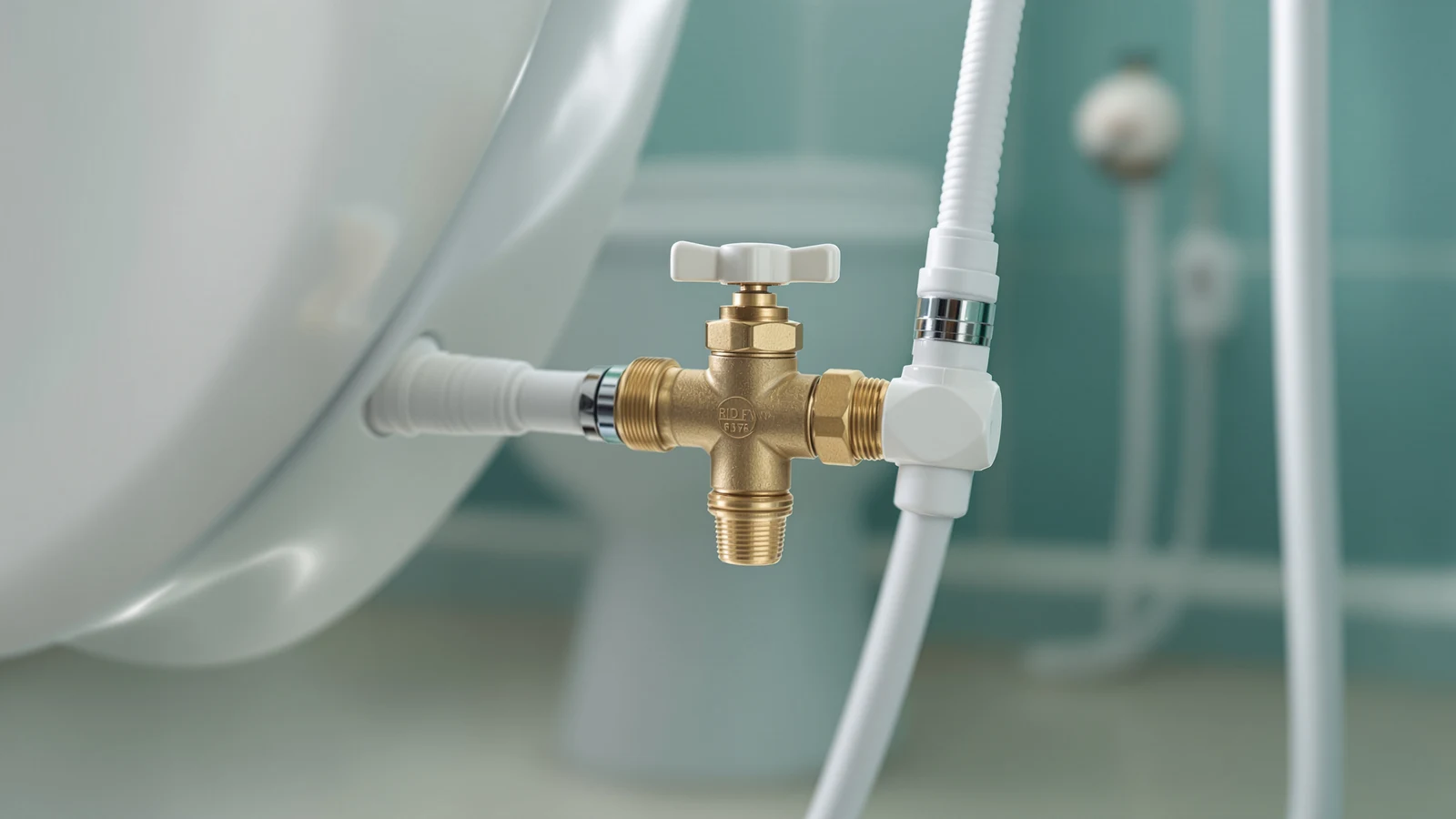
That single-valve setup is the most common reason a bidet installation stalls before it starts. The good news is that it almost never needs a plumber. The part that makes it possible is a T-valve — a small brass fitting that splits your existing cold line into two — and nearly every non-electric bidet attachment or manual bidet seat ships with one in the box, sized to work with a standard single angle stop. The job is usually a five-dollar part and twenty minutes with a wrench. Occasionally it isn't, and this guide is as much about recognizing that second case as it is about the first.
One honest note before we get into it: we don't run a testing lab and we've never installed every bidet on the market ourselves. What follows comes from comparing manufacturer installation instructions, published specs, and the installation complaints and praise that show up again and again in verified owner reviews — which is exactly where a single-valve bathroom tends to surface as a problem.
The short answer
If you only read one paragraph
You do not need a second port on your angle stop to install a bidet. You need a T-valve, which is the small fitting that creates that second outlet for you by sitting between the existing valve and the toilet tank. Almost every non-electric bidet attachment and manual bidet seat includes one sized for a standard single angle stop, so for most 1990s-or-newer bathrooms this is a five-dollar part and a twenty-minute job with no tools beyond a wrench and a roll of plumber's tape. The exception is a genuinely old, corroded, or non-standard valve — the kind found in some pre-1980s homes — which is a plumber's job, not because the bidet needs anything unusual, but because that valve was already due for a replacement.
The one part
What a T-valve actually does
Strip away the branding and a bidet — electric or not — is downstream of exactly one thing: the cold water line that already feeds your toilet tank. There's no separate bidet plumbing hidden in your walls. The T-valve is the part that makes one line do two jobs. It threads onto your existing angle stop in place of the toilet's supply hose and adds a third port: the original still feeds the tank, and the new one feeds a hose to the bidet seat or attachment. Turn the bidet's own control, and water flows through that branch instead of, or alongside, the tank fill line. Nothing about the tank's operation changes.
That's the whole mechanism, and it's why the name is slightly misleading: a T-valve doesn't require your house to have "spare" plumbing anywhere. It creates the second outlet from a single existing line. This is also why almost every non-electric kit includes one as standard hardware — manufacturers assume, correctly, that most bathrooms have exactly one valve behind the toilet and nothing else.
Older homes
The single-angle-stop problem
If a T-valve solves the "no spare port" issue by design, why does this trip people up at all? Because it still has to physically fit onto the valve that's already there, in the space that's already there, and in an older bathroom several things can work against it at once:
The clearance is tight. Toilets installed close to the wall, or angle stops mounted low and near the floor, can leave only an inch or two of room. A T-valve adds length to the connection — sometimes as little as half an inch, sometimes more with a bulky housing — and in a cramped space that's enough to make the tank's supply line kink or the toilet sit slightly off its base.
The valve itself is old. Many homes built before the 1990s still have their original multi-turn (gate-style) angle stops rather than modern quarter-turn ball valves. These can seize from decades of never being touched. The valve doesn't need to move to install a T-valve — but the water does need to be shut off first, and a stop that hasn't been turned in thirty years sometimes doesn't shut off cleanly, or drips afterward from a washer that was never going to survive being disturbed.
The thread or fitting size is non-standard. The overwhelming majority of U.S. angle stops use a 3/8" compression outlet, which is what nearly every bidet T-valve is built for. Older or imported fixtures occasionally use a different size or a compression fitting that's been swapped at some point, and a T-valve that doesn't thread on cleanly is not something to force.
Water pressure and hammer. Splitting a line that's already running on the high side of normal pressure, behind a valve that's partly corroded, is a bit more failure-prone than doing the same job on a newer, freely-turning stop.
None of this means the job needs a plumber by default — it means the valve itself, not the bidet, is the thing worth inspecting first. If your angle stop turns smoothly, shuts off completely, and has an inch or two of clearance behind the toilet, you're almost certainly in five-dollar-part territory. If it's stiff, corroded, drips after you close it, or there's genuinely no room to work, that's your answer before you've spent a cent on a bidet.
Before you buy
Four things to check behind your toilet first
01
Does it turn?
A quarter-turn ball valve (a lever, not a wheel) that moves freely is the easy case. A multi-turn wheel valve that hasn't been touched in years is the one to test gently before you commit.
02
How much room?
Measure the gap between the valve and the wall behind the toilet, and between the valve and the tank. A T-valve typically adds a small amount of length in both directions.
03
Any drips already?
A valve that already weeps at the packing nut is telling you it's near the end of its life — disturbing it to add a T-valve may be the push that makes it worse.
04
Standard thread?
Most U.S. angle stops are a 3/8" compression outlet, which is what bidet T-valves are sized for. If yours looks unusual or has been adapted before, check before you order.
Reading the listing
Kits that include a T-valve vs. ones that assume you already have a port
Because the single-angle-stop scenario is so common, most non-electric bidet attachments and manual bidet seats are designed and boxed around it — the T-valve isn't an accessory, it's the part that makes the rest of the kit work at all. Before you order, it's still worth confirming on the listing itself that a T-valve (sometimes called a diverter valve, tee connector, or dual-outlet angle stop) is included, rather than assumed. A kit that arrives without one is a kit that assumes you already have a second port to connect to — rare in a residential bathroom, and not something to discover after the toilet's already shut off.
The four products below are all non-electric — an attachment that clamps under your existing seat, or a full manual seat that replaces it outright — which matters here because both designs connect to the exact same single supply line as your toilet tank, through the exact same kind of T-valve. There's no separate wiring, no outlet requirement, and no additional plumbing path to plan for. The only real installation variable across all of them is the one this guide has been building toward: the condition of the angle stop that's already behind your toilet.
In the box
Manual seats and attachments: which hardware ships with which
It helps to separate the two hardware categories, because they solve slightly different problems and install slightly differently even though both rely on the same valve mechanism:
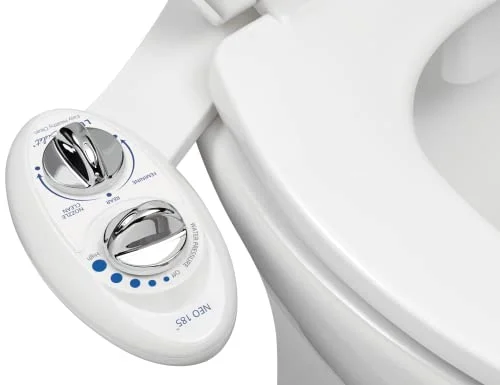
Attachments — like the Hibbent Bidet Attachment ($38.99) and the LUXE Bidet NEO 185 ($49.99) — clamp underneath your existing toilet seat rather than replacing it. You unbolt the seat, sandwich the attachment's mounting plate between the seat hinges and the bowl, and bolt everything back down. The water side is the same story either way: a hose runs from the attachment to the T-valve behind the toilet. Because you keep your current seat, this is the path with the least to remove and the least that can go wrong mechanically — the parts that matter are the valve connection and the hose itself.
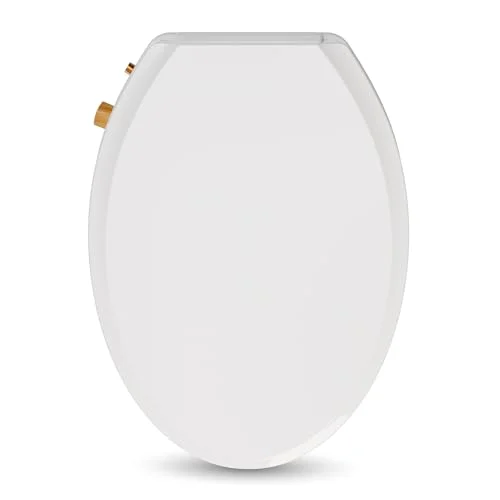
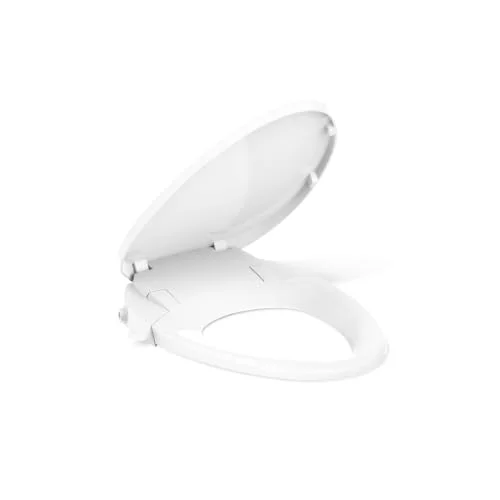
Manual bidet seats — like the VOVO Nature 7 ($79.00) and the Kohler PureWash M300 ($93.75) — replace your toilet seat entirely, with the wash mechanism built into the seat itself rather than wedged beneath it. You remove the old seat completely, mount the new one, and connect the same style of supply hose to the same T-valve. The Kohler M300 in particular ships with quick-release hinges, which make the seat itself easy to lift off later for cleaning — a detail worth knowing about regardless of what your valve situation looks like, since it means routine maintenance doesn't require redoing the plumbing connection.
In both cases, the valve is the one part of the job that isn't inside the box — it's the one already on your wall — which is exactly why it deserves the five minutes of inspection this guide recommends before you buy anything.
The picks
Four non-electric options, all built for a single valve
All four connect through the same T-valve mechanism described above. Prices move on Amazon — confirm the live price before buying.
The lowest-cost way to find out if this is for you
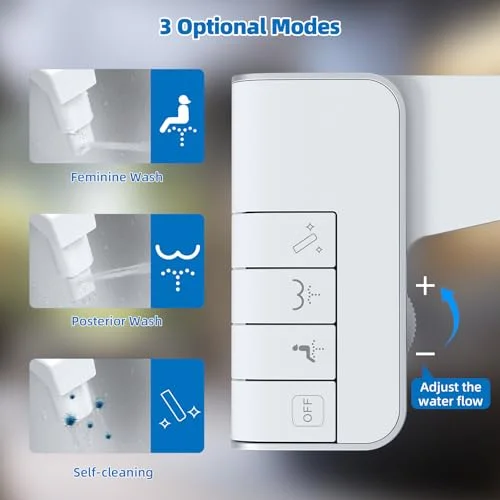
A dual-nozzle attachment with separate front and rear wash, adjustable water pressure control, and a self-cleaning water sprayer, for under $30. It clamps under your existing seat and connects through the same single T-valve as every other option here — the cheapest possible way to test the whole idea before spending more.
An attachment that mounts between your existing seat and the bowl, at 13.5 x 7 x 3 inches, so there's nothing to remove but the seat bolts. Like the Hibbent, it draws from the same single supply line through a T-valve — no second port, no outlet, no extra plumbing to plan for.
Rather than adding an attachment under your current seat, the Nature 7 replaces the seat outright, with ambient-temperature water and easy installation, built for elongated toilets. It still connects through the identical single-valve T-fitting — the difference is entirely in how it looks and mounts, not in what it asks of your plumbing.
A manual elongated bidet seat with a white control handle, a quiet-close lid, quick-release hinges for easy cleaning, and a self-cleaning wand — from a manufacturer whose whole business is bathroom fixtures. Installation still comes down to the same single-valve connection; what Kohler adds is a name with a genuine parts and support channel behind it. See our warranty and support by brand guide for what that's worth in practice, and our TOTO Washlet vs Kohler PureWash comparison if you're weighing Kohler against the electric side of the line.
When it's a five-dollar part, and when it's a plumber
Most of the time, this really is as small a job as it sounds. If your angle stop is a modern quarter-turn valve, turns and shuts off cleanly, and there's an inch or two of room behind the toilet, installing a T-valve is a wrench, a roll of plumber's tape, and about twenty minutes — the same install described in our general bidet seat controls guide. Shut off the water, disconnect the existing supply hose, thread the T-valve on, reconnect the tank's hose to one port and the bidet's hose to the other, turn the water back on slowly, and check every connection for drips. The single most common issue reported across owner reviews, for any brand, is a slow weep at the T-valve threads — solved in nearly every case by more plumber's tape and a quarter-turn further, not by a new part.
The signs that this has crossed from a DIY afternoon into a plumber's job are specific, and worth taking seriously rather than pushing through:
The valve won't fully shut off, or drips steadily after you've closed it — a sign the valve itself has failed, independent of anything to do with the bidet.
The valve is stuck and won't turn at all, or turns with a grinding resistance that suggests internal corrosion.
There's visibly no clearance to fit any fitting between the valve and the wall or floor.
The outlet size or thread doesn't match a standard 3/8" compression fitting, and no adapter resolves it cleanly.
In every one of those cases, the honest read is that the valve needed replacing whether or not a bidet was ever in the picture — you've just discovered it a little earlier than you would have otherwise. A plumber swapping an old angle stop for a modern quarter-turn valve is typically a short, inexpensive visit, and it solves the problem permanently: the new valve will not just accept a T-valve cleanly, it'll be easier to shut off next time you need to work on anything else in the bathroom. Trying to force a fitting onto a valve that's already failing risks turning a small, contained problem into water on the floor.
If you're not sure which category you're in, there's no harm in finding out cheaply: buy the least expensive option here, the Hibbent attachment at $38.99, and treat the valve inspection as the real first step of the install. If it goes on cleanly with no drips, you've got your answer for a fraction of the cost of a full manual seat. If the valve fights you, you've spent thirty dollars discovering something worth knowing before you called a plumber anyway — and the attachment will still be waiting once the new valve is in.
FAQ
Installing without a spare valve: common questions
Do I need a plumber to add a T-valve?
Almost never. A T-valve threads onto your existing angle stop in place of the toilet's current supply hose, using hand tools and plumber's tape. It becomes a plumber's job only if the existing valve itself is stuck, corroded, leaking, or uses a non-standard fitting — in which case the valve needed replacing regardless of the bidet.
What if my bathroom only has one valve behind the toilet?
That's the normal case, not a special one. A T-valve is designed specifically to split a single existing line into two outlets — one for the toilet tank, one for the bidet — so a single angle stop is exactly what these kits expect to find.
How do I know if my angle stop is too old to work with?
Check whether it's a quarter-turn lever (modern) or a multi-turn wheel (older), whether it shuts off completely without dripping, and whether there's roughly an inch or two of clearance around it. A valve that's stiff, drips after closing, or leaves no room for a fitting is a sign to call a plumber rather than force the install.
Do attachments and full manual seats need different valves?
No — both connect through the identical single-valve T-fitting. An attachment clamps under your existing seat and runs a hose to the T-valve; a manual seat replaces the seat entirely but connects to the water supply the same way. The valve situation behind your toilet is the same consideration either way.