Brand vs Category · 2026
Bidet Seat vs Washlet: Is There Actually a Difference?
By Ilane TallUpdated September 6, 2026Research-based
Best Bidet Seats is reader-supported. When you buy through our links we may earn a commission, at no extra cost to you. Commissions never change which products we recommend.
Type "washlet" into a search bar and you'll get bidet seats from a dozen brands that have nothing to do with TOTO, the company that owns the word. That's the confusion in one sentence: Washlet is a trademark, not a type of product. Every Washlet is a bidet seat. Very few bidet seats are a Washlet. The two terms get used interchangeably the way "Kleenex" stands in for tissue or "Jacuzzi" for any whirlpool tub — a single brand became so dominant that its name absorbed the category around it.
That linguistic slide has a real cost for shoppers. If you assume "washlet" describes a feature set — heated seat, warm water, remote — rather than one manufacturer's specific product line, you'll compare listings on the wrong axis and either overpay for the name or underpay for a seat you thought was equivalent and isn't quite. This guide sorts out where the word came from, what TOTO's actual product does that a generic seat doesn't, what the rest of the market legitimately copied, and how to read a spec sheet so the brand premium is a decision you make on purpose rather than by accident.
One honest note before we start: we don't run a testing lab and we've never owned every seat on the market to compare side by side. Everything below comes from TOTO's own published specifications, competitors' published specifications, and verified Amazon buyer reviews — including the critical ones, which is usually where a spec sheet's fine print becomes a lived experience.
Where the word comes from
A trademark that swallowed its own category
TOTO is a Japanese sanitaryware manufacturer founded in 1917, and in 1980 it launched a product called the Washlet — an add-on electronic seat that added a heated seat and a warm-water wash to a standard toilet. It wasn't the first bidet-adjacent product in the world; bidet fixtures and simple attachments existed long before. What TOTO did was package the idea into a single electric seat a homeowner could install, and market it hard enough that within a couple of decades "washlet" had become the word ordinary people in Japan used for the entire category, TOTO or not — the same way "band-aid" became shorthand for any adhesive bandage.
That's called genericization, and trademark lawyers hate it, because a name that stops meaning "our specific product" and starts meaning "this kind of product" can eventually be ruled unenforceable — it's the exact fate that befell "aspirin," "escalator" and "thermos," all once brand names. TOTO has fought this actively: WASHLET® appears with the registered-trademark symbol on virtually all of its official marketing, and the company polices the term where it can. Under U.S. trademark law, "washlet" is registered to TOTO and legally distinct from the generic term "bidet seat" or "bidet toilet seat," which is why you'll see TOTO's own product pages and press materials consistently write "WASHLET®" rather than let it read as a plain noun.
In everyday shopping, though, the trademark law doesn't stop the drift. Search traffic and casual conversation treat "washlet" as interchangeable with "bidet seat," and plenty of non-TOTO listings on Amazon and elsewhere use the word in bullet points or backend search terms to catch that traffic, even though the product inside the box carries a different brand name entirely. That's not necessarily fraud — it's the same genericized-name problem playing out in an SEO context — but it does mean the word on the listing tells you nothing reliable about who actually made the seat.
The real company
What TOTO does differently, honestly
Strip away the brand-name confusion and there's a genuine engineering question underneath: does a TOTO WASHLET do anything a competitor's seat doesn't? Based on published specifications, yes — a handful of specific things, not a wholesale category gap.
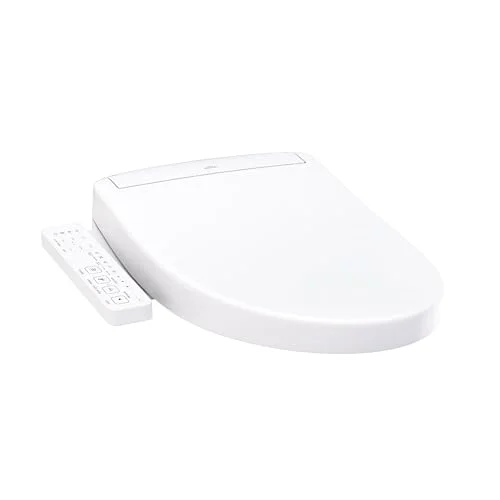
The TOTO WASHLET S2 ($420.00) uses instantaneous water heating — a tankless system that heats water on demand rather than holding a reservoir warm around the clock, so the wash never runs lukewarm partway through regardless of how long you take. It also bundles two features that are distinctively TOTO's: PREMIST, which mists the bowl with water before each use so waste is less likely to stick and the bowl stays cleaner between scrubs, and EWATER+, which cleans the wand itself with electrolyzed water before and after every use rather than relying on a plain water rinse. Both are proprietary systems TOTO has iterated on for years, and neither shows up, under those names, on non-TOTO seats.
What that buys you, honestly, isn't a different category of hygiene — it's a more thorough, more self-maintaining version of the same basic idea every electric bidet seat is built around. The wand still washes with a stream of water; TOTO's version just also cleans itself more aggressively and pre-treats the bowl. Reviewers consistently note the WASHLET line's quiet operation and the tankless heater's reliability, alongside the price tag, as the two things that come up most.
The rest of the market
What everyone else copied — and got right
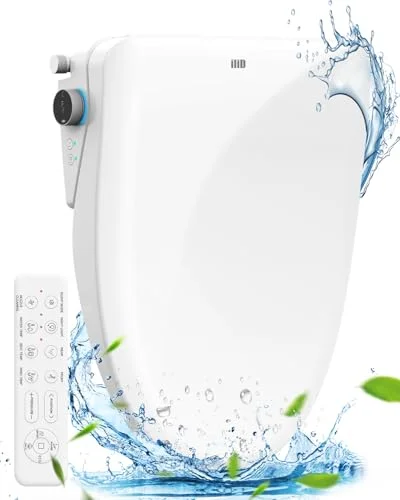
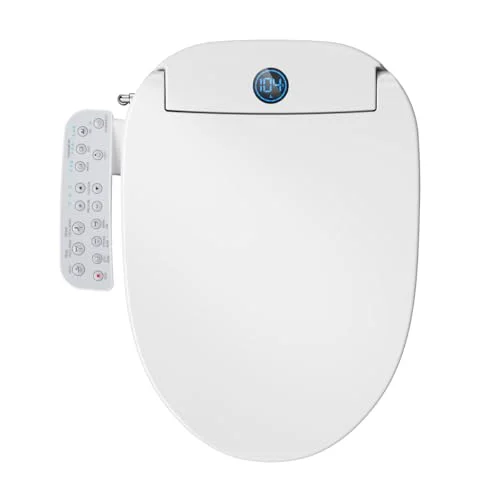
The core electric-bidet-seat formula — heated seat, warm-water wash, adjustable pressure and position, a remote or side panel — is not patented in any way that stops competitors from building it, and most of the market has. The GAICOM Electric Bidet Toilet Seat ($189.96) and the iliD Heated Bidet Toilet Seat ($179.98) both ship as elongated electric seats with a heated seat, warm-water wash and a remote — the same essential job description as the WASHLET S2, at well under half the price.
Where the generic competitors typically differ isn't the presence of the feature but its implementation. A budget-to-midrange electric seat is far more likely to use reservoir (tank) heating, which holds a fixed volume of warm water ready and can run cold if a wash goes on too long or a second person uses it right after the first — rather than the tankless heating TOTO uses on the S2. That's a real, felt difference, but it's an engineering choice available to any manufacturer willing to pay for the more expensive heater — it isn't something only TOTO knows how to build. Some competitors do use instant heating too; check the individual listing's specifications rather than assuming brand determines heater type.
The honest summary: the market copied the formula successfully. What it mostly didn't copy — because it costs more to build and TOTO has spent decades refining it — is the specific combination of instant heating, PREMIST and EWATER+ wand self-cleaning in one product. Whether that combination is worth the price gap is a personal-budget question, not a hygiene one; a well-built generic seat with a wand rinse still delivers the core clean.
How to actually compare
Reading a spec sheet across brands
Once you stop treating "washlet" as a feature checklist and start reading the actual spec sheet, comparing brands gets much simpler. Four lines on any listing tell you almost everything that matters:
- Heater type. Look for the words "instant," "tankless" or "on-demand" versus "reservoir" or "tank." This is the single spec most likely to separate a seat you love from one you tolerate — see our how long the warm water lasts breakdown for exactly how the two behave in practice.
- Bowl shape and size. "Elongated" and "round" are not interchangeable, and a mismatch leaves a visible gap or an overhang. If a listing doesn't state a size, don't assume — check the product page directly before ordering.
- Wand cleaning method. A plain water rinse before and after use is standard; a named self-cleaning system (TOTO's EWATER+, or a UV or electrolysis step on other brands) is the upgrade. Our self-cleaning nozzles and hygiene features explained guide goes deeper on what these systems actually do.
- Control method. Side panel versus wireless remote is a comfort difference, not a hygiene one, but it's frequently the line item that decides which seat a household actually enjoys using day to day.
Price alone is a poor comparison tool, because it blends brand premium, heater type and feature count into one number. Two seats at the same price can differ enormously — one might spend its budget on a tankless heater with a bare-bones remote, another on a full feature panel with a reservoir heater that runs cold after thirty seconds. Read the four lines above before the price tag.
The decision
When the brand premium is worth paying
Pay for the genuine TOTO WASHLET when instant heating actually matters to your household — multiple daily users, or anyone who takes a longer wash and has been annoyed by a reservoir seat running cold partway through. It's also the more defensible buy if PREMIST and EWATER+ specifically appeal to you: less residue sticking to the bowl, and a wand that sanitizes itself rather than getting a plain-water rinse. TOTO also carries the manufacturer support and parts availability of a company that's built nothing but sanitaryware for over a century, which matters if a wand or control board ever needs replacing years down the line.
Skip the premium and buy a generic seat like the iliD or the GAICOM when what you actually want is the everyday comfort formula — heated seat, warm water, a remote — and you're not going to notice the difference between a self-cleaning wand and a rinse-only one in daily use. Neither of these choices is the "wrong" one; they're built for different budgets solving the same basic problem, and the word "washlet" on a listing shouldn't be the deciding factor either way. Confirm the bowl fit and heater type on the actual listing before you buy, and let those two lines — not the brand name — settle it.