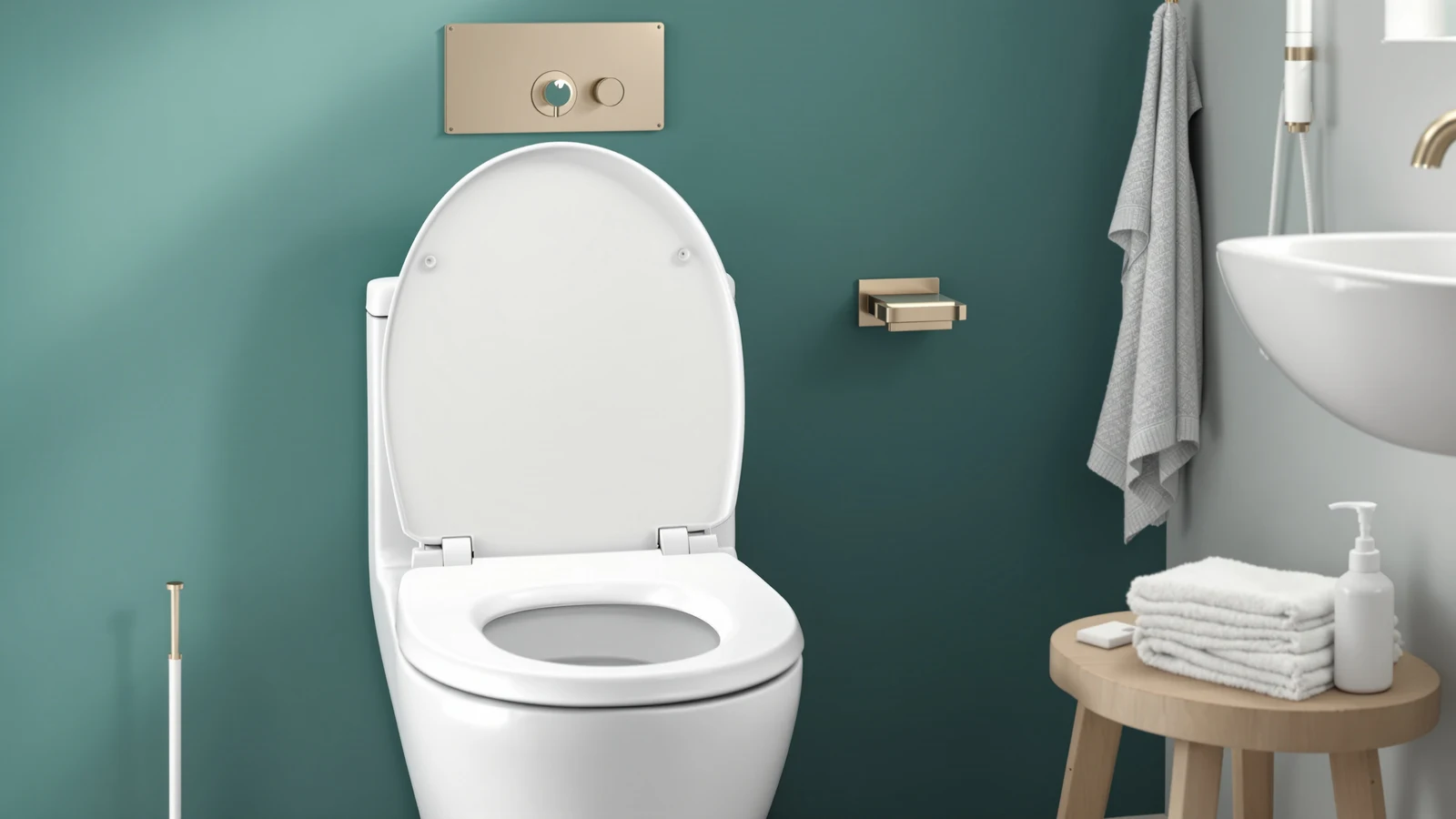
How to Clean and Maintain a Bidet Seat (Without Wrecking It)
Best Bidet Seats is reader-supported. When you buy through our links we may earn a commission, at no extra cost to you. Commissions never change which products we recommend.
A bidet seat is one of the lowest-maintenance upgrades you can make to a bathroom, and that's exactly why people mistreat it. There's no filter to change every month, no belt to replace, no obvious wear part staring at you — so most owners either ignore it entirely or, worse, decide it needs the same scrub-and-bleach treatment as the rest of the toilet. Both instincts cause the two most common failures we see reported in owner reviews: a nozzle that starts spraying sideways because mineral scale has clogged half its holes, and a seat hinge or control panel that's gone cloudy, cracked or discolored because someone reached for the wrong bottle.
None of this requires effort so much as it requires knowing the four or five things that actually matter. We compared manufacturer care manuals, descaling guidance and thousands of verified owner reviews across electric and non-electric seats to put together the maintenance routine that keeps a bidet seat working the way it did on day one — and the short list of products and habits that quietly shorten its life. One honest note up front: we don't run a physical testing lab and never claim to; everything below comes from published manufacturer guidance and what owners report after months or years of real use.
The weekly two-minute routine
Here's the part that surprises new owners most: a bidet seat mostly cleans itself. The nozzle only extends to spray and retracts back behind a plastic guard gate immediately after, which means it spends well over 99% of its life sealed away from the rest of the toilet bowl. That single design detail is why bidet nozzles don't need daily attention the way, say, a showerhead does.
What the nozzle guard doesn't stop is the ordinary bathroom film — hard-water spots, a faint mineral haze, the residue that collects on any wet surface near a toilet. Once a week, that's what you're wiping away, not scrubbing away:
- Wipe the seat, lid and control panel with a damp microfiber cloth and a mild, unscented soap or a bathroom-safe wipe. Dry with a second cloth so water doesn't sit in the seams around buttons or a remote dock.
- Wipe the visible nozzle tip when it's retracted or briefly extended (most remotes have a "nozzle clean" or "move" button for exactly this). A soft cloth is enough for the small amount of film that collects on the tip itself.
- Check the base and hinge where the seat meets the bowl — this is the spot most easily missed with a wipe-only routine, and where grime actually accumulates fastest.
- Skip the toilet brush entirely. Bidet seats and their nozzles are not built for bristles; a brush belongs in the bowl, not on the seat.
Two minutes, once a week, and you've covered the part of the seat you actually touch. The mechanism underneath needs far less attention than people assume, which is the whole point of the next section.
Self-cleaning modes: what they do, and what they don't
Most electric seats — the Kohler PureWash E580, the Kohler PureWash E590, the TOTO WASHLET S2 and similar models — include a self-cleaning or "nozzle clean" cycle, usually triggered automatically before and after every use, or on demand from the remote. It is a genuinely useful feature, and the main reason bidet nozzles stay cleaner than people expect. Implementations differ more than the marketing suggests: Kohler rinses the stainless wand before and after each use, the E590 adds a UV step, and TOTO’s EWATER+ goes furthest by cleaning the wand with electrolyzed water inside and out. But it's worth being precise about what it actually does, because the marketing copy tends to overpromise.
A self-clean cycle runs a short burst of the same water that comes out during a normal wash across the outside of the nozzle, rinsing off surface residue before the nozzle retracts behind its guard. That's it. It is a rinse, not a disinfecting cycle — there's no soap, no heat-sanitizing, no UV step on any of the products named here. It prevents residue from building up in the first place; it does not deep-clean a nozzle that's already scaled up or discolored, and it does nothing for the parts of the seat you actually touch — the lid, the seat ring, the control panel — which is why the weekly wipe-down above still matters even if you never miss a self-clean cycle.
If your model's self-clean has an automatic "before and after use" setting, leave it on — it's the single easiest way to reduce how often you need to think about nozzle maintenance at all.
Hard water and descaling
If a bidet seat is going to disappoint an owner, hard water is usually why. Every drop that comes out of the nozzle passes through the same tiny openings every time, and in a hard-water home — roughly 85% of the US has water hard enough to matter, per common industry estimates — those openings accumulate mineral scale exactly the way a kettle or coffee maker does. The symptoms show up gradually: a spray that goes from a clean stream to a weak fan, then to spraying at an angle, then, eventually, to barely spraying at all. Reviewers consistently note this exact progression on models that otherwise worked well for months.
The fix nearly every manufacturer manual allows is the same one that works on a coffee maker: a diluted white vinegar soak, because vinegar's mild acidity dissolves calcium and lime scale without the harshness of a commercial descaler. The general approach, reflected across manufacturer care guidance:
- Mix equal parts white vinegar and water in a small bowl or cup.
- Extend the nozzle using the remote or panel button (never pull it out by hand — see the quick-release section below for the one exception).
- Wipe or briefly soak the visible nozzle length with a vinegar-dampened soft cloth, focusing on the spray holes.
- Dwell time matters more than scrubbing. A few minutes of contact does more than aggressive rubbing — scale dissolves with time, not friction.
- Rinse and dry with a clean, water-dampened cloth afterward so no vinegar residue sits on the plastic, then retract the nozzle.
In a genuinely hard-water home, doing this monthly — instead of waiting for the spray pattern to visibly weaken — keeps scale from ever building up enough to matter. If you know your water is very hard, an inline water filter or softener attachment on the bidet's supply line (sold by most bidet brands, TOTO and Kohler among them, as an accessory) reduces how often descaling is needed in the first place, since it catches minerals before they ever reach the nozzle.
Cleaners that damage plastic and seals
This is the section that saves the most seats. Bidet seats are built from ABS or polypropylene plastic with rubber gaskets and O-ring seals at every water connection, and both materials react badly to a shorter list of common household cleaners than you'd think. Manufacturer care manuals are consistent on what to keep away from a bidet seat:
- Bleach and bleach-based toilet cleaners. Bleach degrades rubber seals and gaskets over repeated exposure, which is how a seat develops a slow water leak at a connection that was fine for years. It can also cause plastic to yellow and go brittle.
- Abrasive powders and scouring pads. Anything gritty — powdered cleansers, the rough side of a sponge, a Magic Eraser used aggressively — leaves fine scratches in the plastic. Scratched plastic isn't just cosmetic: it gives grime and bacteria more surface area to cling to, making the seat harder to keep clean, not easier.
- Acetone and other solvents. Nail-polish remover, paint thinner and similar solvents can cloud, soften or crack ABS plastic almost immediately. If a stubborn mark tempts you toward a solvent, don't — a longer soak with mild soap and water is the safer route, even if it's slower.
- Undiluted or concentrated cleaners of any kind. Even a generally safe product causes problems at full strength; dilution is what the "mild soap" guidance in every manual is really asking for.
What's actually fine: a mild, unscented dish soap or bathroom soap diluted in water, a soft microfiber cloth, and the vinegar solution described above for descaling. That combination handles essentially everything a bidet seat needs.
Quick-release plates: taking the seat off in 10 seconds
The single biggest quality-of-life feature in bidet seat cleaning isn't a spray mode — it's the quick-release mounting plate that most modern seats, electric and non-electric alike, ship with. Instead of a seat bolted permanently to the bowl the way a standard toilet seat is, a quick-release model sits on a bracket that stays fixed to the bowl while the seat itself lifts straight off, usually after pressing a small release button or tab near the hinge.
The reason this matters: the underside of the seat where it meets the bowl rim is the one area a weekly wipe-down genuinely struggles to reach, and it's also where grime accumulates fastest because it's the least visible spot in the whole fixture. With a quick-release plate, lifting the seat off takes about ten seconds, gives full access to the rim and the underside of the seat for a real clean, and takes about ten seconds to click back into place afterward. There's no tool, no bolts to loosen, and — because the mounting bracket itself doesn't move — no risk of misaligning the water connection when you put it back.
If you're shopping and this matters to you, check the listing or manual for "quick release," "one-touch release" or "detachable seat" — it's a standard feature on most seats in this price range today, including every electric model named in this guide, but it's worth confirming before you buy rather than after. For the actual mounting and water-line steps, our how to install a bidet seat guide covers the full process the quick-release bracket is part of.
Filters, electric seats and the annual checks worth doing
Beyond the weekly wipe and the occasional descale, a bidet seat needs almost nothing — but a short annual pass catches the handful of things that only show up slowly.
Inline water filters. If your seat has one — many premium models like the KOHLER PureWash E835 and the TOTO WASHLET S2 either include one or support an aftermarket add-on — it's the first line of defense against the scale described above, catching sediment and minerals before they reach the nozzle and heating element. Check it once a year; if water pressure through the nozzle has noticeably dropped, that's usually the filter asking to be rinsed or replaced sooner.
Electric-specific checks. Once a year, confirm the power cord and plug show no fraying or discoloration, that the GFCI outlet's test button still trips correctly (a two-second check on the outlet itself), and that the seat's dryer vent — if it has one — isn't visibly dusty or blocked. None of this takes more than a few minutes, and none of it is unique to bidet seats; it's the same basic care any bathroom appliance deserves.
Reservoir vs instant heaters and scale. Models with a reservoir (tank) heater hold standing water that's more exposed to mineral buildup over time than an instant/tankless design, which only heats water as it flows through. If you're in a hard-water area and shopping specifically with maintenance in mind, that's a factor worth weighing alongside the comfort trade-offs covered in our heated bidet seats and warm water guide.
Seals and connections. Once a year, run a hand along the water-line connection at the wall and at the seat itself, feeling for dampness rather than looking for it — a slow seep is often felt before it's seen. Manufacturer manuals typically call for hand-tightening a slightly loose connection, not wrench force, which can crack the plastic fitting.
Add it up and the entire annual list takes under fifteen minutes. That's the real story of bidet seat maintenance: it rewards a few small, consistent habits far more than it ever punishes neglect for a week or two.
The seats named above, at a glance
Prices move on Amazon — confirm the live price before buying.
| Model | Type | Price | Self-cleaning | |
|---|---|---|---|---|
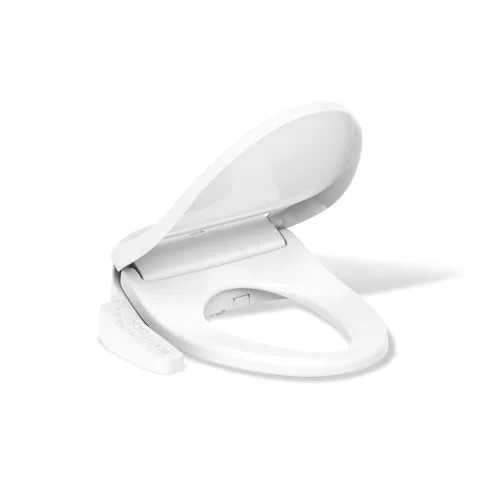 Kohler PureWash E580 Kohler PureWash E580 | Electric · elongated | $269.97 | Wand self-rinses before and after each use | Price |
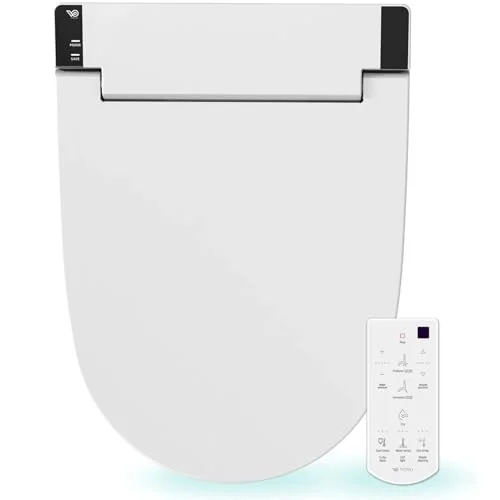 VOVO VB-6000SE VOVO VB-6000SE | Electric · remote | $299.00 | Self-cleaning stainless nozzle, removable for cleaning | Price |
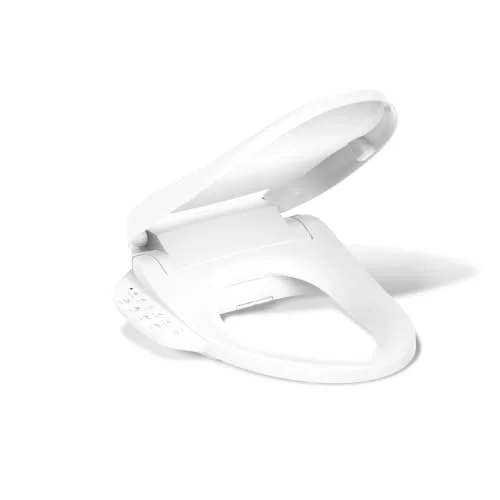 Kohler PureWash E590 Kohler PureWash E590 | Electric · elongated | $359.13 | Adds a UV self-cleaning step on the wand surfaces | Price |
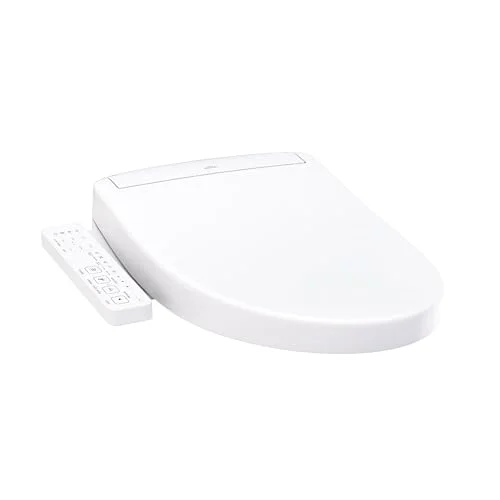 TOTO WASHLET S2 TOTO WASHLET S2 | Electric · elongated | $420.00 | EWATER+ cleans the wand inside and out; PREMIST the bowl | Price |
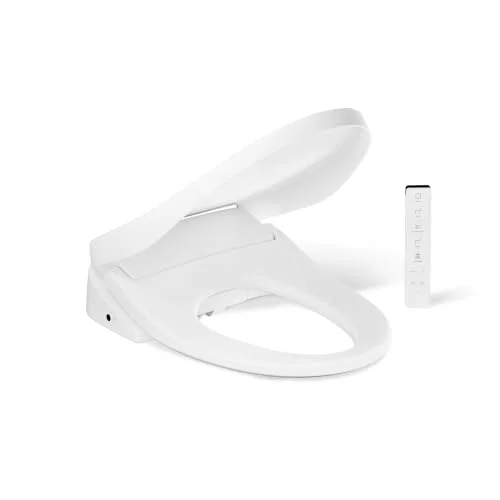 KOHLER PureWash E835 KOHLER PureWash E835 | Electric · remote | $399.00 | Electrolyzed-water wand cleaning, most automated here | Price |
If you only do three things
Wipe the seat and visible nozzle weekly with a damp cloth and mild soap — never bleach, abrasives or acetone. If you're in a hard-water area, run a diluted vinegar soak on the nozzle monthly instead of waiting for the spray to weaken. And once a year, lift the seat off its quick-release plate for a proper clean underneath, and give the cord, outlet and any filter a quick look. That's the entire maintenance job — genuinely just a few minutes a month for a fixture that runs for years.
Cleaning and maintenance: common questions
Can I use bleach to clean my bidet seat?
No — manufacturer care guidance consistently advises against bleach and bleach-based cleaners on bidet seats. Bleach degrades the rubber gaskets and O-ring seals at the water connections over repeated use, which is how seats develop slow leaks, and it can yellow or embrittle the plastic housing. A mild, unscented soap diluted in water handles everyday cleaning safely.
How often should I descale the nozzle?
In a hard-water home, a monthly diluted vinegar wipe on the nozzle keeps mineral scale from ever building up enough to affect the spray pattern. In a soft-water area, you can go longer and simply descale if you notice the spray weaken or angle off to one side — the clearest sign scale has started clogging the nozzle's openings.
Do self-cleaning nozzle modes replace manual cleaning?
No. A self-clean cycle rinses the outside of the nozzle with plain water before and after use, which prevents residue buildup — it isn't a disinfecting or descaling cycle, and it does nothing for the seat, lid or control panel you actually touch. Keep the weekly wipe-down and occasional vinegar descale even if self-clean is switched on.
What's the quick-release plate for, exactly?
It's a mounting bracket that stays bolted to the toilet bowl while the seat itself lifts off in seconds, without tools. It exists specifically so you can clean the underside of the seat and the bowl rim — the one spot a routine wipe-down can't reach — and click the seat back into place afterward without redoing the water connection.