Buying Advice · 2026
Reading a Bidet Seat's Stated Dimensions Before You Measure Your Own Bowl
By Ilane TallUpdated November 6, 2026Research-based
Best Bidet Seats is reader-supported. When you buy through our links we may earn a commission, at no extra cost to you. Commissions never change which products we recommend.
Scroll through a dozen bidet seat listings and you'll notice something strange: half of them tell you nothing more about size than the word "elongated," and the other half bury a string of numbers in the spec table that nobody bothers to explain. Neither extreme is actually useful on its own. A shape word tells you the seat is meant for a certain bowl outline, not that it fits yours. A string of inches tells you something was measured — but unless you know what, exactly, you're trusting a number you can't actually use.
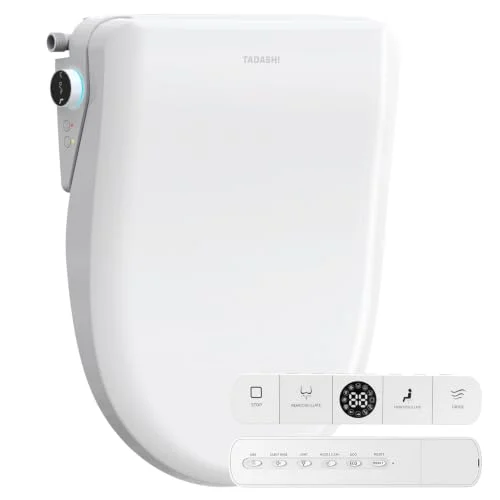
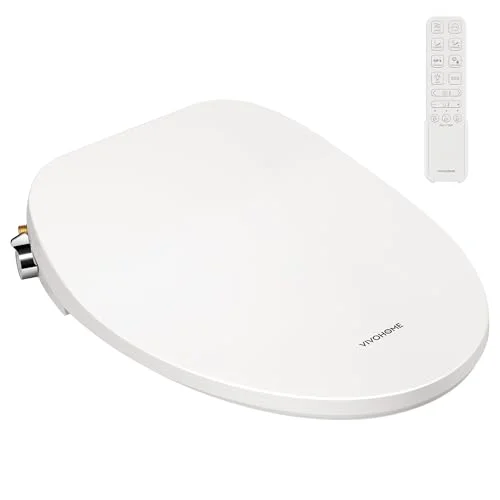
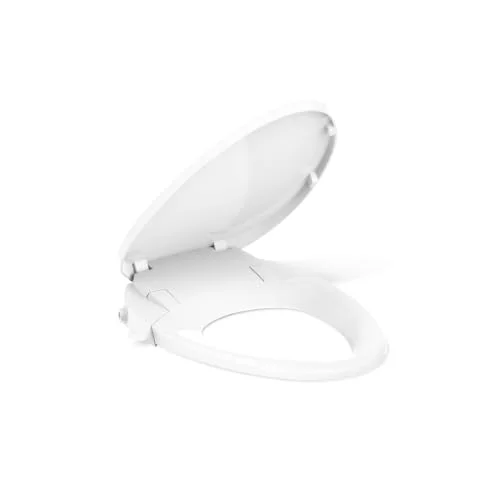
We went through our own catalogue looking specifically for listings that go beyond the shape word and publish real dimensions. Four did: an Aquonderful heated seat with a 15-by-20-inch spec, a Tadashi electric seat and a VIVOHOME electric seat that both list 20 by 14.7 inches, and a Kohler PureWash M300 manual seat with the most complete figure in the group — 21.06 x 17.3 x 5.1 inches. This guide walks through what each of those numbers is actually describing, where two listings can share a dimension and still not be interchangeable, and the one measurement that matters most for fit and that none of the four listings give you at all.
One honest note before we get into it: we don't own these seats, and we don't run a testing lab to physically check whether a given listing's inches match the box that arrives. What follows is a comparison of the published specifications, current prices, and what those numbers mean in the context of how bidet seats are actually built and installed — reading the fine print so you don't have to guess at it after the box is already open.
The shape word
Why "Elongated" Alone Isn't a Measurement
American toilets ship in two bowl shapes: round, which is a true circle at the front, and elongated, which stretches that circle into an egg about two inches longer at the front. Elongated has been the standard on new installations for decades, which is why the overwhelming majority of bidet seat listings — including all four products in this guide — are built only for elongated bowls. The word is doing real work: it rules out a round toilet immediately, and it tells you the seat's hinge posts are spaced for the wider mounting pattern elongated bowls use.
What "elongated" does not do is commit the manufacturer to a specific number. Bowl manufacturers don't all build to one exact elongated template — there's a normal range of a half-inch or so in overall length and in exactly where the bolt holes sit, depending on the toilet brand and model year. A seat molded for "elongated" in general will physically bolt onto the overwhelming majority of elongated bowls, but "will bolt on" and "will sit flush with no overhang or gap at the hinge" are two different promises, and only the second one actually determines whether the seat looks and feels right once it's installed.
That's exactly why a published inch figure is worth more than the shape word alone, even though — as the next section shows — the inch figure usually isn't measuring what you'd hope. A listing that stops at "elongated" is telling you the minimum: this will probably bolt down. A listing that adds real dimensions is at least telling you something about the object you're going to receive, even if it isn't your bowl's own measurements.
Reading the fine print
What the Four Listings With Numbers Actually Say
Four listings in our catalogue go past "elongated" and publish an actual size or variant field. Here's each one, read carefully rather than taken at face value.
Aquonderful's 15-by-20-inch spec
The Aquonderful 102S-W ($159.99) lists its size as 15 inches by 20 inches. Notice the order: the shorter number comes first. That reads as width-by-length rather than the length-by-width-by-height convention Kohler uses below, and it's a useful reminder that a bare pair of numbers is only meaningful once you know which dimension each one refers to — and the listing itself doesn't spell that out. Treat it as the overall footprint of the seat and lid as a shipped unit: roughly 15 inches across and 20 inches from the hinge end to the front tip. It's consistent with a standard elongated electric seat; it is not a bowl measurement, and nothing in the listing claims it is.
Tadashi and VIVOHOME's matching 20-by-14.7-inch listings
Two unrelated seats — the Tadashi electric seat ($189.99) and the VIVOHOME Smart Electric Heated Bidet Toilet Seat ($59.99) — both list 20 inches by 14.7 inches, down to the decimal. That's not a coincidence worth reading too much into: elongated electric bidet seats share a lot of underlying geometry because they're all built to bolt onto the same family of bowl shapes and to clear the same lid-and-tank footprint, so near-identical seat dimensions across different brands are common rather than suspicious.
What matters for a shopper is that this number is the seat's own footprint, not your bowl's. Tadashi and VIVOHOME are $146 apart in price with that identical dimension listed, which is a fairly direct demonstration that the inches are describing the product on the shelf — size, essentially, as packaging — while the price difference is coming from everything else: heating hardware, control type, and features, not from one being a better physical fit than the other. If the two numbers match, it tells you both seats occupy roughly the same footprint once installed; it tells you nothing about which one will sit flush on your specific bowl, because neither listing measures the bowl at all.
Kohler's full 21.06 x 17.3 x 5.1-inch spec
The Kohler PureWash M300 ($94.99) is the only one of the four to publish a three-dimensional figure: 21.06 x 17.3 x 5.1 inches. Reading that as length by width by height, it's giving you the seat's overall length, its overall width, and roughly how tall the closed lid-and-seat assembly sits — the kind of figure you'd actually want if you were checking clearance against a wall-mounted towel bar or a narrow bathroom, rather than just whether the seat will bolt down. It's still a product-box measurement rather than a bowl measurement, but it's the most complete version of that product-box measurement in this group, and the quick-release hinges Kohler ships with the M300 make it one of the easier seats here to test-fit and remove again if the footprint turns out to run close to a tight space.
What it doesn't cover
What These Numbers Do and Don't Tell You About Hinge-to-Bowl Fit
Hinge-to-bowl fit comes down to three things: whether the bolt spacing underneath the seat matches your bowl's mounting holes, whether the hinge posts sit at roughly the right distance back from the bowl's front rim so the seat doesn't hang over or fall short, and whether the overall seat length clears your tank or wall behind it. A published overall-length-and-width figure — which is what all four listings above amount to — speaks only to that third concern, and even then only loosely, since "20 inches long" doesn't tell you how that length is distributed between the hinge end and the front tip.
None of the four spec lines in this guide give you the bolt-hole spacing or the hinge-to-rim distance directly. That's not unusual — it's close to universal across bidet seat listings, electric and manual alike, because manufacturers are describing the seat as a manufactured object, not profiling your bathroom. The reason "elongated" works as well as it does in practice is that elongated-bowl hardware is standardized enough that an elongated seat's bolt spacing will match an elongated bowl's mounting holes the overwhelming majority of the time. The genuinely variable part — where the front rim of the bowl ends up relative to those bolts — is the part no listing here measures, and it's the part that determines whether the seat looks correctly sized once it's actually on your toilet. We cover that gap directly in the round vs. elongated comparison, where identical-looking listings price the two shapes differently without ever explaining the bolt-pattern difference that justifies it.
If you already own a Kohler PureWash electric model and are shopping the M300 as a manual companion seat, or comparing it against the rest of the lineup, our Kohler PureWash lineup review lines up the M-series and E-series specs side by side, including where Kohler's own numbers are more and less complete than the M300's.
The step every listing skips
The One Measurement No Listing Gives You, and How to Take It Yourself
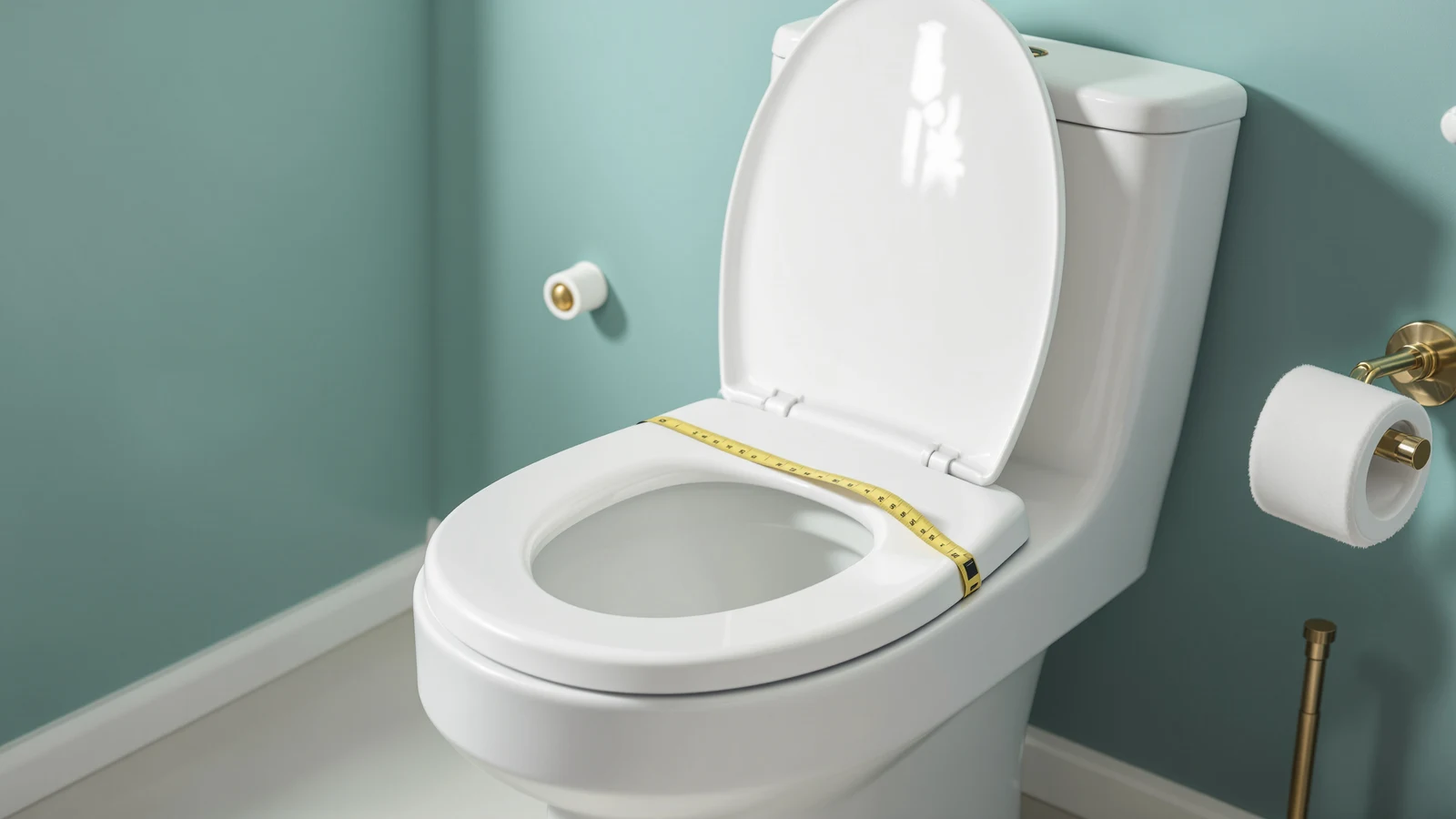
Every number in this guide describes the seat. None of them describe your toilet. The single measurement that actually predicts whether a seat will sit flush — and that no bidet seat listing we've found publishes, because it depends on your bathroom, not their product — is the distance from the center of your bowl's rear mounting bolts to the front edge of the bowl rim.
That distance is what determines whether a given seat's hinge-to-front length will overhang the bowl, sit short of it, or land flush. It's a five-minute job with a tape measure and no tools:
- Find the bolt centers. Remove your current seat's caps if it has them, and locate the two bolts holding the hinge plate to the bowl at the rear. Measure the distance between the centers of those two bolts — this is your mounting spread, and it's the number that confirms a seat is built for your hole pattern at all.
- Measure bolt-center to front rim. With the bolts still as your reference point, run the tape forward in a straight line to the front edge of the bowl. This is the figure no listing publishes, because it's a property of your toilet, not the seat.
- Measure bowl width. At the widest point of the bowl (usually just behind the front curve), measure straight across. This tells you whether a seat's overall width will clear comfortably or crowd a narrow bathroom vanity or wall.
- Compare against the seat's own length, not against "elongated." Once you have your bolt-to-rim distance, you can sanity-check it against a seat's overall stated length (allowing for the portion of the seat that sits behind the hinge). A seat listed well outside your bowl's dimensions is a mismatch regardless of what the listing's shape word says.
If you'd rather not do the hinge math at all, the one-dimension answer that solves the most common fit complaint is simpler: confirm round versus elongated first, since that single distinction rules out the majority of fit problems before any inch figure matters. Our round vs. elongated feature comparison walks through exactly what changes between the two shapes on seats that are otherwise identical, and whether installing the wrong one can affect anything beyond appearance is covered in our piece on whether a bidet seat voids your toilet's warranty — short answer, a seat that doesn't fit is a return, not a warranty event.
Budget is part of this decision too, and it's worth saying plainly: a tighter budget doesn't mean a worse-documented listing. Several seats well under $190 publish perfectly usable specs, which is exactly the ground our roundup of overlooked bidet seats under $190 covers in more depth. The takeaway across all of it is the same one this guide keeps returning to: trust the tape measure in your bathroom over the word on the listing, every time.