Buying Advice · 2026
Dual-Nozzle Non-Electric Bidet Seats: Is the Second Nozzle Worth It?
By Ilane TallUpdated October 29, 2026Research-based
Best Bidet Seats is reader-supported. When you buy through our links we may earn a commission, at no extra cost to you. Commissions never change which products we recommend.
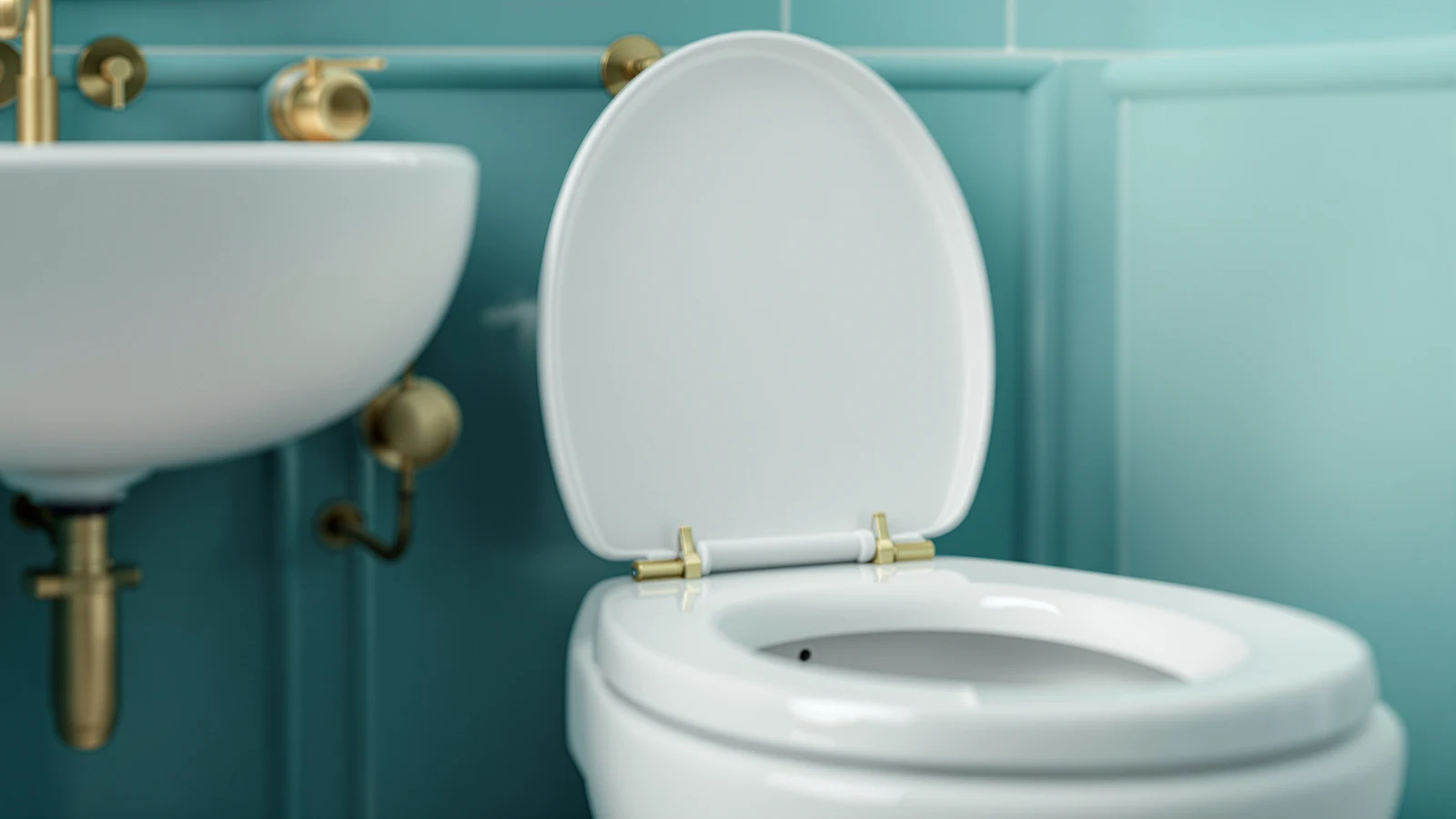
Open almost any non-electric bidet seat listing and you'll find the same sentence: one nozzle, one dial, adjust from rear wash to feminine wash by turning a knob. It is the standard layout for a reason — a single retractable nozzle on a sliding or rotating control covers both jobs with one moving part, which is exactly why these seats can sell for well under $100. Clirass builds its elongated non-electric seat differently. Instead of one nozzle doing double duty on a dial, it gives you two separate, dedicated nozzles — one set back for a rear wash, one set forward for a front wash — each with its own position, so you're not re-aiming a single wand between uses.
That sounds like a straightforward upgrade until you notice the price gap is almost nothing. The Clirass dual-nozzle seat runs $69.99, while the single-nozzle VOVO Nature 7 is $89.00 and the single-nozzle Kohler PureWash M250 is $117.30. In other words, the seat with the extra hardware is the cheapest of the three. That inverts the usual logic of "more parts, more money," and it's worth understanding why before you decide a second nozzle is either essential or a gimmick.
One honest note before we get into it: we don't run a testing lab, and none of us has these three seats bolted to a toilet in a back room somewhere. What follows comes from comparing the published specifications, the listed hardware, and live pricing across all three — plus reading what owners of each report once the seat has been in daily use for a while, which is where the real differences between "two nozzles" and "one nozzle, two settings" tend to show up.
The mechanics
What a dedicated second nozzle actually changes
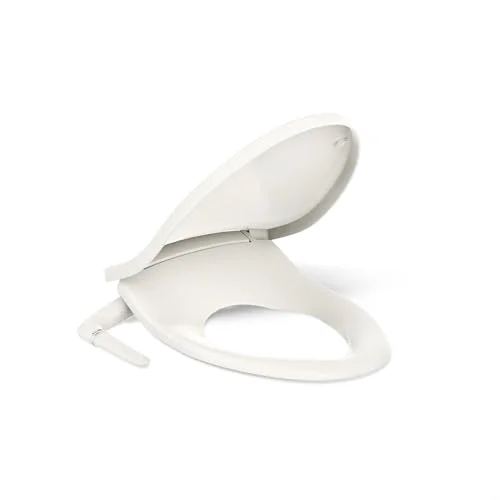
Start with how the common version works. A single-nozzle non-electric bidet — the VOVO Nature 7 and the Kohler PureWash M250 are both built this way — mounts one retractable wand under the seat on a slide or rotation mechanism. Turn the control one direction and the wand extends further back for a rear wash; turn it the other way, or flip a separate lever, and it shifts forward and softens for a front or feminine wash. It's one nozzle doing two jobs by changing where it sits and how hard it sprays. That's a perfectly sound piece of engineering, and it's why a seat like the PureWash M250 can offer "adjustable spray position and pressure" as a single, continuous range rather than a toggle between two fixed settings.
A dual-nozzle layout, which is what the Clirass seat uses, splits that job across two separate nozzles that each stay fixed in their own position — one angled for rear wash, one for front wash — and a selector picks which one fires. Nothing has to physically travel between two jobs; each nozzle is purpose-built for the wash it performs. In practice, that removes a small but real inconsistency some single-nozzle owners describe: because one wand is being asked to do a good job in two different positions, the "in-between" spots on the adjustment range are sometimes less precise than the two extremes it was clearly designed to hit. With two fixed, dedicated nozzles, there's no in-between to get wrong — each one only ever has to be good at the single wash it's built for.
The other practical difference shows up with more than one user. If a household has two people with different preferences — one who wants a stronger rear wash, one who prefers a gentler front wash — a dual-nozzle seat doesn't need the dial reset or re-aimed between them, because each nozzle already has its own fixed geometry. On a single-nozzle seat you're adjusting one shared mechanism each time; it still works, it just means slightly more fiddling than selecting a switch.
The honest limit
Where one adjustable nozzle already covers most of this
It's worth being straightforward about how much of the "problem" a second nozzle solves, because the answer is: not as much as the marketing angle suggests. A single nozzle on a genuinely adjustable dial — the kind the PureWash M250 uses, with both spray position and pressure as separate controls — already lets one person dial in a rear wash, then a front wash, then back again, in the time it takes to turn a knob twice. For a single-person household, or any household where everyone's settings are roughly similar, that's a complete solution. You are not missing a wash mode; you are turning a dial an extra notch.
Where the gap actually opens up is narrower than "two nozzles are always better." It's specifically: households with two people who want noticeably different settings and don't want to reset the dial each time, and people who've found that the in-between range on a single sliding nozzle feels less precise than the two ends of its travel. Outside those two situations, you are paying for a convenience you may never notice you're missing — which is also exactly why the dual-nozzle Clirass seat doesn't carry a price premium over the single-nozzle competition. The manufacturers themselves don't appear to be pricing a second nozzle as a luxury feature; it reads more like a different design choice than an upgrade tier.
The detail that actually matters more
Brass inlet valves: a durability detail with nothing to do with nozzle count
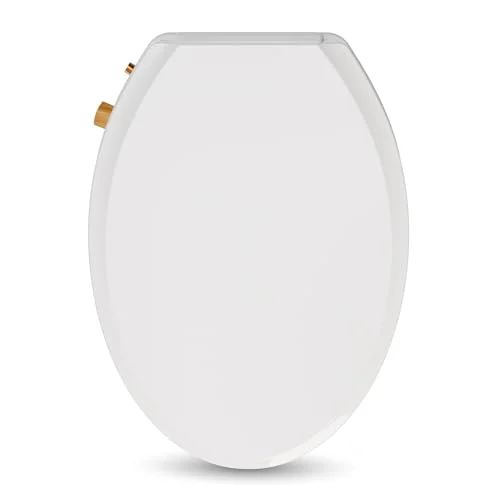
Here's where the nozzle conversation can distract from the part of the seat that's more likely to determine how long it lasts. The valve where the T-adapter feeds water into the seat — the inlet — takes the same mechanical wear on every non-electric bidet regardless of how many nozzles sit downstream of it: it gets turned, pressurized, and occasionally over-tightened on install, day after day, year after year. The Clirass listing specifies a brass inlet valve rather than the plastic valve bodies common on budget non-electric seats, and that's a meaningfully different part — brass resists the stripped threads and hairline cracking that plastic valve housings are prone to after repeated tightening, and it won't develop the same brittleness over years of exposure to water pressure and mineral content that plastic can.
This is worth separating clearly from the nozzle question, because it's easy to lump "better build" and "more features" together as if they're the same upgrade. They're not. A brass inlet valve is a materials decision about the one component every non-electric bidet shares — the thing that fails first on the cheapest seats isn't usually a nozzle, it's a cracked plastic fitting at the water connection. Whether a seat has one nozzle or two tells you nothing about what that connection is made of. If long-term reliability matters more to you than wash customization, read the valve material in the listing before you read the nozzle count — they're answering two completely different questions, and only one of our three picks here specifies brass rather than leaving the valve material unstated.
The temperature nobody's heating
Ambient water on all three — none of them have a heater to offset anything
It's easy to get absorbed in nozzle counts and valve materials and lose track of the thing all three of these seats have in common: none of them heat the water. The Clirass, the VOVO Nature 7, and the Kohler PureWash M250 are all non-electric, which means every one of them sprays water at whatever temperature comes out of your cold supply line — what the VOVO listing calls "ambient water temperature," and what the Kohler listing calls simply "cool water." There's no reservoir, no tankless heater, no circuit board making that choice for you, because there's no electricity reaching any of these seats at all.
That matters for how you weigh the nozzle question, not just as a separate fact. On an electric seat, a second nozzle or a wider adjustment range is one convenience feature competing against warm water, a heated seat, a remote, and a dryer for your attention and your dollar — it's a small addition to a seat that's already doing a lot. On a non-electric seat, there's no such competition: the nozzle layout and the valve material are close to the entire feature list. That's exactly why the two-nozzle-versus-one-nozzle decision carries more relative weight here than it would on a $300 electric seat, and also why it's worth getting right rather than treating it as a rounding error. If ambient water itself is the sticking point rather than the nozzle count — if you're wondering whether cold-only is a dealbreaker regardless of which of these three you'd otherwise choose — our electric vs. non-electric comparison walks through what you'd be trading for warm water on a seat that does heat it.
The decision
Is the dual-nozzle premium worth paying?
Frame the question the way it's usually asked — "is a second nozzle worth paying extra for?" — and the honest answer based on these three listings is that there isn't really a premium to evaluate. The dual-nozzle Clirass is $69.99; the two single-nozzle alternatives here are $89.00 and $117.30. If anything, you'd be paying more to get fewer nozzles, which flips the usual "pay more for more features" logic most buyers walk in expecting. That's specific to this set of three products, not a law of the category — other dual-nozzle and single-nozzle seats elsewhere on the market may price differently — but within these three, there's no dollar amount to weigh against the convenience of two fixed positions.
On a seat with no electric features — no heater, no remote, no dryer, nothing drawing power to offset against the cost of extra hardware — a second nozzle is close to free to add from a manufacturing standpoint, which may be exactly why it doesn't carry a price tag here. Compare that to how a feature gets priced on an electric seat, where each addition competes against a heater and a motor for both engineering budget and the sticker price; our look at Delta's Refresh Standard vs. Premium tiers is a good example of what a real feature premium looks like when there's electronics involved. Here, there's no such tension — you're choosing a nozzle layout and a valve material, not trading off against a bigger budget item.
So the practical verdict: if you're a single user who's happy with a well-made adjustable dial, the VOVO Nature 7 or the Kohler PureWash M250 will do the job completely, and the brand and finish differences between them (soft-close integrated seat vs. biscuit color and quick-release hinges from a plumbing name) matter more than the nozzle count. If two people with different preferences share the bathroom, or you'd simply rather not re-aim a dial between uses, the Clirass gives you that without asking you to pay for it — and its brass inlet valve means you're not sacrificing the one durability detail that actually determines how long a non-electric seat lasts. Either way, keep an eye on that valve material line in any listing you're comparing, the same way you'd check what a "massage" wash mode actually changes before assuming a named feature is doing more than it is — on non-electric seats, the unglamorous spec sheet lines are usually the ones worth reading twice.
If you're coming at this from a completely different angle — comparing a non-electric seat's one-time cost against what you'd give up by not having a remote at all — our look at seats with both a remote and a side panel is a useful contrast: it's the mirror image of this question, asking whether a second control method earns its keep the same way we've asked whether a second nozzle does. And if a $20–$25 jump between two tiers of the same product line is the kind of comparison you find useful, what KERDE's $20 jump between its two electric seats buys runs the same exercise on the electric side of the catalogue.