Budget picks · 2026
Outfitting a Two-Bathroom Home on a Bidet Budget
By Ilane TallUpdated October 11, 2026Research-based
Best Bidet Seats is reader-supported. When you buy through our links we may earn a commission, at no extra cost to you. Commissions never change which products we recommend.
Most bidet shopping advice assumes one toilet, one decision, one checkout. The minute a second bathroom enters the picture, that framing stops working. A two-bathroom household isn't buying "a bidet seat" twice — it's buying two different pieces of hardware for two different jobs, on one shared budget, and the seat that's right for one bathroom is very often the wrong seat for the other.
We priced this out using four real products from our database rather than guessing at round numbers: two non-electric attachments, one non-electric replacement seat, and one electric seat — ranging from $29.99 to $99.98. Put any two of them together and you've outfitted both bathrooms for less than a single mid-tier electric seat costs on its own. One honest note before we start: we don't run a fake testing lab, and we never pretend to. Everything below comes from published listing prices and specs in our product database, read carefully and reported straight, including where a given listing doesn't say enough for us to go further.
This situation is more common than the single-seat shopping guides assume. Most US homes with more than one bathroom have exactly this split: a primary bath attached to a bedroom, used by the same one or two people every day, and a second full bath or half bath down the hall that exists mainly for company. If your household fits that pattern, the rest of this guide is written directly for you — not as a generic "buy two of the same thing" roundup, but as a plan for spending a fixed amount of money across two rooms that don't deserve equal treatment.
The core idea
Your guest bath and your primary bath are not the same shopping problem
Think about how each bathroom actually gets used. Your primary bathroom gets visited by the same one or two people, multiple times a day, every day, for years. Comfort features compound: a heated seat on a cold morning, warm water instead of a cold-tap shock, a wash long enough that it doesn't matter if the second use that hour runs a little cooler. Over a few thousand uses, small comforts stop feeling small.
Your guest bathroom gets visited occasionally, by people who didn't choose the fixture and in most cases have never used a bidet attachment before. Nobody wants to hand a houseguest a side panel with six icons and a learning curve. What that bathroom needs is a seat or attachment that works the instant someone sits down, with controls obvious enough that a stranger can figure them out without asking — which is a very different design brief from "the seat I personally want to live with for the next five years."
That gap in actual use is also a gap in what's worth paying for. A guest bathroom gets a fraction of the primary's cumulative use, so even a feature a guest would genuinely enjoy — heated water, say — delivers far less total value per dollar spent there than the same feature does in the bathroom you use every single day. Spending unevenly across the two isn't a compromise. It's just matching the spend to where the use actually happens.
01
Who actually uses it
Daily household use in the primary bathroom justifies comfort spend that a once-a-month guest visit never will.
02
Outlet access
Electric seats need a GFCI outlet nearby. Primary bathrooms built or renovated recently usually have one; guest half-baths often don't.
03
How obvious it has to be
A guest shouldn't need instructions. A dial on an attachment is self-explanatory in a way a remote-controlled panel isn't.
04
What it says to a visitor
A neutral attachment reads as thoughtful; a six-button remote in a guest bath can just as easily read as excess. More in our piece on how bidet seats affect resale value, which covers the same perception question from a buyer's point of view.
Splitting a fixed budget: where to spend more, where to spend less
Say you've set aside somewhere between $120 and $150 for both bathrooms combined — enough for one genuinely good purchase, or two modest ones, but not enough for two seats that would each look good on their own in a single-bathroom roundup. The instinct to split that number evenly in half is usually wrong. Splitting it unevenly, in favor of the bathroom that gets used every day, gets you more total comfort for the same money.
Concretely: every dollar you don't spend on the guest bathroom's attachment is a dollar you can put toward the primary bathroom's electric seat, and the primary bathroom is where an electric seat's main selling point — water that doesn't start cold — actually gets felt day after day. That's also why we're not pointing you toward the $150–$250 tier, where confirmed instant heaters and recognized brand names start showing up more consistently. That tier is the right call for a single bathroom with real budget behind it. For two bathrooms on one fixed number, staying under $100 on each purchase — sometimes well under — buys both rooms a working bidet rather than one room an excellent one and the other nothing at all.
The one line item worth protecting even on a tight combined budget is the primary bathroom's heater. A non-electric attachment in the primary bathroom is not a mistake, but it does mean permanently cold water in the room you use the most — which is exactly the trade-off an uneven split is designed to avoid.
There's also a running-cost angle that favors buying for both bathrooms rather than deferring the guest bath indefinitely. Households that add a bidet of either kind consistently report cutting their toilet paper use substantially, and that saving applies in whichever bathroom the fixture lives in — a guest bathroom that only gets used a few times a month still adds up over a year. It won't offset a $270 electric seat in any meaningful time frame, but against a $29.99 or $49.99 attachment, it meaningfully shortens the time before the purchase has effectively paid for itself.
Worked out
The full two-bathroom total
Here's what three realistic combinations actually cost once you add both bathrooms together. None of these require touching the $150–$250 tier at all.
Lowest total cost — Hibbent (guest) + VOVO Nature 7 (primary, no outlet needed anywhere in the house)$29.99 + $89.00 = $118.99
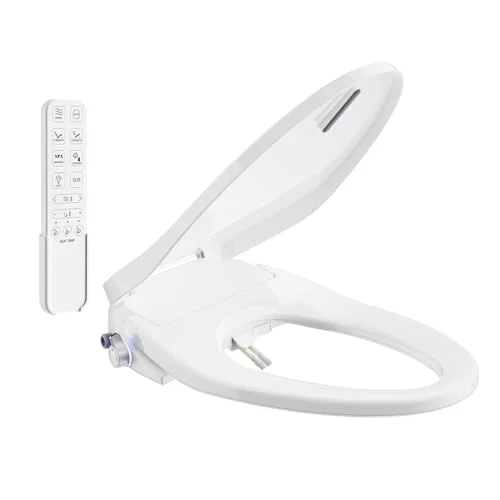
Warm water in the primary, cheapest possible guest side — Hibbent (guest) + SR SUN RISE Electric (primary)$29.99 + $99.98 = $129.97
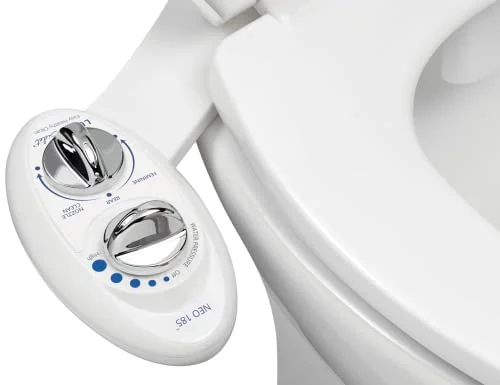
Best of this guide in both rooms — LUXE NEO 185 (guest) + SR SUN RISE Electric (primary)$49.99 + $99.98 = $149.97
All three sit under what a single mid-tier electric seat costs on its own — and the top combination gives one bathroom warm water and the other a genuine upgrade over bare porcelain, for less than $150 total. If one person in the household has strong feelings about cold water and the other doesn't care, the middle option is the one worth a second look: it puts the entire comfort upgrade exactly where someone will actually use it, for under $130 combined.
If the money has to come in two trips
What to buy first if the budget has to be split across two visits
Not every household has the full combined number available at once. If you can only make one purchase this month and the second has to wait for a next paycheck or a sale, buy for the primary bathroom first.
The reasoning is the same uneven-split logic from earlier in this guide, just applied in sequence rather than all at once: the primary bathroom accumulates use every single day, while the guest bathroom might go weeks between visits that even register. Whatever you buy for the primary bathroom starts paying off immediately and keeps paying off daily; whatever you buy for the guest bathroom pays off in small, occasional increments that simply take longer to add up to the same value. If the SR SUN RISE electric seat needs an outlet you don't currently have, that's also the more time-sensitive problem to solve — an electrician visit or a GFCI upgrade is worth scheduling before the purchase, not after, so the seat isn't sitting in a box for a month. The VOVO Nature 7 avoids that wait entirely if you'd rather buy now and add warmth later.
Once the primary bathroom is handled, the guest-bath attachment is close to a no-decision purchase: at $29.99 to $49.99, it's cheap enough to add on its own without disturbing whatever you'd budgeted for anything else that month. And if either seat ever starts behaving oddly down the line — a flashing light, an unresponsive panel — our guide to reading bidet seat error codes and blinking lights is the first place to check before assuming you need a replacement.
There's one more reason the order matters: installing the primary bathroom's seat first means you've already done the T-valve install once by the time you tackle the second bathroom, on whichever device you bought second. Both non-electric attachments and the electric seat use the same basic supply-line splitter, so the few minutes you spend the first time figuring out which way the valve shuts off pay off again on the second install. If you'd rather wait for a sale before buying the second piece, there's no urgency on the guest-bath side — unlike an electric seat tied to an outlet upgrade, a non-electric attachment has no dependency that gets more expensive the longer you wait.