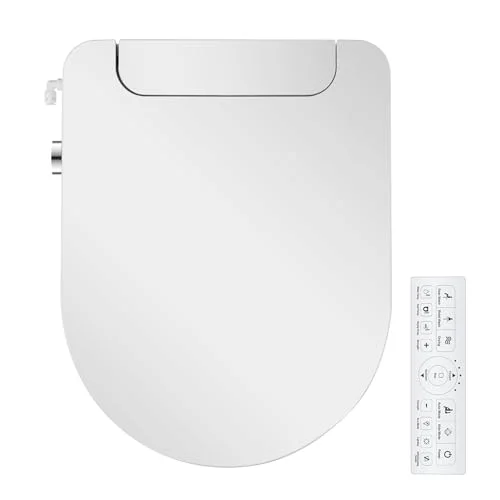
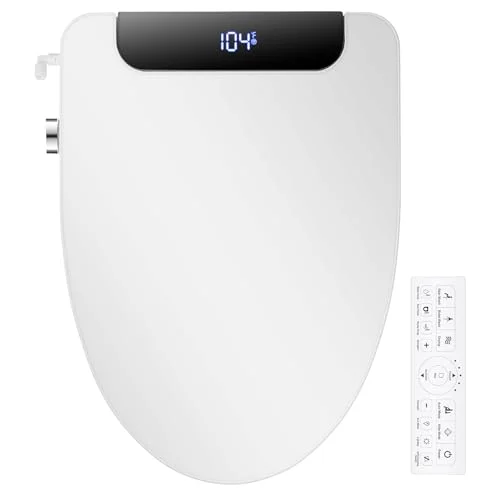
Best Bidet Seats
White elongated bidet toilet seat installed on a tall comfort-height toilet bowl in a bright bathroom
Fit Guide · 2026

Bidet Seats for Comfort-Height Toilets: What Fits Differently

Best Bidet Seats is reader-supported. When you buy through our links we may earn a commission, at no extra cost to you. Commissions never change which products we recommend.

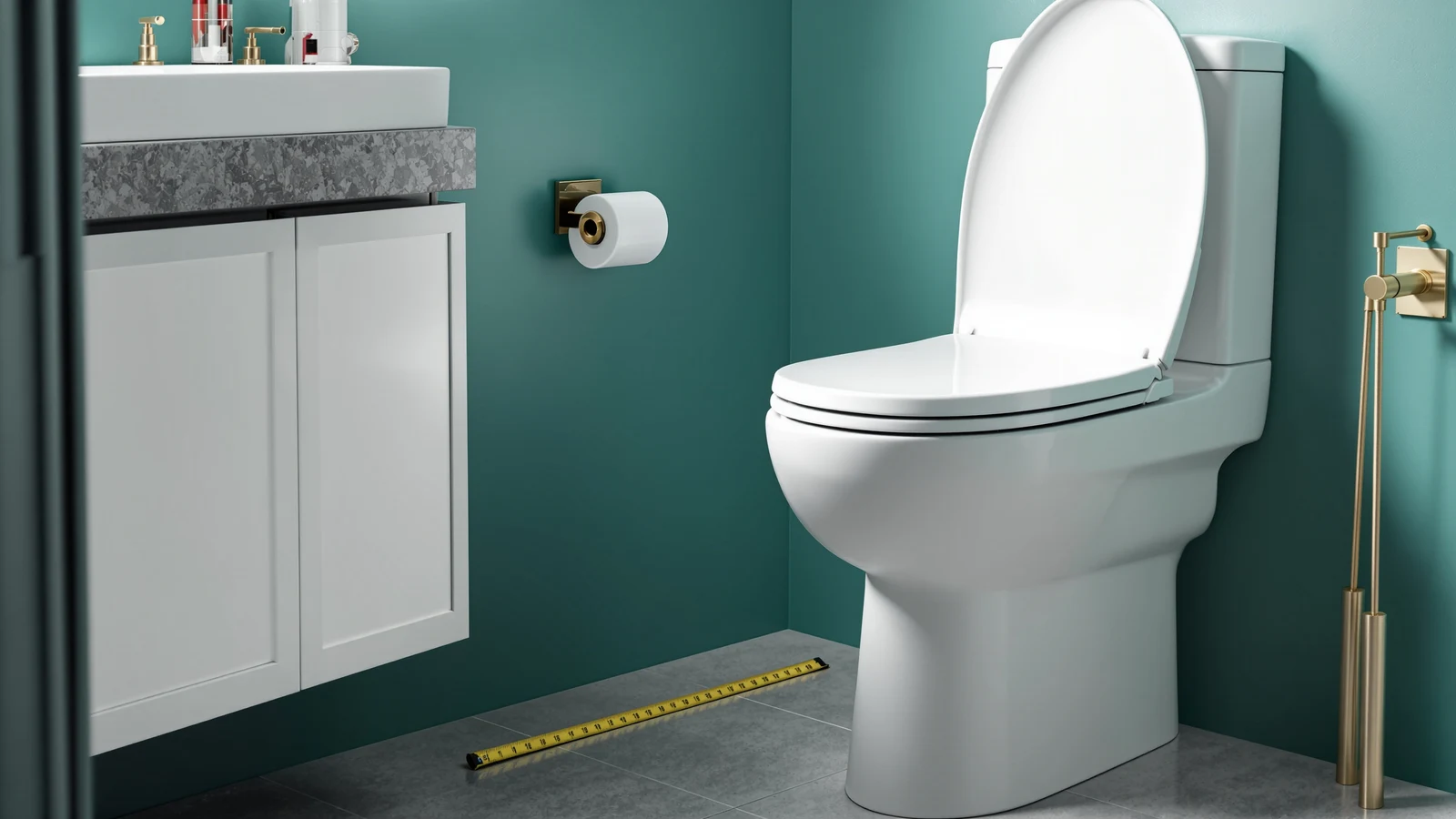
"Comfort height" toilets — also sold as "chair height," "right height," or ADA-compliant models — have become the default in new construction and remodels for a simple ergonomic reason: a bowl that sits roughly two inches taller than a standard bowl is easier to sit down on and stand up from, especially for taller adults, older adults, or anyone recovering from a hip or knee procedure. It's a genuinely good change for the toilet itself. It is also the single most common reason a bidet seat that looks identical to the one in a product photo ends up feeling wrong once it's actually bolted onto a comfort-height bowl at home.

The reason isn't bowl shape. Round-versus-elongated — the measurement most buying guides focus on — is a front-to-back question, and it doesn't change one bit whether the bowl underneath is standard or comfort height. What changes is the vertical stack: how far off the floor the rim already sits before you've added anything, and how much additional height the seat itself piles on top of that rim once it's installed. Add those two numbers together and a comfort-height bowl paired with a tall electric seat can put a user noticeably higher than expected — in a way a round-vs-elongated guide will never catch.

We compared published dimensions, listing specifications, and the patterns in verified owner reviews, rather than installing seats in a lab somewhere and timing how a fitting felt — we don't run a fake testing lab, and we won't pretend otherwise. Here's what actually determines fit on a comfort-height bowl, how to measure your own toilet before you order anything, and what to do if a seat still ends up sitting too high once it's on.

The baseline

Comfort height versus standard height: the two-inch difference that matters

Standard toilets sit with the bare bowl rim — porcelain only, no seat attached — at roughly 14 to 15 inches off the floor, a dimension sometimes called "standard height" or, less charitably, "the old height." Comfort-height toilets raise that same measurement to roughly 16.5 to 17.5 inches, which is where the "about two inches taller" framing used throughout this guide comes from. It's also the dimension that accessibility guidelines for toilets are built around, which is why comfort-height models are sometimes labeled "ADA height" or "right height" on a listing even in homes with no accessibility requirement at all.

Two inches sounds small written down, and for a large share of adults it's a genuine improvement — less knee bend getting down, less effort pushing back up, which is the entire reason builders moved toward comfort height as the new default. The complication shows up specifically when you add a bidet seat, because "the toilet is two inches taller" and "sitting down on it feels two inches different" are not quite the same statement. A seat's own hinge posts, mounting plate, and — on electric models — its internal housing add height on top of the bowl rim, and that addition is constant regardless of what the bowl underneath is doing. Stack a seat's fixed height on top of a bowl that's already two inches taller than standard, and the total seated height climbs by the bowl's two inches plus whatever the seat itself adds. That's the arithmetic that catches people off guard, especially shorter adults and children, who report feeling like they're "perched" rather than seated.

This is distinct from, and compounds with, the round-vs-elongated measurement most buying guides lead with. Bowl shape is a front-to-back fit question entirely about whether the seat's footprint matches the porcelain; it has nothing to do with how tall the bowl sits off the floor. A comfort-height bowl is just as likely to be round or elongated as a standard-height one, and a seat that fits the shape perfectly can still sit uncomfortably tall if nobody checked the height side of the equation. Treat the two measurements as separate checks, not one.
The real spec

Why hinge clearance, not bowl shape, decides the fit

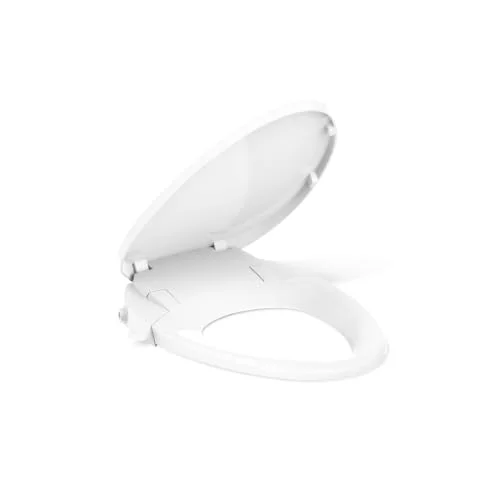
Once you're working with a comfort-height bowl, the number that actually determines whether a given seat feels right is hinge clearance — essentially, how much the seat's hinge assembly and mounting plate raise the sitting surface above the bowl rim it's bolted to. This is a structural spec, the same category of measurement as the weight ratings we cover in our guide to bidet seat weight capacity for larger users: it comes from the hinge and mounting hardware, not from the headline feature list, and two seats that look nearly identical in photos can add meaningfully different amounts of height depending on how that hardware is built.

Manual, non-electric seats tend to have the thinnest hinge-and-mounting stack, because there's no reservoir, pump, or control board housed inside the seat body — the hinge assembly is mostly plastic and a mounting bracket, full stop. Electric seats carry more hardware behind the hinge by design: a water heater, a pump, position motors for the nozzle, and on nicer models a warm-air dryer and deodorizer. All of that has to live somewhere, and "somewhere" is almost always the rear housing, directly above the hinge clearance that matters here. That's not a flaw in electric seats — it's the trade-off for warm water and the other comfort features — but it is the reason an electric seat is more likely to push total seated height noticeably higher on a comfort-height bowl than a manual seat would.

None of the three products in this guide publish a dedicated "hinge clearance" figure as its own spec line — manufacturers rarely isolate that number the way they publish weight capacity — so the practical workaround is to use whatever overall product dimensions a listing does publish as a proxy, which is exactly what the next section does with the one seat here that has a usable figure. For the two products where the listing doesn't break out a usable height dimension, the honest answer is to check the current listing yourself before ordering rather than assume a number on their behalf.

Stacking up

Where a seat's added thickness compounds a taller bowl

The clearest way to see the stacking effect in practice is with an actual published dimension rather than a hypothetical. The Kohler PureWash M300 — a manual, non-electric elongated seat with quick-release hinges — lists overall dimensions of 21.06 x 17.3 x 5.1 inches. That 5.1-inch figure is the one worth lingering on: it's the seat-and-lid assembly's own thickness, and it's the number that gets added on top of whatever the bowl rim underneath is already contributing. On a standard-height bowl, a 5.1-inch seat lands you in an entirely ordinary seated-height range. On a comfort-height bowl that's already sitting roughly two inches taller than standard, the same 5.1 inches is now stacked on top of that extra two inches rather than on top of a standard rim — which is the whole mechanism behind "the seat sits too high" complaints on comfort-height installs.

This is also why manual seats are frequently the more forgiving choice on a comfort-height bowl specifically, independent of price: without a reservoir or pump housing to accommodate, their hinge-and-lid stack tends to run thinner than an electric seat's, so the same comfort-height bowl ends up with less added height on top of it. That isn't a rule we can state as a guarantee for the mijashy or IYTATA electric seats covered below, because neither listing publishes the same breakdown of overall dimensions the M300 does — and per our own rule, we won't estimate a number a manufacturer hasn't published. What we can say with confidence is the general shape of the trade-off: the simpler the hinge-and-housing assembly, the less extra height a comfort-height-bowl owner is likely to be stacking on top of an already-taller rim.

Before you order

Measuring your own comfort-height toilet in advance

Three measurements, taken with the same tape measure you'd use for a round-vs-elongated check, tell you almost everything you need to know before you order a seat for a comfort-height bowl.

01

Bowl height alone

Measure floor to the top of the bare bowl rim, with your existing seat removed. Above about 16 inches, you're on a comfort-height bowl; standard bowls typically land a couple of inches lower.

02

Your current seat's thickness

With the old seat off, measure its own closed height from the hinge post to the top of the lid. That's your current baseline before you swap to something thicker or thinner.

03

Total seated height today

Add the two figures above together. That's the benchmark for "feels normal" — the number a replacement seat's own dimensions should land near, not drastically above.

04

The listing's own numbers

Check whether the new seat's listing publishes overall dimensions the way the M300 does. If it does, compare its thickness figure against your current seat's. If it doesn't, ask the seller before you buy.

None of this requires more than a tape measure and a couple of minutes, and it's worth doing even if you've already confirmed your bowl is round or elongated — shape and height are independent checks, and a seat can pass one and fail the other.

The picks

Three seats to consider for a comfort-height bowl

One manual seat with a published thickness figure, and two electric seats at different price points if warm water matters more to you than minimizing added height. If you're weighing whether a budget electric seat is worth it at all, our breakdown of the cheapest electric bidet seat in our catalog covers the trade-offs that tier generally involves. Prices move on Amazon — confirm the live price before buying.

Kohler PureWash M300 manual elongated bidet toilet seat in white

Kohler PureWash M300

Best for comfort-height bowls — the thinnest stack of the three

A manual, elongated seat with no reservoir or pump housed behind the hinge, which is exactly the profile that adds the least extra height on top of an already-taller comfort-height rim. Published overall dimensions are 21.06 x 17.3 x 5.1 inches — that 5.1-inch figure is the one to compare against your own current seat before ordering. It installs with quick-release hinges, has a quiet-close lid that won't slam (the same feature we weigh on its own merits in our guide to slow-close lids), and a self-cleaning wand, with manual control over water pressure rather than an electronic panel.

$94.99
Manual · elongatedCheck price →
mijashy electric bidet toilet seat, round, with warm water and heated seat

mijashy Electric Bidet Toilet Seat

Best budget electric — if warm water matters more than minimizing stack

A round, electric seat with warm water and a heated seat built in. The listing doesn't publish the kind of overall-dimension breakdown the M300 does, so we won't estimate how much height its heater and pump housing add behind the hinge — check the current listing's own measurements against your bowl-height and seat-thickness numbers from the section above before you order, especially since this is a round-bowl model and bowl shape is a separate check from bowl height.

$139.99
Electric · roundCheck price →
IYTATA electric bidet toilet seat, elongated, with warm water, air dryer and heated seat

IYTATA Electric Bidet Toilet Seat

Best full-featured electric — elongated, at the top of this trio's price

An elongated electric seat with warm water, an air dryer, a heated seat, a slow-close lid, adjustable water temperature, front and rear wash, an LED nightlight, and a wireless remote. At $169.99 it sits inside the range we cover in bidet seats between $150 and $250: what actually changes. As with the mijashy seat above, the listing doesn't publish an overall-thickness figure, so measure your own bowl and current seat first and compare against the listing rather than assuming it will match the M300's stack.

$169.99
Electric · elongatedCheck price →
At a glance

The three picks, side by side

ModelTypePublished thicknessPrice
Kohler PureWash M300Manual · elongated5.1 in (seat and lid)$94.99Price
mijashy ElectricElectric · roundNot published — check listing$139.99Price
IYTATA ElectricElectric · elongatedNot published — check listing$169.99Price
After install

What to do if the seat sits too high once installed

Sometimes the measuring step gets skipped, or a seat's actual in-hand thickness turns out to be more than the listing implied, and you're left with a seat that's bolted on and sits noticeably taller than expected. A few things are worth trying before you treat a return as the only option.

FAQ

Comfort-height fit: common questions

Does a comfort-height toilet need a different type of bidet seat?

Not a different category, no — but the added height from a seat's own hinge-and-housing stack lands on top of a bowl that's already roughly two inches taller than standard. A thinner manual seat is usually the safer starting point if total seated height is a concern, while an electric seat trades some of that margin for warm water and other comfort features.

How do I know if my toilet is comfort height?

Measure from the floor to the top of the bare bowl rim, with the seat removed. Roughly 16 to 17.5 inches or more means comfort height; standard bowls typically measure around 14 to 15 inches — about two inches lower.

Do electric bidet seats sit higher than manual ones?

Generally yes, because the water heater, pump, and motor housing add thickness behind the hinge that manual seats don't need. We can confirm this using the Kohler PureWash M300's published 5.1-inch dimension as the one verifiable figure we have among the seats in this guide; the electric options here don't publish an equivalent number, so check their current listings directly.

What if the bidet seat I bought ends up too tall once it's installed?

Try it for a few days first, since some of the feeling is adjustment. If it's still wrong, a manual seat removes the most height by cutting out the reservoir and pump housing, a bidet attachment adds less bulk than a full seat swap, and most Amazon listings carry a standard return window if you act on it promptly with the actual measured unit in hand.

Keep reading

More buying guides worth your time