By Ilane TallUpdated October 9, 2026Research-based
Best Bidet Seats is reader-supported. When you buy through our links we may earn a commission, at no extra cost to you. Commissions never change which products we recommend.
A bidet seat is one of the few bathroom upgrades that a buyer actually notices during a walkthrough, and that's exactly what makes it a little risky at resale. A tucked-away towel bar or a new showerhead blends in. A second control panel bolted to the side of the toilet, or a remote sitting in a little tray on the tank, does not. It reads as a decision someone made, and buyers form an opinion about that decision in about four seconds, standing in the doorway.
Most of the time that opinion is mildly positive — a clean, modern bathroom detail, a sign the house has been looked after. But the same fixture that reads as "thoughtful" in white, from a brand the buyer half-recognizes, can just as easily read as "clutter" in a seat with a glowing display, a loose remote, and a night light that turns the bowl blue at 2 a.m. We're not a real estate brokerage and we don't appraise houses; this is a comparison of how the category is generally discussed by agents, inspectors and home-staging guidance, set against the actual hardware differences between a basic manual seat and a feature-loaded electric one. If you're shopping for the seat itself rather than thinking about resale, our main buying guide covers the full lineup.
The short answer
If you just want the verdict
It generally helps if…
It's neutral, quiet and from a name buyers recognize
A white manual seat from a brand like Kohler, installed cleanly with no loose cords or extra holes drilled, tends to register as a small bonus rather than a feature a buyer has to evaluate. It costs the seller little and removes almost nothing from the sale.
It can hurt if…
It's visibly electric, unfamiliar or high-maintenance looking
A side panel with a dozen buttons, a dangling remote, a night light, and a cord running to an outlet reads as one more system in the house that could break — and one the buyer doesn't know how to use. The fixture itself is fine; the impression of complexity is the cost.
The walkthrough
What an inspector or buyer's agent actually notices
Neither a home inspector nor a buyer's agent is evaluating your bidet seat as a bidet seat. An inspector is checking that the toilet doesn't leak, that the seat is securely mounted, and — if it's electric — that whatever it's plugged into is a grounded, GFCI-protected outlet, because an ungrounded or non-GFCI outlet next to a water source is the kind of thing that shows up as a flagged item on the inspection report regardless of how nice the seat itself is. That single line item is the most concrete way a bidet seat can cost you money at closing: not the seat, the outlet behind it.
A buyer's agent is watching the buyer's face, not the spec sheet. What they're actually clocking is reaction time — does the buyer glance at it and move on, or do they stop, pick up the remote, and ask "wait, what does this do?" That second reaction isn't necessarily bad, but it does shift the conversation in the bathroom away from the bathroom itself and onto a gadget, which is rarely the impression a seller wants to spend their walkthrough minutes on. Loose cords, a remote sitting on the tank, or a seat installed slightly crooked on the bowl read as bigger problems than they are, because in a five-minute room they're the most visually "unfinished" thing present.
01
The outlet
A GFCI outlet near an electric seat is the inspection item that actually matters — not the seat's features.
02
The mounting
A seat that's slightly off-center or rocks on its hinges reads as neglect, independent of the brand.
03
The cord
A visible cord or a remote left on the tank is the detail that turns "nice upgrade" into "what's that."
04
The reaction
Buyer's agents watch how long a buyer lingers on a fixture — a bidet seat that invites questions slows the showing.
Permanent or removable
Manual versus electric: which one reads as part of the house
Manual
Reads as a permanent fixture
A manual bidet seat looks and behaves like a toilet seat, because structurally that's what it is — no cord, no outlet, no visible electronics, just a hinge, a lid, and a small supply hose running to the existing shutoff valve. To most buyers it registers the same way a bidet seat did a decade ago in a nicer hotel: a fixture, not a gadget. There's nothing to unplug, nothing to explain, and nothing that looks like it needs a manual.
Electric
Reads as something you'd remove
An electric seat announces itself — a side control panel or remote, a cord to a wall outlet, sometimes a small display. Buyers who don't already own one tend to mentally file it as "the seller's thing," something they'd likely swap out rather than inherit, the same way they'd mentally swap out a seller's smart-home hub or a mounted TV bracket. That's not a judgment on the product; it's just how an unfamiliar electronic fixture is processed in a four-second glance.
The practical consequence: a manual seat is reasonable to leave installed and mention in passing, if at all. An electric seat is worth a deliberate decision — leave it, disclose it clearly, or take it with you — because buyers are more likely to ask about it, and an unanswered question during a showing is worse than no question at all. Our plumbing-brand-vs-specialist comparison digs into why the name on the seat changes how buyers read it, which matters more at resale than almost any feature on the spec sheet.
What to buy if resale is on your mind
Neutral white and a name buyers half-recognize beats novelty every time
If you're installing a bidet seat in a house you expect to sell within the next several years — or even one you're not sure about — the two variables that matter most for resale aren't warm water or wash pressure. They're color and brand familiarity. Staging guidance is consistent on finishes generally: neutral reads as move-in ready, color reads as a project. A black or colored seat on a white bowl looks like a mismatch the day it's installed, and it looks like a mismatch five years later when a buyer is standing in the doorway deciding whether this bathroom needs work.
Brand familiarity does something similar at a glance. A seat stamped with a name a buyer already associates with bathroom fixtures — a Kohler, for instance — gets a kind of instant benefit of the doubt: if it's from a plumbing brand, it's probably fine, probably supported, probably not about to be an orphaned gadget. A seat from a name the buyer has never seen, especially one covered in extra buttons, a digital display, and a night light, invites a different and less generous read: what is this, is it still supported, and what happens when it breaks. None of that is really about product quality — our VOVO lineup review covers a specialist brand that builds nothing but bidet seats and does it well — it's about what a stranger can infer in the few seconds they spend looking at your toilet. A night light, a loud display or a remote visibly living next to the bowl reads as clutter faster than almost any other bathroom detail, simply because nothing else in a typical bathroom glows or has buttons.
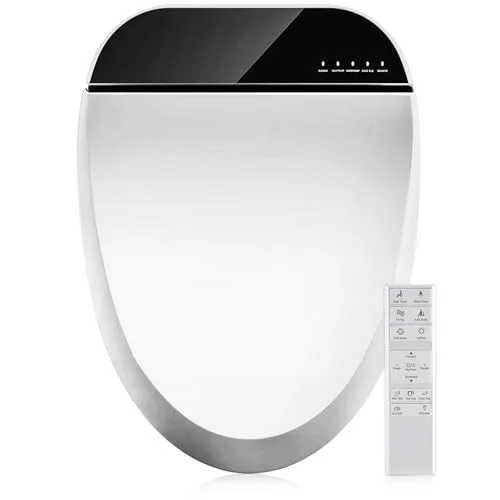
Among the models in our own catalog, this plays out clearly. The Kohler PureWash M300 and Kohler PureWash M250 are both manual, white, and carry a name most American buyers already associate with toilets and faucets — exactly the profile that disappears into a listing instead of becoming a talking point. A seat like the Combier Electric Bidet Toilet Seat, by comparison, brings a remote and the visual signature of an electric unit; it's a genuinely different and more capable product, but it's also the kind of fixture that is more likely to prompt a question during a showing, and worth a deliberate decision rather than an afterthought before you list. For a wider read on what separates mid-tier electric seats from each other, see our breakdown of what actually changes between $150 and $250.
Before you list
Leave it installed, or put the original seat back on?
There's no universal answer, but there is a sensible default, and it depends almost entirely on whether the seat is manual or electric.
For a manual seat: leave it. It installs the same way a standard replacement seat does, it adds no complexity for the buyer to inherit, and removing a perfectly functional, neutral fixture to put back a seat that's probably older and more worn makes the bathroom look worse, not better. If anything, mention it as a small amenity in the listing the way you'd mention a bidet-equipped bathroom in general — a nice detail, not a selling point to lead with.
For an electric seat: think about it the way you'd think about a mounted TV bracket, a smart thermostat, or a water softener — a system the next owner either wants or doesn't, and one that's reasonable to negotiate rather than silently leave or silently remove. Three honest options, roughly in order of how often each gets chosen:
Leave it and disclose it plainly in the listing or at the inspection — "electric bidet seat and GFCI outlet convey with the sale" or similar. This is the cleanest option if the seat is in good working order and a recognizable brand; it removes the guesswork that otherwise turns into a showing question.
Swap the original seat back on before listing, and take the electric seat with you. This makes sense if the unit is a few years old, cosmetically worn, or simply something you want to keep for your next bathroom — a basic manual replacement seat is inexpensive and takes under half an hour to install, and it removes the "what is this and does it work" question entirely.
Leave it, but reset it and tidy the install — tucked cord, no loose remote on the tank, panel wiped down. If you're not swapping it, the five minutes of tidying matters more than the feature list ever will. A slow-close lid helps here too, since a lid that slams is its own small negative impression; our slow-close lid guide covers which seats build that in.
What we wouldn't recommend is leaving an electric seat installed, unplugged, with the outlet capped and no mention of it anywhere — that's the version most likely to generate a confused question mid-showing, which is the exact outcome a seller wants to avoid.
The picks
If you're installing (or replacing) one before you list
Three seats that illustrate the two sides of this decision — two neutral, brand-recognizable manual seats, and one capable electric seat worth a deliberate choice rather than an afterthought.
01Best for resale
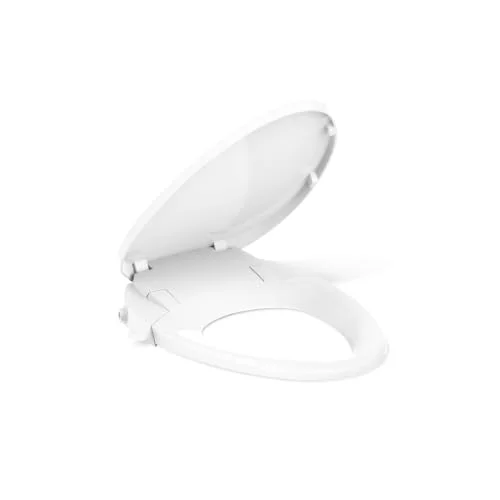
Kohler PureWash M300
Elongated · manual · white
A white, elongated, manual bidet seat from a brand almost every American buyer already associates with toilets and faucets. Quick-release hinges make it an easy swap either direction — onto the bowl before a showing, or back off if you decide to take it with you — and a quiet-close lid means it won't slam shut while buyers are touring the house. Measures 21.06 x 17.3 x 5.1 inches.
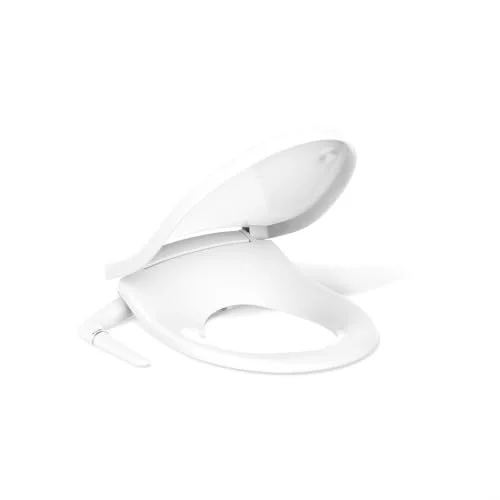
The round-bowl counterpart to the M300, for the older toilets that still use that shape. Same neutral white finish, same recognizable Kohler name, same quiet-close lid and quick-release hinges, plus adjustable spray position and pressure so the one non-electric feature that varies seat to seat — how the wash actually feels — is dialed in rather than fixed.
A genuinely more capable seat — wash, dry and a soft-close lid controlled from a remote — and a reasonable choice if you plan to live in the house for years before any sale. Just go in knowing it's the profile this guide flags as worth a deliberate decision before listing: disclose it, tidy the cord and remote, or swap back to a manual seat rather than leaving it as a question mark. Fits elongated bowls, 15" x 20".
What to disclose, and what buyers rarely ask about
Disclosure rules vary by state and are a legal question for your agent, not something we're qualified to advise on as a product comparison site. In general terms, though, sellers are expected to disclose known defects, not list every fixture in the house — a working bidet seat, manual or electric, isn't typically a defect. Where disclosure genuinely helps is removing ambiguity: if an electric seat conveys with the sale, saying so plainly (in the listing, or verbally at showings) prevents the awkward moment of a buyer wondering whether it's included, whether it works, or whether they're expected to remove it themselves.
What buyers rarely ask about, in our experience reading how these showings get discussed, is maintenance history or water-line integrity — the things that would actually matter if something were wrong. A supply line that was installed with plumber's tape and hand-tightened fittings, the way every bidet install is supposed to go, is not something a buyer walking through the house can evaluate by looking, and most don't think to ask. If you're the seller, that's worth a line to your agent regardless of what the seat looks like: when the T-valve was installed and whether it's ever leaked is more relevant to a buyer's actual risk than the color of the seat or whether it has a remote.
The other thing rarely asked, oddly, is price. Buyers tend to assume a bidet seat is either a minor amenity or an expensive luxury add-on, and they rarely ask which it was — which is exactly why the visual impression (neutral and quiet versus flashy and electronic) carries more weight in a showing than the actual cost did at purchase. A $280 electric seat and a $50 manual attachment can produce opposite impressions despite the price gap running the other way, simply because one looks like a system and the other looks like a toilet seat. If you're deciding what's worth paying for in the first place, our look at whether the cheapest electric seat in our catalog is worth it walks through that trade-off directly.
FAQ
Bidet seats and resale: common questions
Will a bidet seat scare off buyers who've never used one?
Rarely on its own. Most buyers either recognize what it is immediately or give it a quick, curious glance and move on — it's a small fixture, not a renovation. What tends to generate a negative reaction is complexity: a seat covered in buttons, a loose remote, or a visible cord is more likely to prompt "what is this and does it work" than the basic presence of a bidet seat is to prompt any concern at all.
Should I remove an electric bidet seat before listing my house?
Not automatically. It's a reasonable default if the unit is older, cosmetically worn, or something you'd rather keep for your next home — a manual replacement seat installs in well under an hour. If the seat is in good condition and from a recognizable brand, leaving it and disclosing it plainly in the listing is often the simpler, cleaner option.
Does the color of the seat actually matter for resale?
More than most buyers would guess. Neutral white matches nearly every toilet bowl color sold in the last few decades and reads as a clean, finished detail. A black, colored, or patterned seat can look mismatched against a white bowl, and mismatched fixtures are one of the small details that make a bathroom read as dated or unfinished, independent of how the seat performs.
Does an electric bidet seat affect the home inspection?
Indirectly, through the outlet it plugs into rather than the seat itself. Inspectors check that any outlet near a water source, including one powering a bidet seat, is properly grounded and GFCI-protected — a code requirement in bathrooms generally. An ungrounded or missing-GFCI outlet can appear as a flagged item on the inspection report; the seat itself typically does not.