How Loud Is a Bidet Seat? Pump and Dryer Noise, Compared
By Ilane TallUpdated October 12, 2026Research-based
Best Bidet Seats is reader-supported. When you buy through our links we may earn a commission, at no extra cost to you. Commissions never change which products we recommend.
"Is it loud?" comes up in almost every bidet conversation that gets past "what is it," and it's usually asked by someone picturing a toilet that suddenly sounds like a dishwasher. The honest answer is more specific than yes or no: the part everyone worries about — the actual wash — is close to silent on every electric seat we've looked at. The noise people end up noticing lives in two other places entirely, and they behave very differently from each other.
This guide breaks down where bidet seat sound actually comes from, what that means if your bathroom shares a wall with a bedroom or a neighbor, and which of our picks publish the features that affect noise — a warm-air dryer, a soft-close lid — versus which don't say either way. One honest note before we start: we don't run a testing lab and we haven't measured decibel levels with a meter in hand. What follows comes from how these mechanisms work, the specs manufacturers do and don't publish, and the themes that repeat across the broader market for electric bidet seats. Where we don't have a documented spec for one of the three seats below, we say so instead of guessing.
First, the mechanics
Where the noise actually comes from: pump, dryer, or neither
01
The wash itself
Water moving through a narrow nozzle at low pressure makes almost no sound — closer to a faucet running than anything mechanical. This is the part people worry about and the part that's rarely the issue.
02
The internal pump
A small motor pressurizes the wash and, on instant-heat models, moves water through the heating element. It produces a brief, moderate whirring — audible up close, easy to miss from across a room.
03
The warm-air dryer
A fan motor pushing air across a heating coil, similar in principle to a hair dryer on a low setting. It's the loudest single component on any seat that has one, and it runs the longest.
04
Neither, sometimes
A non-electric attachment has no pump and no dryer — just household water pressure through a valve. There's nothing electrical to generate sound at all.
None of the three seats in this guide publish a decibel rating — that's typical for the category; most manufacturers simply don't spec it. What they do document is which of these components they include, and that's the more useful thing to know before you buy.
The room next door
What a shared-wall or apartment bathroom needs to consider
In a detached house with a primary bathroom nobody sleeps next to, bidet seat noise is close to a non-issue — you'll hear the pump's brief whir and, if the seat has one, the dryer's fan for a stretch afterward, and that's the whole story. The calculation changes in an apartment, a condo, a rental with thin interior walls, or any bathroom that backs onto a bedroom. In those layouts, the two sounds that matter are duration and timing: a two-second pump cycle at 11pm barely registers, but a 30–60 second dryer run right outside a sleeping partner's wall is the kind of thing that gets mentioned the next morning.
The practical fix in a shared-wall bathroom isn't a different seat so much as a different habit: use the wash and skip or shorten the warm-air dry, finishing with a few squares of toilet paper or a small towel instead. Every electric seat we're aware of lets you stop the dryer early by standing up or pressing the panel again, so the "quiet" version of any of these seats is usually just the version where you don't run the loudest feature to completion. If your household genuinely can't tolerate any mechanical sound near a shared wall, that's the strongest case for skipping electric altogether — more on that further down.
It's also worth remembering that the toilet itself, the tank refilling after a flush, is louder on most toilets than anything a bidet seat's pump adds on top of it. If a shared-wall bathroom has never been a problem with the toilet alone, a bidet seat's pump cycle is unlikely to be the thing that changes that — the dryer is the one variable actually worth planning around. For bathrooms with genuinely thin walls in general — the kind you also find in RVs and off-grid setups, where every sound carries — the same logic applies: minimize dryer use, or skip it in favor of a non-electric option.
The main event
Dryer run time, and why it's usually the louder, longer sound
Why it's louder
A fan plus a heating coil
A warm-air dryer has to move a real volume of air and warm it on the way out, which takes a stronger fan motor than anything else in the seat. It's the one component built the same way a handheld hair dryer is, and it sounds similar for the same reason.
Why it's longer
Seconds versus a full cycle
The wash and the pump that drives it run for the few seconds you're actually using them. A warm-air dryer, by contrast, is typically run until you feel dry — commonly somewhere in the 30-second-to-a-few-minute range depending on setting and how long you hold the button — which is simply more total seconds of audible sound.
Two of our three picks document a warm-air dryer as a named feature: the IYTATA lists a "built-in warm air dryer," and the iliD lists "adjustable warm air drying" with its own temperature levels. The ZingPOP's published feature list covers heated water, a heated seat, and adjustable pressure and spray mode, but it does not list a dryer among its documented features — so we're not asserting it has one. If a dryer (or the ability to skip it) is a deciding factor for you, confirm it directly on the current Amazon listing before buying, since feature lists are occasionally revised.
What to look for
Night mode and quiet settings that some seats offer
Higher-end bidet seats in the wider market sometimes advertise a "night mode" — typically a setting that dims or disables an LED display and indicator sounds so the seat doesn't announce itself with a beep or a glow at 3am. That's a genuinely different thing from a quiet mode that reduces pump or dryer volume; mechanically reducing the sound of a motor without also reducing its output isn't something these seats are built to do, so "quiet mode" in marketing copy almost always means "fewer beeps and lights," not "a silent dryer."
Worth separating clearly: a nightlight is a visual feature, not a sound one. The IYTATA documents a "built-in nightlight for nighttime convenience" — useful for finding the seat in the dark without flipping on the main bathroom light, but it has no bearing on pump or dryer volume. None of the three seats in this guide documents a dedicated sound-reduction night mode in its published features. If that specific feature matters to your household, it's worth searching a listing's full feature list and Q&A section for the words "night mode" or "quiet mode" specifically, rather than assuming a nightlight or a soft-close lid covers it — they solve different problems. A soft-close lid, for what it's worth, does measurably cut one specific noise: the bang of a lid dropped at speed, which is its own late-night complaint independent of the pump or dryer.
The most reliable "quiet setting" available on any electric seat, documented or not, is simply using the controls to stop the dryer early rather than letting a long cycle run to completion — every model here lets you do that with the panel or remote. If a shorter wash-only routine is realistic for your household, the dryer's run time stops being a factor at all.
The picks
Three electric seats, and what they document about sound
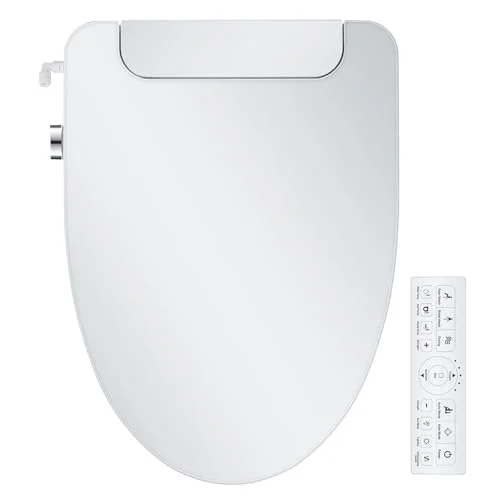
IYTATA Electric Bidet Toilet Seat
Documented dryer, plus a nightlight for dark bathrooms
Its listing names a built-in warm-air dryer directly, along with instant temperature-controlled warm water, a heated seat, a soft-close lid, wireless remote and a nightlight. The soft-close lid addresses one late-night noise — the lid itself — even though the dryer is still the loudest, longest sound in the cycle when you choose to run it. Named "Elongated" in the listing title; confirm your bowl shape against the current listing before ordering.
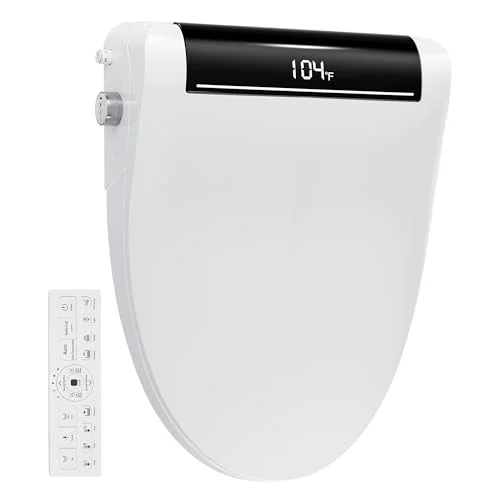
No dryer listed — one less thing running after the wash
Its published features center on instant heated water, a heated seat, hands-free radar auto-open, and AI voice control, with adjustable water temperature, pressure and spray mode. A warm-air dryer is not among the features ZingPOP documents, which in practice means one less mechanical noise source after the wash finishes — you'd finish with paper or a towel instead. Named "Elongated" in the listing title; verify fit on the current listing.
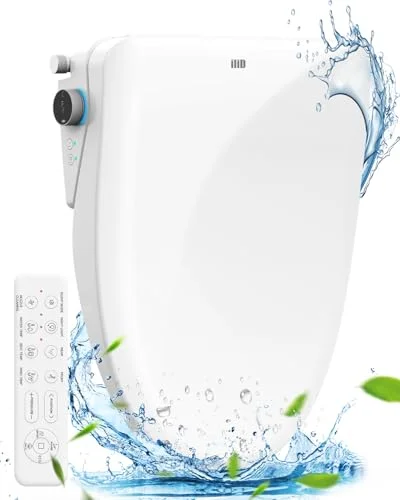
Adjustable dryer levels, and a listing that specifically calls out quiet operation
Its listing documents adjustable warm-air drying with its own temperature levels, instant warm water, a 3-level heated seat, a self-cleaning stainless nozzle, and — notably for this topic — describes the seat and its soft-closing lid as "whisper-quiet," the most direct sound-related claim among the three. That claim is the manufacturer's own description rather than an independent measurement, so treat it as a listing detail worth weighing rather than a lab result. Named "Elongated" in the listing title; confirm your bowl shape before buying.
When a non-electric attachment is the quietest option by default
If quiet is the single most important requirement in your bathroom — a nursery on the other side of the wall, a studio apartment, a roommate who works night shifts and sleeps during the day — the most reliable way to guarantee silence isn't picking the "quietest" electric seat. It's skipping the electric category entirely. A non-electric attachment has no pump, no heater, and no dryer; it's a valve and a nozzle running on your home's existing water pressure, the same mechanism that makes your sink or shower run. There's no motor to generate noise in the first place, which makes it the default quiet option rather than the best-case one.
The trade-off is the one you'd expect: cold water instead of warm, and no warm-air dryer, so you'd finish with paper or a towel either way. For a guest bathroom, a bedroom-adjacent half-bath, or anyone who has decided the comfort features aren't worth the sound they bring with them, that trade is often an easy one. Our outfitting a two-bathroom home on a bidet budget guide covers exactly this split — an electric seat where it gets daily use and matters, a non-electric option in the bathroom where quiet matters more than warmth.
If you're still deciding whether the comfort features of an electric seat are worth their cost and their sound at all, our is the cheapest electric bidet seat in our catalog worth it? breakdown runs the budget side of that math in more detail.
FAQ
Bidet seat noise: common questions
Is the wash itself loud?
No — water moving through the nozzle at the pressures these seats use is close to silent, closer to a faucet running than anything mechanical. The sounds people actually notice come from the internal pump and, on seats that have one, the warm-air dryer, not from the wash itself.
What's louder, the pump or the dryer?
The warm-air dryer, when a seat has one. It's a fan motor pushing air across a heating coil, similar in principle to a hair dryer on a low setting, and it runs for 30 seconds to a few minutes depending on the setting and how long you hold it — far longer than the brief pump cycle that drives the wash.
Do any bidet seats have a true quiet or night mode?
Some higher-end seats in the wider market advertise a "night mode," but that typically means dimmed displays and muted beeps, not a quieter pump or dryer. None of the three seats in this guide documents a dedicated sound-reduction mode; the iliD's listing does describe its seat and lid as "whisper-quiet," which is the manufacturer's own description rather than an independent measurement.
What's the quietest bidet option overall?
A non-electric attachment or seat. With no pump, no heater and no dryer, there's no motor to generate sound at all — just household water pressure through a valve. The trade-off is cold water and no warm-air drying, which for a lot of shared-wall bathrooms is an easy trade to make.