A Small Feature, Honestly Assessed · 2026
Bidet Seats With a Built-In Deodorizer, Compared
By Ilane TallUpdated September 22, 2026Research-based.
Best Bidet Seats is reader-supported. When you buy through our links we may earn a commission, at no extra cost to you. Commissions never change which products we recommend.
A handful of bidet seat listings mention a "deodorizer" or an "air filter" tucked in among the warm water, heated seat and remote control bullets, and it's easy to skim right past it — until you're the one standing in a small, poorly ventilated bathroom wondering whether that line item is worth paying for. Unlike a heated seat or a wireless remote, which are self-explanatory the moment you use them, "deodorizer" is one of those spec-sheet words that manufacturers use loosely enough to mean several genuinely different things depending on the brand.
We compared the listings, prices and general design approach behind three electric bidet seats that keep surfacing in searches for this feature: two from Bio Bidet, one from TOTO. The goal here isn't to rank them on comfort or install difficulty — we cover that ground elsewhere — it's narrower and more specific: what does a bidet seat's deodorizer or air filter actually do mechanically, how do TOTO and Bio Bidet talk about it differently, and whether it beats the $20 plug-in air freshener sitting in half of America's bathrooms already.
One honest note before we get into it: we don't run a physical testing lab, and a feature this hard to quantify — odor, air movement, a smell that's gone before you'd have time to rate it — is exactly the kind of thing a fake lab would be tempted to fabricate a score for. We're not going to do that. Everything below comes from published specs, current pricing, and how manufacturers describe the feature across their own product lines, with the gaps in what we actually know flagged plainly rather than papered over.
The mechanics
What "deodorizer" actually means on a spec sheet
Across the bidet seat category, "deodorizer" and "air filter" on a spec sheet generally point to one of two mechanical setups, and the wording a brand chooses usually tells you which one it's describing. The first is active air filtration: a small internal fan draws bathroom air into the unit, usually while the seat-occupancy sensor confirms someone is sitting there, pushes it through a filtering element, and releases it back into the room with less odor than it went in with. This is the setup brands tend to call an "air filter" or "air deodorizer," because there's a physical filtering element doing the work, not just a fragrance or a chemical reaction.
The second is a simpler deodorizing element built into the unit without a dedicated fan-and-filter assembly — sometimes a passive catalytic surface, sometimes closer to how an air freshener works, releasing or neutralizing odor without actively pulling room air through a cartridge. Brands describing this version tend to use the plainer word "deodorizer" rather than "air filter," and it's usually the lower-cost way to put the word on a spec sheet, since there's no fan motor or replaceable filter housing to engineer around.
Neither approach is scented — this isn't a fragrance dispenser bolted to a toilet seat. Whatever the mechanism, the goal is reducing or masking odor at the source, in the few seconds right after use, rather than fully deodorizing the room the way an exhaust fan running for twenty minutes would.
Two approaches
TOTO's air filter vs Bio Bidet's built-in deodorizer: two different approaches
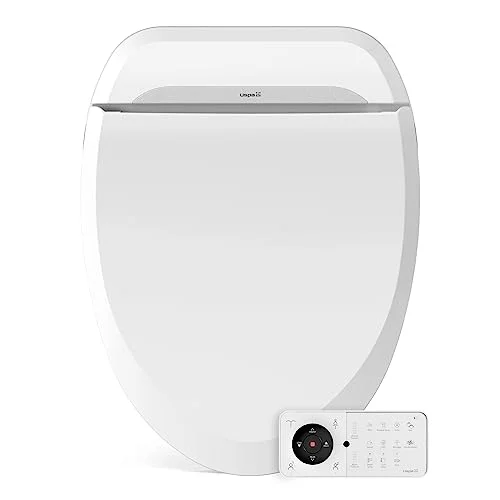
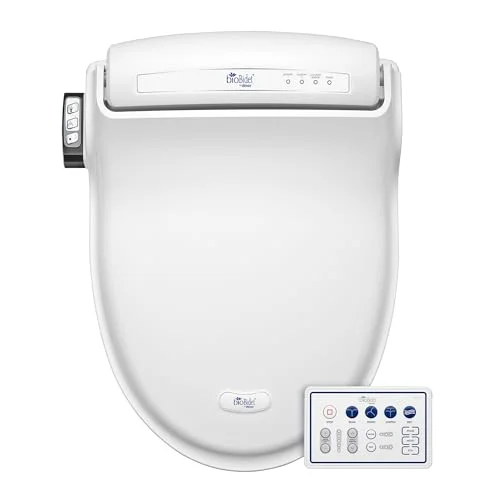
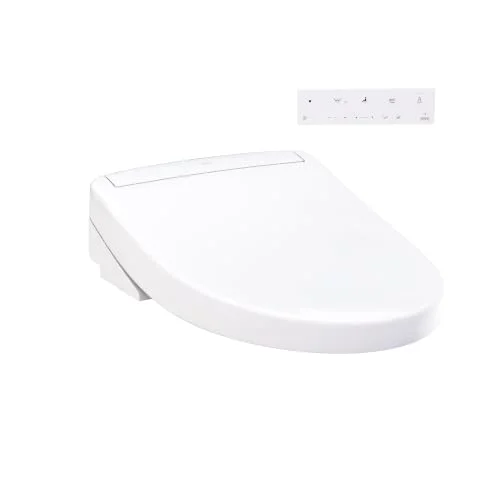
Search "bidet seat deodorizer" for more than a few minutes and these two brand names come up constantly, because between them they represent the category's two most common ways of marketing this feature. TOTO's WASHLET lineage — the family the WASHLET S5 ($582.00) belongs to — is generally built around the active-filtration approach described above: air drawn through the unit and released with reduced odor, positioned as one piece of a broader hygiene package that, on the S5, also includes instantaneous water heating, PREMIST bowl-wetting and EWATER+ wand cleaning. Bio Bidet, across models like the USPA PRO ($249.00) and the Bliss BB1000 ($336.17), more often uses the plainer "deodorizer" language across its catalog — the simpler, no-fan-cartridge version of the same basic idea.
Here's the honest caveat: the listing bullets we pulled prices and specs from for all three of these particular seats lead with warm water, heated seats, dryers and remote controls — none of the three headline callouts we have in front of us spells out a deodorizer or air-filter feature explicitly. That's common; on a lot of listings, a feature like this is buried a few bullets down or only mentioned in the full product description rather than the title, and it varies by exact configuration even within one product line. If a deodorizer or air filter is the specific reason you're buying one of these three, don't take our word — or the general reputation of either brand — as confirmation. Open the listing, check the full feature list, and confirm it's on the exact unit and configuration you're about to order.
Under the hood
What a carbon filter actually catches, and how often it needs replacing
On the seats built around active air filtration, the filtering element is typically some form of activated carbon — the same material used in kitchen range hoods, aquarium filters and household air purifiers. Activated carbon works by adsorption: its surface is riddled with microscopic pores that trap odor-causing molecules — largely the sulfur compounds and volatile organic compounds responsible for bathroom odor — as air passes through, rather than masking them with a competing scent. It doesn't destroy the odor chemically; it physically holds onto it, which is exactly why the filter has a finite lifespan.
As with any activated-carbon filter, that capacity to trap odor molecules declines with use and eventually needs to be refreshed or replaced — manufacturers across the small-appliance category typically call for a filter swap somewhere between every few months and about a year, depending on how heavily the unit is used and how the specific product is engineered. We don't have a manufacturer-confirmed replacement interval for the specific seats featured in this article, so we won't print one as though we do; if a filter-replacement schedule is a deciding factor for you, check the product manual or listing Q&A for the exact unit before buying; a filter-based deodorizer that nobody remembers to replace eventually performs no better than one that was never installed.
The bigger picture
Why most bidet seats skip this feature entirely
Walk through any lineup of electric bidet seats and you'll notice a deodorizer or air filter shows up on a minority of models, even among seats that otherwise pack in a heated seat, a warm-air dryer, oscillating wash and a wireless remote. A few practical reasons explain the gap. First, it adds real engineering cost — a fan motor and filter housing, or at minimum a dedicated deodorizing element, on top of everything else already crammed into a seat the size of, well, a toilet seat. Second, most bathrooms already have a mitigation tool built in: an exhaust fan. A fan that's actually used clears odor from a small room faster and more completely than any filter sized to fit inside a toilet seat ever could, which makes an onboard deodorizer feel redundant in a well-ventilated bathroom and genuinely useful only in the ones that aren't.
Third, and more subtly: a bidet's actual job — washing rather than wiping — already reduces one meaningful source of bathroom odor on its own, independent of any deodorizer. Reviewers across the category consistently note less lingering smell after switching to a bidet seat at all, deodorizer or not, simply because water rinses more thoroughly than paper. That overlap in benefit is probably part of why a dedicated air filter never became a standard feature the way a heated seat or a remote control did — for a lot of buyers, the core wash already does most of the work a deodorizer would otherwise be asked to do.
The comparison that matters
Does a $20 plug-in air freshener do the same job for less?
For pure odor control, a $20 plug-in air freshener or a small room diffuser is hard to beat on cost, and it's worth being honest about what each option is actually doing. A plug-in freshener masks odor with a competing fragrance released continuously into the room; it doesn't remove or neutralize anything, it just gives your nose something stronger to notice instead. An active-filtration deodorizer built into a bidet seat, by contrast, is attempting to physically trap odor-causing molecules at the source, in the seconds right after use, without adding any scent of its own. Different mechanisms, and arguably different jobs — one covers up a smell across a whole room over hours, the other tries to reduce one specific moment of odor right where it happens.
If odor control is your only goal and budget is tight, the plug-in wins on pure cost-effectiveness — it treats the whole room, works with any toilet seat you already own, and costs a fraction of any bidet seat with or without a built-in deodorizer. Where the built-in feature earns its keep is as a bonus layered onto a seat you were already planning to buy for the warm water, the heated seat and the wash itself. Treat a deodorizer or air filter as a tiebreaker between two seats you'd otherwise be equally happy with, not as the reason to spend $250-plus over a $20 plug-in — and if your bathroom's exhaust fan already does the job, you may not need either.